July 28, 2026
Signs of Labor: When to Go to the Hospital
Wondering if you're in labor? Learn signs of labor, how to tell false from real contractions, and when to go to the hospital. Free birth plan included.

I've supported hundreds of births over the years, and the most common question I hear from first-time moms is some version of: "How do I know this is real?"
It makes sense. Labor doesn't start with a flashing sign. It creeps in, sometimes slowly, sometimes all at once, and it can be hard to tell whether what you're feeling is the real thing or just your body practicing. By the time you're reading this, you're probably paying close attention to every twinge and cramp, and that's exactly where you should be.
Let me walk you through the real signs of labor, how to tell false labor from the real deal, and most importantly, exactly when you should head to the hospital.
What Are the First Signs of Labor?
Labor rarely starts with dramatic contractions. Most women notice subtler changes in the days or hours before active labor begins. Knowing these early signs can help you feel more prepared and less anxious.
Lightening (baby dropping). A few weeks or days before labor, your baby settles deeper into your pelvis. You might notice you can breathe more easily because there's less pressure on your diaphragm, but you may also feel more pressure in your lower pelvis and need to urinate more often. For first-time mothers, this can happen weeks before labor. For experienced moms, it may not happen until labor actually starts.
Loss of the mucus plug (bloody show). As your cervix begins to soften and dilate, you may notice a thick, jelly-like discharge that can be clear, pink, or slightly blood-tinged. This can happen days before labor begins or during early labor itself. It's a sign your body is preparing, but it doesn't mean you need to rush anywhere.
Cramping and back pain. Many women describe early labor as feeling like strong menstrual cramps or a dull ache in the lower back. This is your uterus beginning the work of effacing and dilating your cervix. If you've been having Braxton Hicks contractions that didn't progress, pay attention. These cramping sensations that persist and intensify may be the real thing.
Nesting energy burst. You might feel an overwhelming urge to clean the house or organize the nursery. This is a classic pre-labor sign. Enjoy it, but don't exhaust yourself.
Digestive changes. Nausea, loose stools, and loss of appetite are common as your body clears out systems in preparation for labor.
Not everyone experiences all of these. You might notice one or two, or none at all and go straight into regular contractions. Every labor is different.
How Do I Know If I'm Having Real Contractions?
This is the question that keeps most pregnant women up at night, and for good reason. Contractions are the hallmark sign of labor, but not every tightening means it's time to grab your hospital bag.
Real labor contractions follow a pattern. They come at regular intervals, grow longer and stronger over time, and don't stop when you change positions or rest. Here's what to watch for:
Timing. Time your contractions from the start of one to the start of the next. Real contractions tend to come at increasingly predictable intervals. Early labor might have contractions 10 to 20 minutes apart. Active labor brings them closer together, every 3 to 5 minutes.
Duration. Each contraction lasts about 30 to 70 seconds. Time how long the tightening sensation lasts from beginning to end. As labor progresses, contractions get longer.
Intensity. Real contractions build in intensity. They don't stay the same. They get progressively stronger. Early on, you might be able to talk through them. By active labor, you'll need to stop, breathe, and focus.
Movement. Real contractions don't stop when you walk, change positions, or take a shower. If anything, movement can make them stronger. False labor contractions often ease up with activity.
When you're timing contractions, I recommend using a contraction timer app on your phone so you don't have to do the mental math. Just write down the start time of each one and note how long it lasts. After an hour, you'll have a clear picture of your pattern.
How Can I Tell the Difference Between False Labor and Real Labor?
False labor (also called Braxton Hicks contractions) is your uterus practicing for the main event. It can start as early as the second trimester and become more noticeable in the third. But knowing how to tell the difference between false labor and the real thing can save you a trip to the hospital that ends in being sent home.
Braxton Hicks contractions are usually irregular in timing and intensity. They often stop when you change activity, and they tend to stay in the front of your belly rather than wrapping around to your back. They're uncomfortable but not typically painful, and they don't get progressively stronger or closer together.
Here's a simple comparison:
| What You Notice | False Labor (Braxton Hicks) | True Labor |
|---|---|---|
| Timing | Irregular, don't get closer together | Regular, get progressively closer |
| Duration | Doesn't change or gets shorter | Gets longer over time |
| Intensity | Stays the same or fades | Gets stronger |
| Position changes | Contractions stop or ease | No change or get stronger |
| Location | Mostly in the front of the belly | Starts in lower back and wraps around |
| Cervical change | No dilation or effacement | Progressive dilation and effacement |
If you're unsure, try the simple "walk it off" test. Get up and move around for 30 minutes. If your contractions fade or stop, it was likely false labor. If they get stronger and more regular, you're probably in early labor.
A note from experience: if you're genuinely confused about whether it's false labor, it's worth calling your provider or heading in to be checked. I've seen plenty of women who were sure they were "just having Braxton Hicks" and were actually 5 centimeters dilated. Better to be checked and sent home than to wait too long.
When Should I Go to the Hospital?
This is the moment every expecting parent wants clarity on. The general rule is the 5-1-1 rule: go to the hospital when your contractions are 5 minutes apart, lasting 1 minute each, for at least 1 hour.
But there are exceptions, and knowing them is just as important.
For first-time mothers: The 5-1-1 rule is a solid guideline. Early labor tends to last longer for first-time moms, so you have time. Don't rush in at the first contraction. Laboring at home in a comfortable environment can actually help progress move faster than sitting in a hospital triage room.
For experienced mothers: If you've given birth before, labor tends to move faster. Consider heading in when contractions are 7 to 8 minutes apart and lasting 45 seconds to a minute. Your second or third baby often comes more quickly than the first.
Go to the hospital immediately if:
- Your water breaks, especially if the fluid is green, brown, or has a foul odor
- You have heavy bleeding (more than spotting)
- You notice a significant decrease in your baby's movements
- You have severe, constant pain that doesn't let up between contractions
- You have symptoms of preeclampsia: severe headache, vision changes, upper abdominal pain
- You feel pressure like you need to push
When to call your provider before going:
- Your water breaks but contractions haven't started (they'll give you a time window)
- You have a fever of 100.4°F or higher
- You have a medical condition like gestational diabetes or high blood pressure
- You're less than 37 weeks pregnant (preterm labor signs need evaluation)
Every provider's protocol is slightly different. Your hospital or birth center may have specific guidelines for when to come in. I always recommend asking your provider about their specific recommendations at your 36-week appointment so you know their protocol ahead of time. Add those notes to your Joyful Birth Plan so your partner or support person has them handy.
What Should I Do If My Water Breaks Before Contractions Start?
Your water breaking (technically called rupture of membranes) happens in about 8 to 10 percent of pregnancies before labor begins. It feels like a trickle or a gush of fluid, and it's usually unmistakable. If you're not sure whether your water has broken or you've just leaked urine (common in late pregnancy), put on a pad and lie down for 30 minutes. Amniotic fluid keeps leaking when you lie down; urine doesn't.
Once your water breaks:
Call your provider right away. Most will want you to come in to confirm it's really your water and check for infection. If you're group B strep positive, your provider will likely want you to start antibiotics.
Contractions often begin on their own within 12 to 24 hours after your water breaks. If they don't, your provider may recommend induction to reduce the risk of infection. This is a good conversation to have ahead of time. Include your preferences in your hospital birth plan so you're not making decisions under pressure.
A practical tip: once your water breaks, wear a pad, not a tampon. Change it regularly and note the color and smell of the fluid. Clear or pink-tinged is normal. Green or brown fluid means your baby may have passed meconium (their first stool), which your provider needs to know about.
What Happens When I Arrive at the Hospital in Labor?
Knowing what to expect can help you feel less anxious. Here's the typical sequence:
Triage. You'll be checked in and taken to a triage room. A nurse will check your vital signs, monitor your baby's heart rate, and check your dilation. If you're in active labor, generally 4 to 6 centimeters with regular contractions, you'll be admitted. If you're earlier in labor, you may be sent home or asked to walk the halls for an hour.
Admission. Once admitted, you'll move to a labor and delivery room. You'll change into a hospital gown, get an IV placed, and continuous monitoring may be started. This is when your birth plan for hospital delivery is really useful.
Labor management. Your care team will support you through labor. Your nurse handles the medical side while your partner or doula handles comfort measures.
Delivery and recovery. After your baby is born, you'll stay in the delivery room for skin-to-skin contact and initial newborn procedures, then move to a postpartum room.
If you're planning to labor in a specific city, checking local hospital policies ahead of time can help. For example, doula support in Austin, TX is widely accepted in most hospitals, while policies in Denver, CO may vary. Texas birth support resources and Colorado birth support resources can help you compare.
What If Labor Starts at Night or on the Weekend?
Babies have a knack for arriving at inconvenient times. Labor starting at 2 AM is more common than you might think.
Rest as long as you can. If contractions are mild enough that you can rest between them, stay in bed. Early labor is the rest phase. Once active labor hits, rest becomes much harder.
Call your provider. Even at 3 AM, most providers have an on-call system. Don't hesitate to call. They can help you decide whether to come in or stay home.
Grab your hospital bag. If you decide it's time to go, your hospital bag checklist should be packed and ready: phone charger, toiletries, comfortable clothes, snacks for your partner, and your birth plan.
Have a backup plan. If you have other children, confirm your childcare plan a few weeks before your due date so nobody is caught off guard.
How Can a Birth Plan Help Me Prepare for Labor?
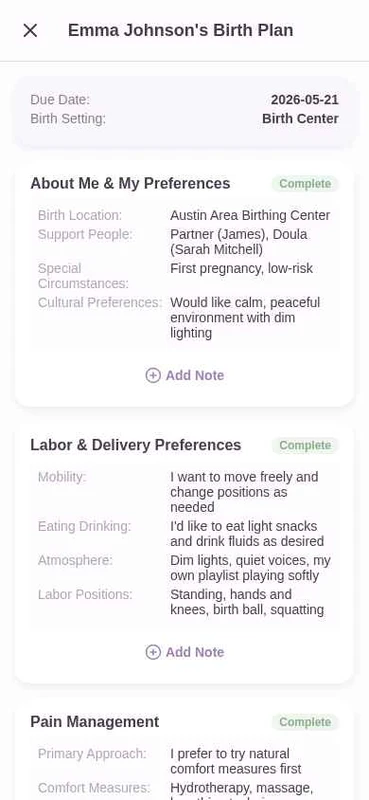
A birth plan forces you to think through decisions before you're in the middle of contractions. When you're focused on managing intense sensations, you don't want to be making choices about pain management or what happens if labor stalls. A good birth plan puts those decisions on paper so your care team knows what you want and your partner knows how to advocate for you.
Your birth plan should include:
Pain management preferences. What methods you want to try first (breathing, movement, water, massage) and whether you're open to an epidural. For a deeper look at your options, my guide to natural labor pain management covers techniques you can use whether or not you're planning a medicated birth.
Labor environment preferences. Dim lights, music, who you want in the room.
Intervention preferences. How you feel about cervical checks, continuous monitoring, labor augmentation, assisted delivery.
Delivery preferences. Preferred pushing positions, who catches the baby, delayed cord clamping, immediate skin-to-skin contact.
Newborn care preferences. Vitamin K, eye ointment, vaccinations, breastfeeding initiation.
Postpartum support. If you're planning to hire a postpartum doula or set up a support system, add those preferences to your plan.
The best time to write your birth plan is around 32 to 34 weeks. Share it with your provider so you can discuss anything they flag. Keep a few printed copies in your hospital bag.
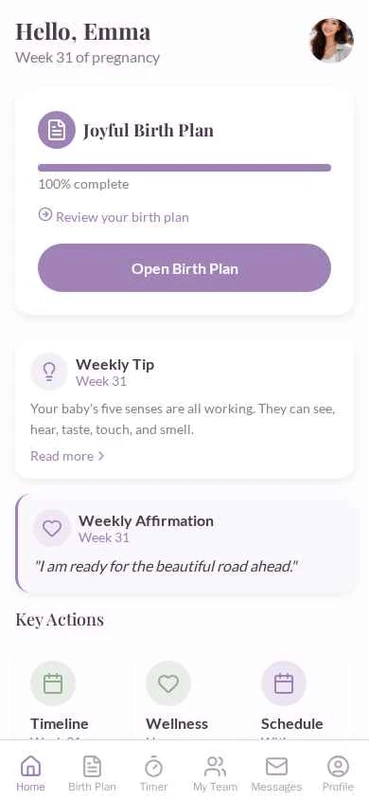
If you haven't written yours yet, you can download the free Joyful Birth Plan template to get started.
How Do I Know for Sure?
Trust yourself. If something feels wrong, it probably is. If you're unsure, call your provider. No midwife or doctor will be annoyed by a concerned mom.
Worst case: you go to the hospital and they send you home for a few hours. That's inconvenient, but it beats waiting too long. Best case: you're in labor and walk in prepared with your plan, your bag, and your support team.
I've seen women wait too long because they didn't want to bother anyone. If I had to choose, I'd rather a mom come in early and get reassurance than wait at home wondering. When you walk into that hospital, you'll know exactly what to say: "My contractions are five minutes apart and have been for an hour. Here's my birth plan."
Written by Shelbi Kohler