
True Joy Birthing

Help Center

Birth Plan & Doula FAQ

Everything you need to know about birth plans, doulas, costs, insurance, the free app, and getting started — answered by a certified birth doula. Whether you're wondering what a birth plan actually covers, how to find and afford a doula in your city, what your insurance will pay for, or just want a simpler way to organize your preferences, this guide walks you through it all. We also cover how the free Joyful Birth Plan app helps you build, share, and update your plan in minutes — so you walk into the delivery room confident and prepared.

Frequently asked questions about birth plans, doulas, and the Joyful Birth Plan
01

Birth Plans

What is a birth plan and do I really need one?

A birth plan is a one-page document that tells your care team what matters most to you during labor and delivery. It's not a binding contract — it's a communication tool. Nurses and doctors rotate shifts; your birth plan travels with the chart so every provider knows what you want, even if you're in active labor and can't speak for yourself. Do you need one? Every mom deserves to walk in knowing her options. Our free Joyful Birth Plan template covers everything in one page.

When should I start writing my birth plan?

Most families start around 28–32 weeks — the beginning of your third trimester. Starting early gives you time to discuss your preferences with your OB or midwife at a prenatal visit and adjust if your hospital has policies you didn't expect. Earlier is always fine. The sooner you understand your options, the more confident you'll feel when choices come up in the delivery room.

Do doctors and nurses actually read birth plans?

Yes — when they're short, organized, and respectful in tone. Your nurse is the one who reads it most closely since they're at your bedside throughout labor. Hand your plan to your nurse at admission (not the front desk) and ask them to add it to your chart. One page with clear bullet points is infinitely more effective than a multi-page document.

Can I change my birth plan during labor?

Absolutely. A birth plan is a set of preferences, not a contract. If you planned to go unmedicated and want an epidural, that is okay. If you planned on an epidural and labor is moving fast, you can skip it. Your team should support your current wishes, not the ones you wrote down weeks ago. The key is communicating clearly with your nurse and partner when things change.

What if my birth doesn't go according to plan?

That is normal — most births deviate from the plan in some way. A good birth plan is not about controlling every outcome. It's about communicating your preferences so your care team knows what you want when choices come up. When the plan changes, your preferences still guide the conversation. That is why we include space for "if things change" notes in the free template.

What's the difference between the PDF and the app?

The PDF is free, fillable, and designed for print — write in your preferences and bring hard copies to the hospital. The free app goes further: it walks you through each section with guided videos, lets you update your plan anytime, and shares your live plan with your doula or partner directly. Both cover the same sections. The app is for families who want an interactive, always-current experience. Download the free app →
02

Doulas & Birth Support

What is a doula and how do they help?

A doula is a trained, non-medical support person who provides emotional, physical, and informational support during labor and delivery. They stay with you through every contraction — holding space, suggesting position changes, helping you communicate with your care team. Research shows doula support leads to 28% fewer cesareans, 31% less Pitocin use, and labors that are 40 minutes shorter on average. Learn more about what a doula does →

What's the difference between a doula and a midwife?

A doula provides non-medical emotional and physical support. A midwife is a medical care provider who can deliver babies, prescribe medications, and manage clinical care. They serve completely different roles on your birth team — and many families have both. The doula supports you while the midwife manages the medical side. Full comparison →

Does True Joy Birthing replace having a doula?

No. Our tools complement doula support. The free app helps you build your plan and understand your options. The guided walkthrough teaches you what each choice means. But a doula knows your specific situation and adapts in real-time during labor — no app can do that. If you are considering hiring one, find a doula in your city.

How do I find a doula near me?

Start with doula directories like DONA International or ProDoula, ask your OB or midwife for referrals, or check local Facebook mom groups. You can also browse our city-specific pages — we list local doulas, hospitals, and cost information. When you find candidates, interview at least two or three before deciding.

When should I hire a doula?

Start looking around 24–28 weeks. Good doulas book up, especially in metro areas. Starting early also gives you time to meet with 2–3 candidates and think it over without pressure. That said, even a doula hired at 38 weeks can provide meaningful support. It's never too late.
A doula providing comfort and support to a mother during labor — holding hands in a warm, reassuring moment

A doula's support goes beyond the birth room — continuous presence, comfort, and advocacy are the foundation of better birth outcomes.

03

Costs & Insurance

How much does a doula cost?

Birth doula fees in the US typically range from $650 to $3,000 for a standard birth package. The national average is around $1,200–$1,500. A standard package includes 1–2 prenatal visits, on-call availability from 37 weeks, continuous labor support, and 1–2 postpartum visits. Costs vary by region — metro areas tend to be higher, rural areas lower. See cost by city →

Does Medicaid cover doulas?

As of 2026, states including Oregon, Washington, California, Colorado, New Mexico, Minnesota, Nevada, North Carolina, Utah, and others have implemented Medicaid doula coverage. Coverage details vary by state. Some states cover the full cost; others pay a portion. Check your state →

Does private insurance cover doulas?

Some private insurers are beginning to cover doula services, particularly as part of maternal wellness benefits. Coverage varies widely by plan and state. Call your insurance provider and ask if doula services are covered under your maternity benefits. If they say no, ask about a "maternal wellness benefit" or "birth support benefit" — sometimes it is available even if the agent does not know to mention it.

Are there low-cost or free doula options?

Yes. Many communities have volunteer doula programs, and some doulas offer sliding-scale fees or payment plans. Student doulas completing certification often charge reduced rates while being supervised by experienced mentors. Look into local doula collectives, community birth centers, and nonprofits focused on maternal health equity.

How much does postpartum doula care cost?

Postpartum doulas typically charge $25–$50 per hour for daytime support and $200–$400 per overnight shift. Package rates for 3–5 days of support often bring the effective hourly rate down. Most families book 8–20 hours per week for the first 2–6 weeks. Full cost guide →
04

The Free App

Is the app really free for moms?

Yes. Parent Mode — the interactive birth plan builder, educational content, and guided walkthrough — is completely free. Pro Mode with tools for doulas and midwives is a paid subscription. No trial, no credit card. Just download it from the App Store and start building your plan. Download the free app →

What is the Joyful Birth Plan?

A free, fillable birth plan template designed by a certified doula. It covers labor preferences, pain management, delivery, postpartum, and newborn care — organized so a nurse can read it in two minutes. Type directly into the PDF, print it, or fill it in by hand. Download the free Joyful Birth Plan →

What is the Guided Birth Plan Walkthrough?

A free, self-paced video walkthrough with a certified doula guiding you through every section of your birth plan. About 60 minutes of short lessons covering labor choices, pain management tradeoffs, newborn procedures, and what to say when your provider recommends something unexpected. Free with your email. Watch the free walkthrough →

What is the Birth Plan Confidence Session?

A 60–75 minute live Zoom call with a certified birth doula who reviews your completed birth plan line by line — including advocacy role-play and hospital-specific pushback practice. Bring your questions and your plan. $250 per session, limited availability. Book a session →

Free for moms

Your Birth Plan, In Your Pocket

The free True Joy Birthing app walks you through every section of your birth plan with guided videos, lets you update anytime, and shares your preferences with your doula or partner. Download it free — no trial, no credit card.
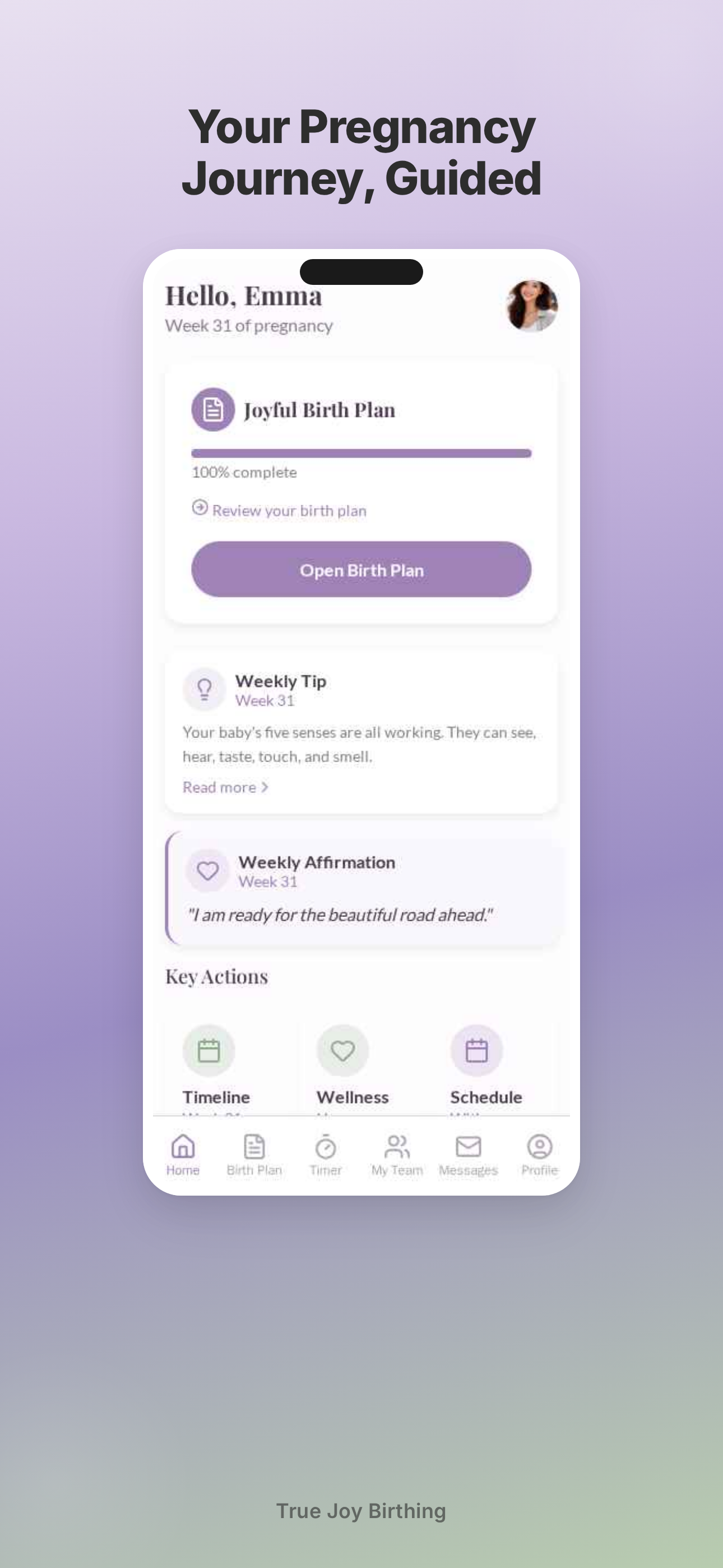
True Joy Birthing app home screen with pregnancy week tracker, birth plan progress, and weekly tips
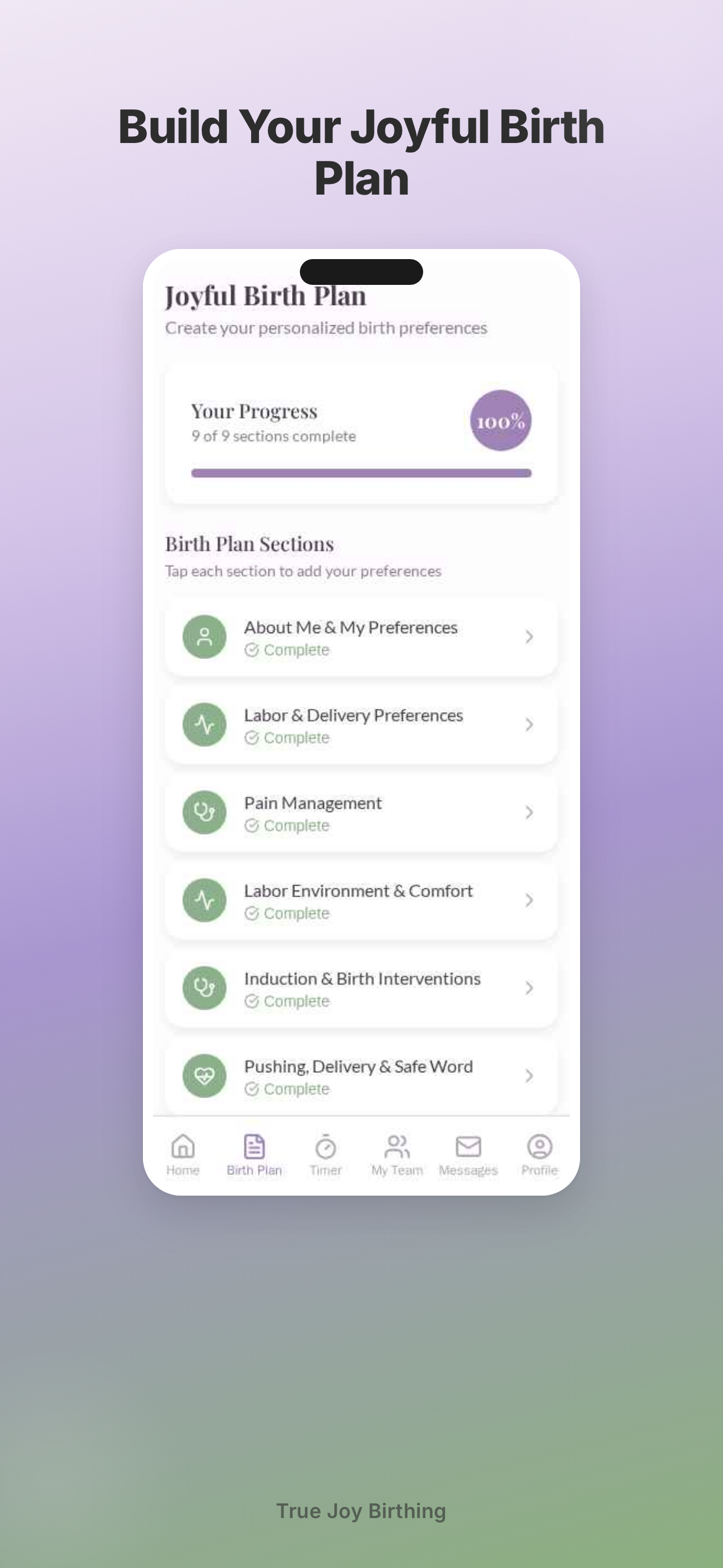
True Joy Birthing app birth plan showing completed sections for labor preferences, pain management, and delivery

Free app

Build your birth plan step by step in the app

Nine guided sections. Hospital preferences, pain management, who's in the room — all walked through so nothing gets missed.

  • Step-by-step guidance for every section
  • Update your plan anytime — not a static PDF
  • Share directly with your care team or doula

Download on the App Store
Get it on Google Play Coming soon

Free · No account needed to start

Free Download

Get the Free Joyful Birth Plan

Enter your name and email and we'll send you the free fillable PDF birth plan template plus access to all 5 guided walkthrough videos — a certified doula walking you through every decision.

No spam. Just your birth plan and occasional tips you can actually use.