July 9, 2026
Birth Plan Scenarios: Prepare for the Unexpected
Birth plan scenarios help you prepare for the unexpected. Learn what to include for inductions, C-sections, VBACs, and more. Start your plan today.

Birth plan scenarios are situation-specific plans that prepare you for the different paths your labor might take. Instead of one document that tries to cover everything, you write targeted preferences for your most likely scenario and a few contingency sections for when things shift.
After supporting hundreds of births, I can tell you that no labor follows a script. The moms who feel most prepared are the ones who thought through what they would want before they ever walked through the hospital doors. Not because they expected things to go wrong, but because they had already done the thinking while they were calm and clear-headed.
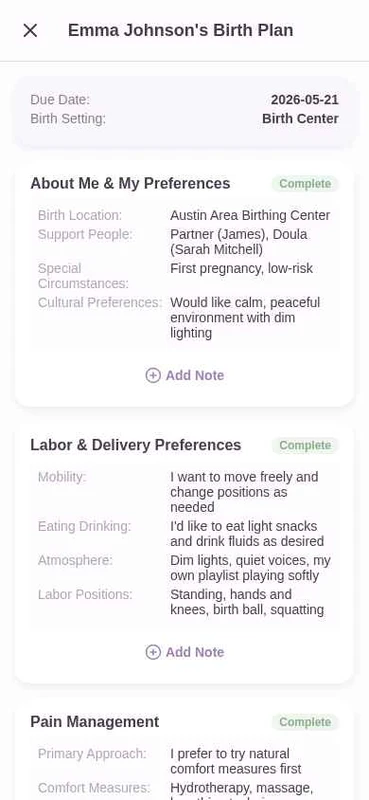
If you are just starting out, grab the Joyful Birth Plan template first. It gives you the structure to organize your preferences across every category. Then come back here to build out your scenario-specific sections.
What Are Birth Plan Scenarios and Why Do They Matter?
A birth plan scenario is a specific version of your birth plan built around a particular type of labor. Induction, planned C-section, VBAC, home birth, and unmedicated birth each have different decisions, priorities, and language that fit them.
Think of it this way: your primary birth plan covers what you want to happen. Your scenario plans cover what you want to happen if the situation changes. Most moms only need one primary plan with a short contingency section. But if your provider has mentioned an induction, or you are attempting a VBAC, or you have a planned C-section with preferences for a family-centered delivery, writing a second scenario plan helps you feel ready without being rigid.
The key is writing these while you are still pregnant and thinking clearly. In labor, you are making decisions in real time with limited information. Having already thought through your preferences for common scenarios means you can respond instead of react.
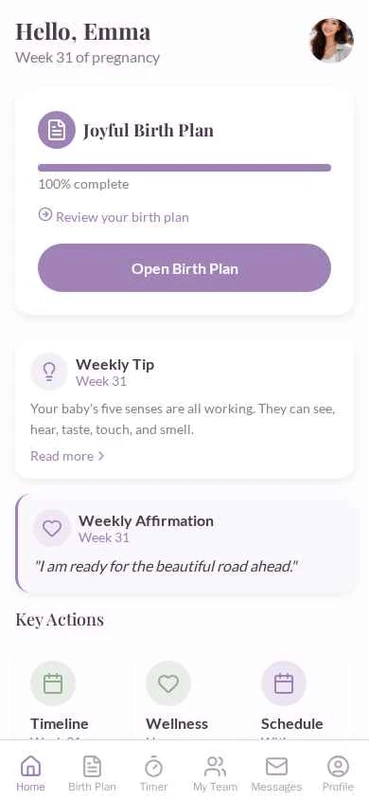
You can see all the scenario-based guides on our birth plan scenarios hub, or use the step-by-step birth plan walkthrough in the app to build each section.
What If You Need an Induction?
Labor induction is one of the most common birth plan scenarios. About one in three births in the United States involves some form of induction, whether scheduled for medical reasons or started after going past your due date.
When you are induced, the timeline and environment change. Pitocin contractions can come on faster and stronger than spontaneous labor. You may be confined to continuous fetal monitoring, which limits movement. And you may spend longer in the hospital before active labor even begins.
Include these preferences in your induction scenario:
- Whether you want the lowest effective dose of Pitocin or prefer a more active approach
- Your preference for cervical ripening methods (misoprostol, dinoprostone, or a Foley bulb)
- Whether you want to labor at home as long as possible before coming in, or prefer to be admitted early
- Pain management preferences specific to Pitocin contractions, which can be more intense
- Whether you want your water broken artificially or prefer to wait for it to break naturally
I have seen moms who wrote an induction plan feel dramatically more in control when the day came. They had already processed the decision, asked their questions, and knew what they wanted. If you want a full guide, read our induction birth plan companion for specific language templates.
What If You Need a C-Section?
Whether planned or unplanned, a C-section is a scenario every parent should think through. Even if you are planning a vaginal delivery, knowing your preferences for a surgical birth means you will not be caught off guard.
For planned C-sections, you have time to build a detailed plan. For unplanned ones, a few key preferences noted in advance can shape your experience even in a fast-moving situation.
Include these preferences in your C-section scenario:
- Whether you want a clear drape so you can see your baby being born
- Who you want in the operating room with you
- Whether you want immediate skin-to-skin in the OR if medically possible
- Your preference for delayed cord clamping in a surgical birth
- Whether you want the baby assessed on your chest or taken to the warmer first
- Music, lighting, or other environmental preferences if the situation allows
For a full template, our C-section birth plan guide walks through every decision point with specific language you can copy into your plan.
What If You Are Planning a VBAC?
Vaginal birth after Cesarean (VBAC) is a scenario that requires its own set of considerations. You are balancing the goal of a vaginal delivery with the reality of monitoring a prior uterine scar.
Most hospitals require continuous fetal monitoring for VBAC labors, which affects mobility. Some providers want you laboring in a facility equipped for an emergency C-section, which may limit your birth setting options. And the emotional component of a VBAC is significant. Many moms who had a difficult first birth are processing that experience while preparing for this one.
Include these preferences in your VBAC scenario:
- Your monitoring preferences and whether you want intermittent monitoring if your facility allows it
- How you want to be informed about progress and any concerns about scar integrity
- Your pain management preferences, including whether you want an epidural placed early as a safety measure
- What kind of support you want from your doula or partner during labor
- Your preferences if a repeat C-section becomes necessary
Our VBAC birth plan guide has specific language for each of these decisions.
What If You Are Planning a Home Birth?
Home birth is a scenario where your plan looks fundamentally different. You are working with a midwife in your own space, without the hospital's monitoring equipment and medical staff on hand.
Your birth plan for a home birth focuses on the environment, the transfer plan, and your preferences for the immediate postpartum period.
Include these preferences in your home birth scenario:
- Who you want present and their roles
- Your backup hospital and transfer plan if labor does not progress or complications arise
- Water birth preferences if you are using a birth pool
- Your preferences for the third stage of labor, including whether you want a physiologic delivery of the placenta or prefer active management
- Newborn procedures you want done at home versus deferred
If you are considering home birth, our home birth plan companion covers every section in detail. I also recommend looking into birth support in Austin, TX or Philadelphia, PA depending on where you live, because local midwife availability and state regulations shape what is possible at home. You can also browse our Texas birth support hub for statewide information.
What If Labor Happens Too Fast or Too Slow?
Two scenarios catch many families by surprise: precipitous labor (very fast) and prolonged labor (very slow).
Precipitous labor is defined as labor lasting under three hours from start to delivery. It is intense and can happen before you reach the hospital. If you have a history of fast labors or live far from your birth facility, write down what you want if you cannot make it in time. Who do you call? Where do you go? What supplies do you keep at home just in case?
Prolonged labor is more common. You may be in early labor for many hours before things pick up, or you may stall in active labor and need decisions about augmentation. Your scenario plan should address:
- How long you are comfortable laboring at home before heading in
- Whether you want to try natural augmentation methods before Pitocin
- Your preference for movement, position changes, and using a birth ball
- When you would consider an epidural if labor is dragging on and you need rest
I have supported moms in both situations. The ones who had written preferences were calmer and more confident, even when things moved faster or slower than expected.
How to Write Backup Preferences Into Your Birth Plan
Your backup preferences are the "if this, then that" section of your birth plan. This is where birth plan scenarios become practical.
Here is how I recommend structuring them:
- Start with your primary plan. Write out what you want for your most likely scenario in full detail.
- Add a contingency section at the bottom. Use a simple format: "If [situation changes], I prefer [alternative]." Keep each line to one sentence.
- Prioritize your top three non-negotiables. If only one thing survives a scenario change, what matters most? For many moms, it is skin-to-skin, delayed cord clamping, and who is present.
- Share with your provider in advance. Do not surprise your care team on labor day. Walk through your contingency preferences at a prenatal appointment so everyone is on the same page.
For a complete checklist of every decision you need to make, our birth plan checklist covers the full list from top to bottom. And if you want to see real examples of scenario plans, our birth plan examples page shows complete plans for different situations.
What to Do When Your Birth Plan Changes Mid-Labor
This is the scenario no one wants to think about, but it is the one I see most often. Your birth plan is not a contract. It is a communication tool that tells your care team what you prefer when things go as hoped. When they do not, you still have choices.
Here is what I tell every client:
- Ask for a moment. Unless it is a true emergency, you can ask your provider to pause and explain what is happening and what your options are. You do not have to decide instantly.
- Lean on your support person. Your partner or doula can advocate for you, ask clarifying questions, and remind the team of your written preferences.
- Your preferences still apply. Even in a C-section, you can ask for skin-to-skin. Even with an induction, you can ask for position changes. Your scenario plan is your roadmap.
- Processing afterward matters. If your birth did not go as planned, talk about it. A birth plan that changes is not a failure. But unprocessed disappointment can affect your postpartum experience.
If you are looking for a doula to support you through unpredictable labor scenarios, our guides to birth support in Chicago, IL and the Pennsylvania birth support hub can help you find local professionals who know the hospitals and policies in your area.
Frequently Asked Questions About Birth Plan Scenarios
What is a birth plan scenario? A birth plan scenario is a situation-specific version of your birth plan that covers a particular type of labor, such as induction, C-section, VBAC, or home birth. Each scenario includes language, priorities, and decisions that fit that situation.
Do I need more than one birth plan? Maybe. If your birth has clear next steps, writing both a primary plan and a contingency section helps you feel prepared. But most people only need one primary plan with a brief backup section. Write for your most likely scenario and add a few "if things change" lines.
What if my birth does not fit any scenario? That is common. If your situation is unique, pick the closest scenario and adapt. The language templates in each guide are starting points, not final drafts.
Can I change my birth plan during labor? Yes. Your birth plan is not a contract. It tells your team what you prefer if things go the way you are hoping. If your birth takes a different path, your nurses, doctor or midwife, and doula should talk you through what is changing and why. You get to decide in real time.
Where do I start? Pick the scenario that matches your situation, read through the guide, and use the Joyful Birth Plan template to write it out. If you want step-by-step help, the birth plan walkthrough in the app walks you through each section.
Written by Shelbi Kohler