July 12, 2026
Water Birth: What Every Expecting Mom Should Know
Water birth can reduce labor pain and shorten delivery. Learn the benefits, risks, and how to decide if laboring in water is right for you and your baby.

Water birth is a labor and delivery option where you spend part or all of your labor in a tub of warm water. Some women labor in the water and then get out for delivery, while others stay in the water and deliver their baby there. Both approaches have grown in popularity over the past two decades.
I've supported dozens of water births across hospitals, birth centers, and home births. Some were calm experiences where the water made a visible difference in how the mom handled contractions. Others taught me that water birth isn't the right fit for every situation. This guide walks you through what water birth involves, what the research says, and how to decide if it's worth pursuing.
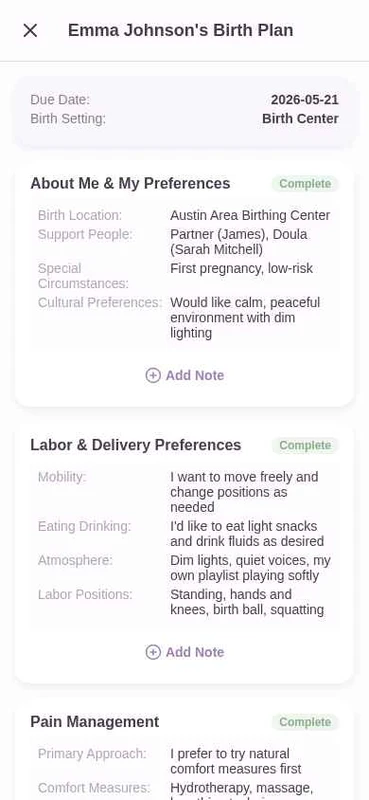
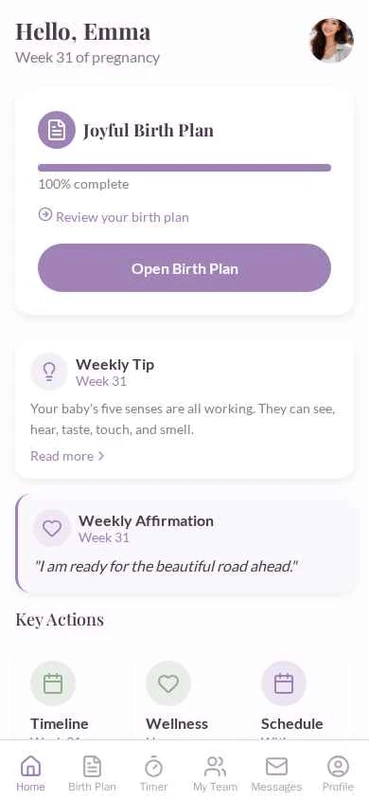
If you're early in your birth planning, the Joyful Birth Plan includes water birth preferences you can toggle on or off, so you can see how it fits into your overall plan.
What Is a Water Birth?
A water birth means you labor (and sometimes deliver) in a pool or tub of warm water maintained between 95 and 100 degrees Fahrenheit. The idea is that warm water helps your body relax, reduces the sensation of pain, and creates an environment that some providers believe is more similar to the amniotic fluid your baby has been living in for nine months.
There are two stages where water can be involved:
Laboring in water. You get into the tub during active labor to manage contractions. The buoyancy takes pressure off your joints and back, and the warmth helps your muscles relax. Many providers recommend this even if you plan to deliver on land, because the pain relief can be significant.
Delivering in water. You stay in the tub through the pushing phase and your baby is born underwater. The baby is brought to the surface within seconds, and they take their first breath when they contact air. This is the more controversial option, and not every hospital or provider offers it.
The distinction matters. Many hospitals offer water labor (getting in the tub to cope with contractions) but do not offer water delivery (actually giving birth in the tub). I'll cover why that is later in this post.
Water Birth Benefits: What the Research Shows
The research on water birth is a mixed bag, but there are several well-documented benefits, particularly for the labor phase.
A 2018 Cochrane review found that women who labored in water were less likely to use epidural anesthesia and reported higher satisfaction with their birth experience. The review found no difference in C-section rates, infection rates, or Apgar scores between women who labored in water and those who did not.
Here's what the evidence supports:
- Reduced pain perception. Warm water works as a natural analgesic. Women in water consistently report lower pain scores, especially during transition. One mom I worked with in Portland, OR described it as "the difference between being hit by a wave and watching it pass over you."
- Shorter first stage of labor. Some studies suggest water immersion can shorten the active phase by 30 to 45 minutes. The warmth and relaxation appear to help the cervix dilate more efficiently.
- Lower epidural rates. Women who labor in water are less likely to request an epidural. This is one of the most consistent findings across studies.
- Greater sense of control. Being in your own space, in water, gives you a physical boundary that many women find centering. You can move freely and the water blocks out some of the clinical environment.
The research on actually delivering in water (not just laboring) is less robust. The benefits above apply primarily to water labor. For water delivery, the evidence is thinner, and some organizations have raised concerns I'll address in the risks section.
If you're interested in other non-medical pain relief options, our natural labor pain management guide covers breathing techniques, position changes, and other strategies that pair well with water immersion.
Water Birth vs Land Birth: Key Differences
Women often ask me whether water birth is "better" than land birth. The honest answer is that it's different, not better. Here's how they compare in practical terms:
Pain management. Water provides continuous, full body pain relief without medications. On land, you rely on position changes, massage, counterpressure, and breathing. Water reduces pain more passively, you just get in and let it work.
Mobility. In water, buoyancy makes it easier to shift positions, squat, lean forward, or float. On land, gravity helps in some positions but fights you in others. The tub gives you a wider range of comfortable positions without fatigue.
Monitoring. On land, your nurse can use continuous electronic fetal monitoring. In water, monitoring is done with a waterproof handheld Doppler every 15 to 30 minutes. If your labor requires continuous monitoring, you'll need to leave the tub.
Interventions. Water births tend to involve fewer interventions. You can't have an epidural in the tub, IV lines limit mobility, and continuous monitoring isn't practical in water. This is a trade-off: fewer interventions if your labor is progressing normally, but you'll exit the tub if complications arise.
The choice between water and land birth depends on your risk factors, your birth setting, and what kind of experience you want. Neither is inherently safer for low-risk pregnancies when appropriate guidelines are followed.
Hospital Water Birth: What to Expect
Hospital water birth is the most variable option because policies differ dramatically between facilities. Some hospitals have dedicated birthing tubs and protocols for both water labor and water delivery. Others have tubs for labor only and require you to exit the water before pushing.
Here's what to expect if you're pursuing a hospital water birth:
Ask early. During your hospital tour or a prenatal visit, ask specifically: "Do you have labor tubs? Do you support water delivery, or water labor only?" Don't assume. I've had clients show up at hospitals expecting a tub only to find out the tub was removed during a renovation two years ago.
Not all hospitals offer water delivery. ACOG supports water immersion during the first stage of labor but does not endorse water delivery due to insufficient evidence on safety. Many hospitals follow this guidance, offering water labor but asking you to exit for delivery.
You'll need to meet criteria. Hospitals that offer water birth typically require you to have a low-risk pregnancy, be at least 37 weeks, have a single baby in head-down position, and have normal vital signs. If your labor becomes complicated (abnormal fetal heart rate, meconium-stained fluid, fever, or bleeding), you'll be asked to leave the tub.
Timing matters. Most providers recommend getting into the tub during active labor (around 5 to 6 centimeters dilated). Getting in too early can sometimes slow contractions. Your provider or doula can help you judge the right timing.
A mom I supported in Austin, TX planned a hospital water birth and the hospital had one labor tub. When she arrived, another patient was already using it. She labored on land and had a fine delivery, but the lesson is: ask whether the hospital has more than one tub and what happens if it's occupied. If you're planning a birth in Texas, our Texas birth support hub covers hospital policies across the state.
Where You Can Have a Water Birth
Your birth setting determines whether water birth is even an option. Here's the landscape:
Birth centers. Freestanding birth centers are the most likely to offer water birth. Many have dedicated birth pools and midwives trained in water delivery. Birth centers are designed around physiologic birth, and water immersion fits that philosophy. If you're looking for a birth center, our birth center finder can help you locate one near you.
Home births. Home birth midwives routinely offer water birth. You can rent or buy a birth pool for home use, and your midwife brings the equipment to set it up. This gives you the most control over your environment and the most reliable access to water delivery.
Hospitals. Hospital availability varies widely. Some have dedicated birthing tubs, others have standard bathtubs that work for labor but not delivery, and many have nothing at all. The trend is moving toward more hospitals offering water labor, but water delivery in hospitals is still relatively uncommon in the U.S.
If you're considering a home birth, our home birth plan guide covers what you need to prepare, including water birth logistics.
Who Is a Good Candidate for Water Birth?
Water birth isn't appropriate for every pregnancy. Providers generally recommend it for women who meet these criteria:
- Low-risk, uncomplicated pregnancy
- Single baby in head-down position
- At least 37 weeks (full term)
- Normal BMI and no significant health conditions
- No prior C-section (though some providers will consider it)
- HIV-negative and no active infections
- No preeclampsia, gestational diabetes with complications, or other medical concerns
If you have a high-risk pregnancy, are carrying multiples, or have a baby in breech position, water birth is not recommended. Your provider will screen you before approving a water birth plan.
I always tell my clients: write your water birth preferences into your birth plan, but hold them loosely. Birth is unpredictable. Having a preference is good. Being devastated if you can't use the tub is not. You can see examples of how to write flexible preferences in our birth plan examples collection.
Water Birth Risks and When to Avoid It
I want to be straightforward about the risks, because water birth is not risk-free, and some providers have legitimate concerns.
Infection risk. The main concern is infection from the water itself. When you deliver in water, the baby is born into water that contains your body fluids. Most studies have not found increased infection rates, but the theoretical risk exists, which is why some hospitals limit water birth to labor only.
Aspiration risk. A persistent concern is whether the baby could aspirate water. Babies don't take breaths until they contact air, and the dive reflex prevents aspiration underwater. However, case reports of near-drowning events exist, which is why ACOG takes a cautious stance on water delivery.
Cord avulsion. There have been rare cases where the umbilical cord snaps when the baby is brought to the surface too quickly. This is preventable with careful handling.
Temperature regulation. The water temperature needs monitoring. Too hot and it can raise your body temperature, affecting the baby. Too cold and the relaxation benefits are lost. Your provider will monitor the temperature throughout.
When to avoid water birth entirely:
- You have a fever or suspected infection during labor
- Meconium-stained amniotic fluid (the baby had a bowel movement in utero)
- Abnormal fetal heart rate patterns
- Excessive bleeding
- You need continuous monitoring or IV medications
- Your labor is progressing too slowly and augmentation is being considered
- You have herpes or other infections that can be waterborne
If any of these arise during labor, you'll be asked to leave the tub. This is standard practice and not a failure of your birth plan.
How to Plan for a Water Birth
If you've decided to pursue water birth, here's how to set yourself up for success:
Talk to your provider early. Bring it up at your first or second prenatal visit, not at 36 weeks. Your provider needs to confirm you're a candidate, and you need to know if their facility supports it.
Tour your birth setting. If you're planning a hospital or birth center birth, tour the facility and ask to see the tub. Take note of the size, whether it's a dedicated birth pool or a standard bathtub, and how private the space is.
Write it into your birth plan. Include specific preferences like:
- I would like to labor in water if a tub is available
- I prefer to deliver in water if my provider supports it and labor is progressing normally
- If I cannot use the tub, I would like access to a shower for hydrotherapy
- Please monitor my baby with a handheld Doppler while I'm in the tub
Prepare a backup plan. Tubs get occupied and labor doesn't always go as expected. Write your birth plan so it works whether or not you end up in the water. The Joyful Birth Plan lets you set water birth preferences alongside your land birth preferences.
Consider a doula. A doula can help you time when to get in the tub, suggest position changes in the water, and keep you hydrated. Learn more in our benefits of doula support guide.
If you're in the Pacific Northwest, Oregon birth support has some of the most water-birth-friendly hospitals and birth centers in the country. Portland in particular has strong water birth infrastructure.
Frequently Asked Questions
Is water birth safe?
Water labor (getting in the tub for pain relief during contractions) is widely considered safe for low-risk pregnancies. Water delivery is more debated. ACOG supports water labor but not water delivery due to insufficient safety evidence. Many midwives and birth centers do offer water delivery with good outcomes. Talk to your provider about what's right for your situation.
Does water birth hurt less?
Most women report that water significantly reduces pain perception, especially during transition. The warm water relaxes muscles and the buoyancy takes pressure off your back and pelvis. It's not pain-free, but many women find it reduces their need for an epidural.
Can I have a water birth at any hospital?
No. Hospital policies vary widely. Some have dedicated birth tubs and trained staff, others don't offer water immersion at all. Ask your provider or tour the hospital to find out what's available.
What if the tub is occupied when I arrive?
This happens. If your hospital has only one tub and it's in use, you'll labor on land. Ask during your hospital tour how many tubs they have and what happens when they're full.
Can I have a water birth after a C-section?
Most providers do not recommend water birth for VBAC because of the need for closer monitoring. If you're pursuing a VBAC, talk to your provider about whether water labor might be an option. Our VBAC birth plan guide covers this in detail.
How warm is the water in a birth tub?
The water is maintained between 95 and 100 degrees Fahrenheit, close to body temperature. Your midwife or provider checks it regularly. Water that's too hot can raise your temperature and affect the baby.
Water birth can be a wonderful option when it fits your pregnancy, your setting, and your preferences. The key is planning for it without being so attached to it that you can't adapt if labor takes a different path. Start with the Joyful Birth Plan to map out your preferences.
Written by Shelbi Kohler