June 23, 2026
6 Proven Benefits of Doula Support
Research proves the benefits of doula support: shorter labors, fewer C-sections, better outcomes. Learn the 6 evidence-backed advantages for your birth.
If you're wondering whether a doula is worth it, the research has a clear answer. The benefits of doula support are among the best-documented in maternal health, backed by Cochrane reviews, randomized trials, and decades of clinical data. I've seen this play out across hundreds of births I've attended as a doula, and the evidence matches what I've watched mothers experience firsthand: shorter labors, fewer interventions, higher satisfaction, and better outcomes for both mom and baby.
Let me walk you through what the research says, how these benefits show up in real births, and why doula support matters regardless of where or how you plan to deliver.
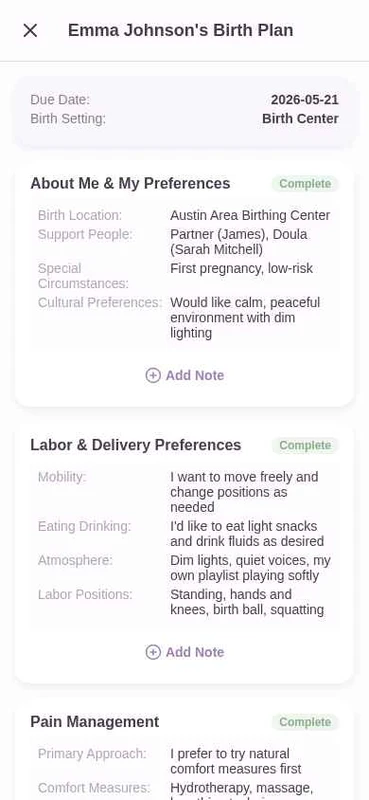
Before we dive into the specific benefits, if you haven't already, grab a copy of my free Joyful Birth Plan template to start documenting your own preferences alongside the evidence you'll learn here. For a broader overview of the research behind doula care, see our main benefits of a doula guide which covers the full Cochrane data in depth.
What Does Research Say About Doula Support?
The strongest evidence comes from a 2013 Cochrane review that analyzed 22 trials involving over 15,000 women across multiple countries and settings. The findings were remarkably consistent: continuous labor support from a doula or trained caregiver produced measurable improvements in birth outcomes regardless of the hospital, the country, or the mother's risk profile.
One mom I worked with in Denver put it simply after her second delivery. Her first was at a busy hospital with no doula, and she described it as "confusing and exhausting." Her second, with a doula by her side from start to finish, was "a completely different experience, even though the hospital was the same." She told me the difference was having someone whose only job was to be there for her, not to manage a room full of patients. That comparison captures what the data shows: doula support doesn't change the setting, it changes the experience.
The key findings the Cochrane review reported included a 28 percent reduction in Cesarean births, a 31 percent drop in synthetic Pitocin use, a 9 percent reduction in epidural requests, and labors that averaged 40 minutes shorter. These aren't small numbers, and they hold up across different types of hospitals and different populations.
Benefit 1: Shorter Labors With Fewer Medical Interventions
The 40-minute reduction in average labor length is meaningful not because 40 minutes is a long time, but because of what it signals. When labor stalls, hospitals typically turn to interventions like Pitocin (synthetic oxytocin) to restart or augment contractions. The fact that women with doula support had significantly less Pitocin use suggests that continuous support helps labor progress more efficiently on its own.
The mechanism here is well understood. Stress and fear trigger adrenaline, which counters oxytocin, the hormone that drives contractions. A doula's calming presence, comfort measures, position changes, and constant encouragement help keep oxytocin flowing naturally. It's not mystical. It's basic physiology.
One mother in Austin who had planned an unmedicated hospital birth ended up with a surprise breech presentation. She told me later that even though her birth didn't go remotely as she'd planned, her doula kept her calm through the whole thing. Because she avoided an epidural, she was never tethered to continuous monitors and could move freely, trying different positions as labor progressed. Her doula helped her stay in an upright, forward-leaning position that may have helped her baby navigate a tricky station. She credits the doula's confident presence and positional guidance with keeping her out of the operating room.
If you're planning a hospital birth, it's worth checking what policies your local hospital has around doula access. Austin, TX hospitals generally allow doulas, and I've compiled details on specific hospital policies in the Portland, OR and Austin, TX city guides.
Benefit 2: Lower Cesarean Rates Across All Settings
The 28 percent reduction in Cesarean risk is one of the most striking findings in the Cochrane review. In settings where women had no other continuous support (no partner, no family member staying throughout), the effect was even stronger. This matters because Cesarean birth carries higher risks of infection, longer recovery, and complications in future pregnancies.
What's particularly important is that doula support reduced C-section rates without increasing other interventions. This wasn't a tradeoff. Women with doulas simply had labors that progressed more smoothly and were less likely to stall, which is the most common reason for unplanned Cesareans.
I've seen this play out with a mom in Chicago who was terrified of needing a C-section after two previous losses. She hired a doula specifically to have someone who could help her navigate the hospital system and advocate for her preferences. When her labor slowed around 6 centimeters, her doula suggested position changes and counter-pressure techniques that helped her baby descend. She delivered vaginally after 14 hours and told me afterward, "I honestly don't think I would have made it without her. The nurses were great, but they had other patients. My doula had only me."
For more on doula care in different cities, check our Chicago doula guide and our Beaumont doula guide.
Benefit 3: Better Emotional Outcomes and Higher Birth Satisfaction
Perhaps the most overlooked benefit of doula support is how it affects a mother's emotional memory of birth. Women who had doula support consistently report higher satisfaction with their birth experience regardless of whether things went according to plan. This is a big deal because birth satisfaction is linked to lower rates of postpartum depression and easier bonding with the baby.
One mom from Portland told me about her experience with a failed home birth transfer. She had planned a home birth with a midwife, but after 26 hours of labor her baby wasn't descending and she needed to transfer to the hospital. She was exhausted, emotional, and scared. Her doula rode with her in the car, helped her communicate with the hospital staff, and provided continuous support through the eventual vacuum-assisted delivery. She told me later:
"When I got to the hospital I was so tired I could barely speak. My doula knew my birth plan inside and out, so she explained everything to the nurses while I just focused on breathing through contractions. She supported me for 32 hours total, through every phase of labor. My midwife was wonderful, but my doula was the one consistent presence the whole time. I honestly think I would have ended up with an emergency C-section if she hadn't been there helping me stay calm and try different positions."
Mother in Portland, OR, reflecting on her doula-supported home-birth transfer
The research backs this up. The Cochrane review found that women with continuous support were more likely to rate their birth experience positively, even when medical outcomes were similar to the control group. The presence of a trusted, knowledgeable person throughout labor seems to buffer the psychological impact of unexpected events.
If you want to prepare your birth preferences around emotional support, our Joyful Birth Plan template includes specific sections for comfort measures, communication preferences, and postpartum care goals.
Benefit 4: A Better Experience for Partners Too
Doulas don't replace partners. They give them a clear role and build their confidence. One of the most common fears I hear from partners is that they'll be useless during labor. A doula takes the pressure off by showing partners exactly how to help, which positions to try, where to apply counter-pressure, and when to step back and let the medical team work.
One mom I supported in Phoenix chose to hire a doula specifically because her partner couldn't handle medical settings. He struggled with needles, blood, and clinical environments, and she knew he wouldn't be able to provide the active physical support she wanted. Her doula handled the comfort measures and position coaching while her partner stayed by her head, holding her hand and talking to her. Afterward, her partner said he felt relieved and grateful that he could focus on emotional connection while the doula handled the physical support.
This is a surprisingly common scenario. Many partners worry about fainting, freezing up, or saying the wrong thing during labor. A doula fills those gaps and helps the partner feel useful rather than helpless.
For more on building your birth team, see our guide to choosing a doula and our comparison of doula vs midwife roles.
Benefit 5: Better Breastfeeding and Postpartum Outcomes
The benefits of doula support extend well past delivery. Studies show that women who had continuous labor support are more likely to initiate breastfeeding and to breastfeed exclusively at hospital discharge. The mechanism is practical, not mysterious. Doulas often assist with the first latch, help position the baby for effective feeding, and normalize the early challenges that can derail breastfeeding in the first 24 hours.
Beyond breastfeeding, the emotional buffer a doula provides during labor correlates with lower postpartum depression risk. Mothers who feel supported and heard during birth are less likely to experience the sense of powerlessness that can trigger postpartum mood disorders. This same support continues with postpartum doulas, who specifically help with feeding, sleep, recovery, and the overwhelming transition home.
For a deeper look at the emotional side of the fourth trimester, read our post on postpartum emotional care.
Benefit 6: Doula Support Works Across All Settings
One of the most important findings from the research is that doula support is effective regardless of where you give birth. The Cochrane review included hospitals, birth centers, and home birth settings, and the benefits held across all of them. Whether you're delivering at a large teaching hospital or planning a home birth with a midwife, continuous support improves outcomes.
If you're considering a birth center, our birth center guide covers how doulas work alongside midwives in those settings. For hospital births, our hospital birth plan guide includes specific language for ensuring doula access.
Are the Benefits of Doula Support Worth the Cost?
Doulas typically cost between $800 and $2,500 depending on your location, experience level, and what services are included. That's a real expense, and I don't want to minimize it. But it helps to look at the full picture. A Cesarean birth costs $15,000 to $30,000 more than a vaginal birth on average. A NICU stay adds tens of thousands more. Postpartum depression treatment costs families thousands in therapy, medication, and lost work.
From a strictly financial perspective, a doula who helps you avoid even one unnecessary intervention has likely paid for themselves several times over. But the real value isn't financial. It's the difference between feeling like your birth happened to you versus feeling like you were present and supported through it.
Costs vary significantly by region. Compare doula pricing in Seattle, WA versus Phoenix, AZ to see how geography affects rates. Our complete doula cost guide breaks down averages by city, and our detailed cost breakdown covers what factors influence pricing.
Frequently Asked Questions
Does science actually prove that doulas improve birth outcomes?
Yes. The Cochrane review of 22 trials with over 15,000 women found that continuous labor support from a doula or trained caregiver significantly reduces Cesarean rates by 28 percent, Pitocin use by 31 percent, and shortens labor by an average of 40 minutes. These findings have been replicated across multiple countries and hospital settings.
How does a doula reduce the risk of C-section?
Doulas reduce C-section risk primarily by helping labor progress more efficiently. They suggest position changes, provide comfort measures that keep oxytocin flowing, and help mothers stay calm and focused. The Cochrane review showed this effect was strongest in hospitals where women had no other continuous support from a partner or family member.
Is a doula worth it if I have a supportive partner?
Many of my clients have wonderful partners, and they still find enormous value in doula support. Partners often worry about being "useless" or freezing up during labor. A doula takes the pressure off by showing partners exactly how to help. A 2018 study in the Journal of Perinatal Education found that partners who attended birth with a doula reported significantly less anxiety and greater confidence in their ability to provide effective support compared to partners who attended without a doula.
Does doula support help with breastfeeding?
Research shows that women who have continuous labor support are more likely to breastfeed and to breastfeed exclusively at hospital discharge. Doulas often assist with the first latch, position the baby for effective feeding, and normalize the early struggles that can derail breastfeeding in the first 24 hours.
Can I have a doula if I'm planning a medicated hospital birth?
Absolutely. Doulas support all types of birth, including medicated hospital births and planned Cesareans. The Cochrane review's findings on reduced intervention rates held regardless of whether women ultimately used epidurals, and the 9 percent reduction in epidural requests was driven by women feeling they needed less pharmacological pain relief, not because doulas discouraged it. Many of my clients plan epidurals and still benefit from doula support through position changes during early labor, advocacy during decision-making, and continuous emotional presence that hospital staff with multiple patients can't always provide.
Does insurance cover doula services?
Insurance coverage for doula services is expanding rapidly. Some states now cover doula care through Medicaid, and several private insurers have added doula benefits in recent years. Check our Medicaid doula coverage guide for state-specific information, or our Texas birth hub for coverage details across Texas cities.
The evidence is clear: doula support is one of the few birth interventions that has strong evidence of benefit and no evidence of harm. It shortens labor, reduces interventions, improves satisfaction, and supports better postpartum outcomes including breastfeeding and emotional health.
If you're ready to start planning your birth with doula support, download our free Joyful Birth Plan template to document your preferences and bring them to your consultations. For city-specific doula options and pricing, explore our Colorado birth support hub or our Texas birth hub.
Written by Shelbi Kohler