June 14, 2026
Labor Pain Management Options Guide
Explore every labor pain management option from epidurals to breathing techniques. Learn what works, what to expect, and how to prepare for your birth.

There Is No Single "Right" Way to Manage Labor Pain
If you have spent any time reading birth stories online, you already know that labor pain is deeply personal. One birthing parent swears by their epidural, while another credits breathwork and a birth pool for getting them through. Neither perspective is wrong. The reality is that labor pain exists on a spectrum, and so do the tools available to you.
As a certified doula, I have supported hundreds of families through labor, and I can tell you with certainty: the best pain management plan is the one that feels right for you. Not your best friend, not your mother-in-law, not some stranger in a Facebook group. You.
This guide walks through every major labor pain management option — medical and non-pharmacological — so you can approach your birth with knowledge and confidence. I want you to feel empowered to make choices in real time, because labor rarely follows a script, and flexibility is your greatest asset.
Understanding What Labor Pain Actually Feels Like
Before we dive into options, let us talk about what you are actually managing. Labor pain is not a single sensation. It shifts and builds across phases:
- Early labor often feels like strong menstrual cramps or low back pressure. The contractions are shorter and further apart, giving you time to rest between them.
- Active labor ramps up the intensity. Contractions become longer, stronger, and closer together. This is when most people start reaching for coping strategies.
- Transition is the intense final stretch before pushing. Contractions may feel like they stack on top of each other, and this phase often brings shaking, nausea, or emotional release.
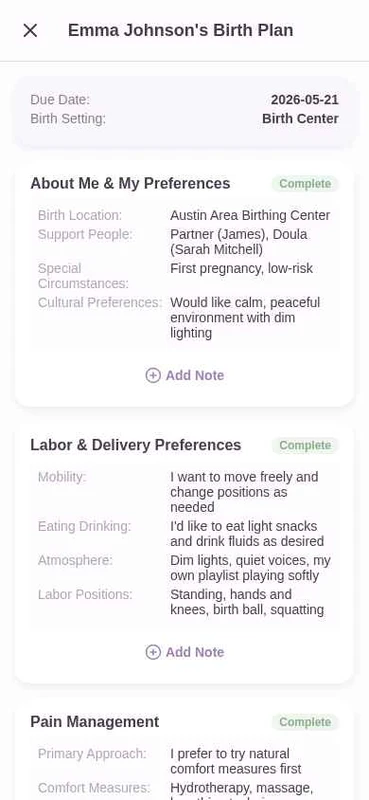
Every person experiences these phases differently. Your pain tolerance, your baby's position, your support environment, and even your emotional state all influence how labor feels. That variability is exactly why having multiple comfort measures in your toolkit matters — and why I always recommend writing them into your birth plan template before the big day.
Non-Pharmacological Pain Management Options
Non-pharmacological techniques are comfort measures that do not involve medication. They work with your body's natural pain-relief systems — endorphins, oxytocin, and the gate control theory of pain. Many of these are most effective in early to active labor, but several can be used throughout your entire labor.
Breathwork and Directed Breathing
Controlled breathing is the foundation of almost every childbirth education method for good reason. Slow, rhythmic breathing activates your parasympathetic nervous system, which tells your body that it is safe. When you hold your breath or breathe rapidly, you amplify tension and pain.
I teach my clients a simple pattern: inhale for four counts, exhale for six counts. The longer exhale signals your nervous system to relax. During transition, we might shift to a lighter, faster pace to ride the peak of each contraction.
Breathwork costs nothing, requires no equipment, and travels with you from home to hospital. It pairs beautifully with every other technique on this list.
Movement and Position Changes
Staying in one position during labor — especially lying flat on your back — works against your body. Movement helps your baby descend and rotate into an optimal position while giving your muscles a chance to release between contractions.
Walking, swaying on a birth ball, slow dancing with your partner, lunging, and rocking are all effective options. Changing positions every twenty to thirty minutes keeps labor progressing and prevents discomfort from building in one area.
If you are planning a hospital birth, I talk more about advocating for movement in my hospital birth plan guide, because some hospital routines can inadvertently limit your mobility.
Hydrotherapy (Water Immersion)
Water is one of the most powerful natural pain relief tools available. A warm shower directed at your lower back can ease back labor significantly. A birth pool or deep tub provides buoyancy that reduces the weight you carry and softens the sensation of contractions.
Research consistently shows that water immersion during the first stage of labor reduces pain perception, shortens labor, and decreases the use of additional pain medication. Many of my clients describe getting into the water as a turning point — the moment they found their rhythm again.
You do not need a water birth to benefit from hydrotherapy. Even twenty minutes in the tub during active labor can make a meaningful difference.
Massage, Counter Pressure, and Touch
Physical touch activates different nerve pathways that compete with pain signals — this is the gate control theory in action. Firm sacral pressure during a contraction can dramatically reduce back pain. Light stroking between contractions helps your body release tension and produces oxytocin, the hormone that drives labor forward.
As a doula, my hands are one of my most important tools. I also teach partners simple techniques so they can stay involved and helpful. Hip squeezes, shoulder massage, and steady counter pressure on the lower back are all techniques you can practice together before birth.
If you are looking for more natural comfort strategies, my natural labor pain management post goes deeper into hands-on techniques you can try.
Other Comfort Measures Worth Knowing
Several additional non-pharmacological tools deserve a mention:
- Heat and cold therapy — A rice sock warmed in the microwave or a frozen gel pack can target pain locally.
- Aromatherapy — Lavender, clary sage, and peppermint are popular for promoting relaxation or combating nausea.
- Vocalization — Low, open-throated sounds (moaning, humming, toning) release tension from your pelvic floor and core.
- Visualization and affirmations — Guided imagery or repeated positive statements help reframe your experience of pain.
- Acupressure — Specific pressure points on the hands, feet, and lower back can reduce pain and support labor progress.
None of these require medication, and they can all be combined freely. The more tools you have, the more adaptable you can be when labor takes an unexpected turn.
Medical Pain Management Options
Medical pain relief involves medication administered under the care of your provider. These options are typically available in hospital settings and sometimes in birth centers. Here is what you need to know about each one.
Epidural Analgesia
The epidural is the most commonly used medical pain relief method in the United States. A thin catheter is placed in the epidural space of your spine by an anesthesiologist, delivering a continuous infusion of medication that numbs the lower half of your body.
Pros: An epidural can provide excellent pain relief, allowing you to rest during a long labor. It does not make you drowsy or affect your mental state, so you remain alert and present. It can also lower stress hormones that might otherwise slow labor.
Cons: An epidural may reduce your ability to move and change positions, which can slow labor progress. It can cause a drop in blood pressure, itching, or fever. Pushing with an epidural sometimes takes longer because you lose the urge to push. There is also a small risk of a spinal headache if the dura is punctured.
Timing matters. Getting an epidural too early can slow labor, but waiting too long may mean the anesthesiologist cannot place it in time. This is a conversation to have with your provider well before labor begins.
Nitrous Oxide
Nitrous oxide, sometimes called "laughing gas," is a self-administered option available in a growing number of hospitals and birth centers. You hold a mask to your face and inhale the gas at the beginning of each contraction.
Nitrous does not eliminate pain — it takes the edge off and helps you feel calmer. Because you control the mask, you decide how much to use. The effects wear off within minutes once you stop inhaling, and it does not affect your mobility or your baby.
This option is ideal for birthing parents who want something to take the intensity down a notch without committing to an epidural. It is also helpful during transition or during suturing after birth.
Intravenous (IV) Medications
IV pain medications — usually opioids such as fentanyl, morphine, or Stadol — are administered through your IV line and take effect within minutes. They reduce your perception of pain and can help you relax between contractions.
These medications do cross the placenta, so providers typically avoid giving them close to delivery. They can make you feel drowsy, dizzy, or nauseated. Because the effect is systemic, you may feel groggy rather than clear-headed.
IV medications are best suited for early labor when you need rest, or for bridging the gap until an epidural can be placed.
Combining Approaches: The Best of Both Worlds
Here is something I want you to hear clearly: choosing an epidural does not mean you failed. Choosing an unmedicated birth does not make you a hero. These are not opposing teams.
Many of my clients plan for an unmedicated birth but stay open to medical options if things shift. Others plan for an epidural but use breathing, movement, and massage during early labor while they wait for the anesthesiologist. Some combine nitrous oxide with hydrotherapy during transition. The possibilities are endless.
What matters is that you feel informed and supported either way. I encourage all of my clients — whether in Philadelphia, Pittsburgh, or anywhere across Pennsylvania — to discuss their pain management preferences with their provider and their doula ahead of time.
How to Prepare Before Labor Begins
Preparation makes every option more effective. Here are the steps I recommend:
Take a comprehensive childbirth class. A good class covers both medical and non-pharmacological options in depth so you understand the benefits, risks, and logistics of each.
Write your birth plan. Your plan should list your preferred comfort measures, your feelings about medical pain relief, and any scenarios you want your team to prepare for. Grab my free birth plan template to get started.
Discuss your options with your provider. Ask what pain relief is available at your birth location, what the typical protocols are, and whether there are any restrictions based on your health history.
Practice comfort measures in advance. Breathing techniques, position changes, and massage strokes all benefit from practice. The more familiar they feel, the more naturally they will come during labor.
Build your support team. Whether that means hiring a doula, recruiting a knowledgeable partner, or both, having continuous support is one of the most evidence-based ways to improve your birth experience. If you are planning a birth in Austin, TX, a local doula can help you practice these comfort measures and tailor your pain management plan to your birth setting.
Making Peace With Changing Your Plan
Labor is unpredictable. You may plan for an unmedicated birth and find that the intensity overwhelms your coping strategies. You may plan for an epidural and discover that labor moves too fast for one. You may use a combination of everything and feel grateful for every tool available.
None of these outcomes is a failure. The goal is not a specific type of birth — the goal is a birth where you feel respected, informed, and supported.
I have seen clients switch plans mid-labor with grace and confidence because they had done the research beforehand. That confidence is what I want for you. When you know your options, you can pivot without panic.
You Deserve Support No Matter What You Choose
Pain management during labor is not a test of endurance or willpower. It is a personal decision shaped by your health, your values, your baby, and the circumstances of your labor on any given day. The more you know, the more empowered your choices will be.
If you are looking for personalized support as you navigate these decisions, I would love to walk alongside you. As a certified doula serving families across central Pennsylvania, I help you understand your options, practice comfort measures, and advocate for your preferences — whatever they are. Whether you are preparing for your first birth in Chicago, IL or refining your plan for your third, reach out anytime. You do not have to figure this out alone.
Frequently Asked Questions
What is the most common form of labor pain management?
The epidural is the most commonly used medical pain relief method in the United States. It provides excellent pain relief by numbing the lower half of your body through a thin catheter placed in your spine. However, it may limit your mobility and can have side effects like blood pressure drops or longer pushing stages.
Can I manage labor pain without medication?
Yes. Non-pharmacological options include breathwork, movement and position changes, hydrotherapy (shower or birth tub), massage and counter-pressure, heat and cold therapy, aromatherapy, vocalization, and visualization. Many of these work with your body's natural pain-relief systems (endorphins and oxytocin) and can be combined freely. A doula can teach you these techniques before labor and guide you through them in real time.
Does nitrous oxide actually help with labor pain?
Nitrous oxide does not eliminate pain, but it takes the edge off and helps you feel calmer. You hold a mask to your face and inhale at the beginning of each contraction. You control how much to use, and the effects wear off within minutes once you stop. It does not affect your mobility or your baby, making it a good middle-ground option.
When is the best time to get an epidural?
There is no single right answer. Getting an epidural too early can slow labor progress, but waiting too long may mean the anesthesiologist cannot place it in time. This is a conversation to have with your provider well before labor begins, and it should be reflected in your birth plan.
Can I combine natural and medical pain management?
Absolutely. Many families plan for an unmedicated birth but stay open to medical options if things shift. Others plan for an epidural but use breathing, movement, and massage during early labor while waiting. Some combine nitrous oxide with hydrotherapy during transition. The best pain management plan is the one that feels right for you, with flexibility for when labor takes an unexpected turn.
Written by Shelbi Kohler