June 9, 2026
Natural Birth Plan: Unmedicated Birth
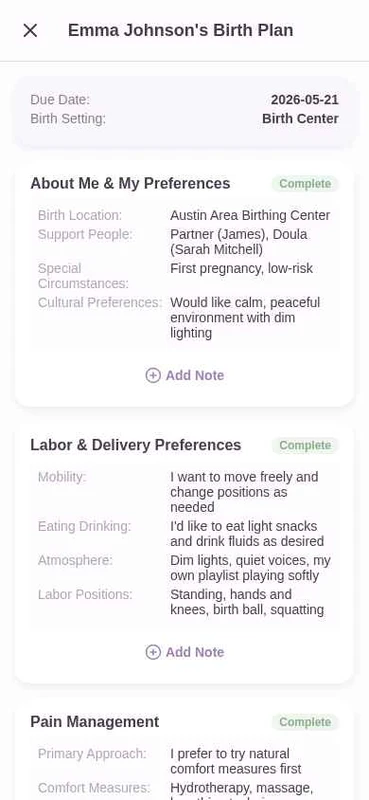
Natural birth plan for unmedicated delivery with comfort measures, labor positions, and hospital advocacy. Free template by a certified doula.
Planning a natural birth means you've decided to labor without an epidural or IV pain medication. That's a powerful choice, and a natural birth plan gives you the structure to make it happen on your terms, in any setting.
After supporting hundreds of unmedicated births and birthing seven children myself, I've seen how the right natural birth plan turns uncertainty into confidence. It tells your care team what you want, how you plan to manage labor, and what happens if you change your mind. Let me walk you through exactly what to include.
What Is a Natural Birth Plan?
A natural birth plan is a written document that shares your preferences for an unmedicated birth with your medical team. It covers how you want to manage pain, what comfort measures you'd like to use, who you want supporting you, and how you want your team to respond if you request medication or if complications arise.
Natural birth planning applies to any setting. Hospital, birth center, or home. The specific details change based on where you deliver, but the core is the same: you're choosing to labor without medication, and you want your team to support that choice rather than assume you'll change your mind.
A natural birth plan is not a declaration that you'll never accept medication. It's a clear statement that medication is not your first choice, and here's what you'd like to try first. This distinction matters because it keeps the door open without making you feel like you've failed if you decide an epidural is the right call in the moment.
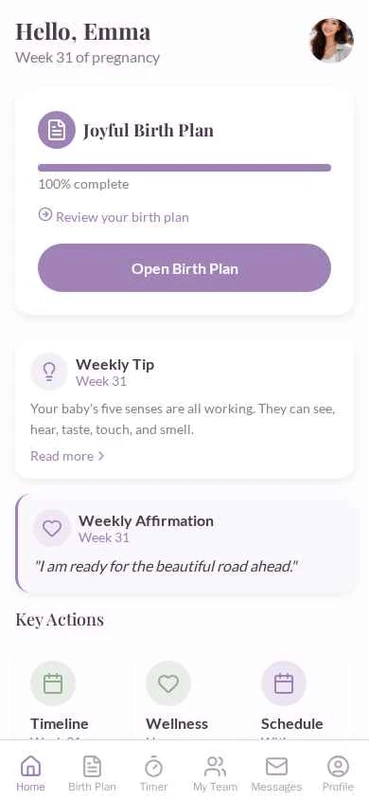
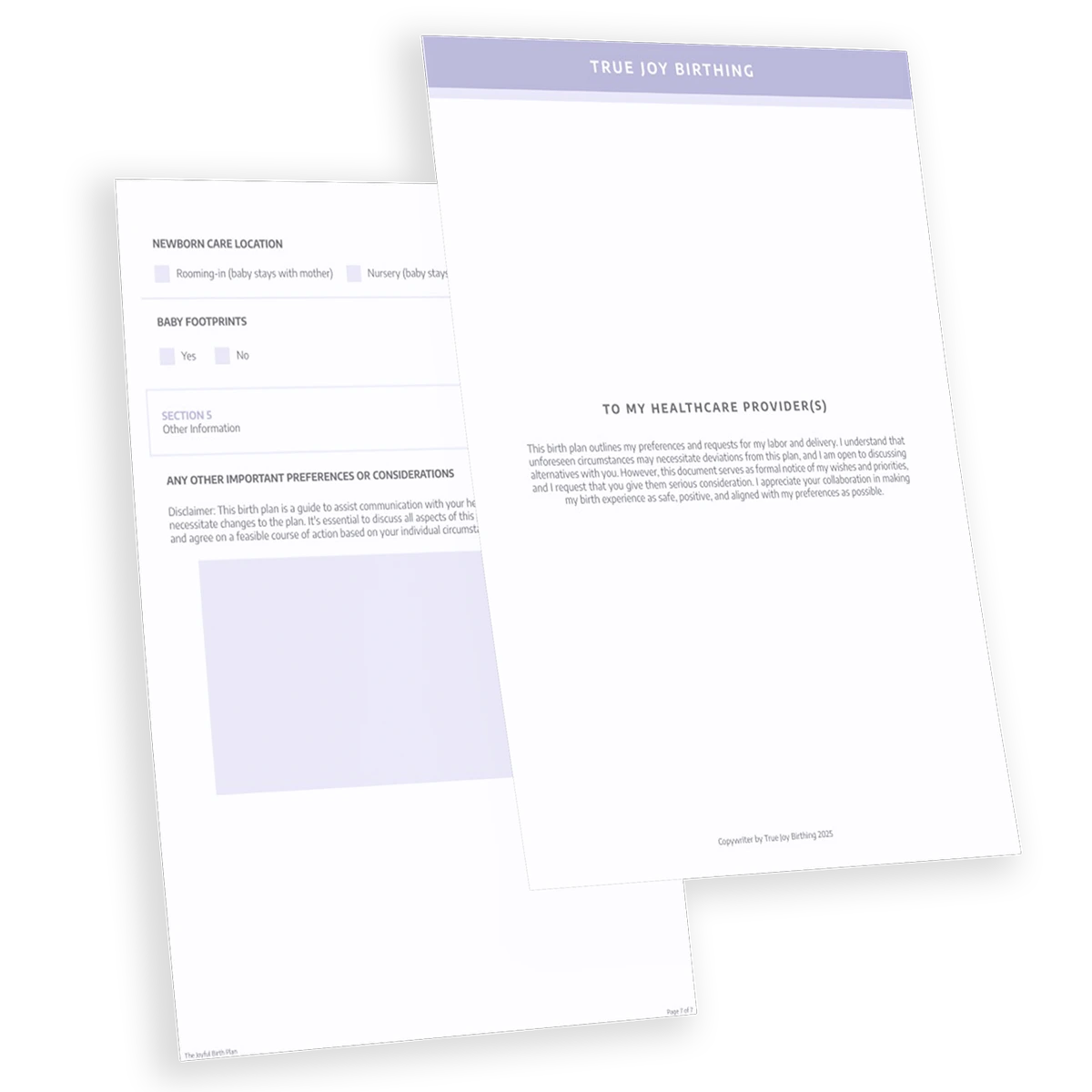
Ready to start writing? Our free Joyful Birth Plan template gives you a fill-in-the-blank starting point that works for any birth setting.
Why a Natural Birth Plan Is Different From a Standard Birth Plan
A standard birth plan covers your general preferences. A natural birth plan goes further because it addresses specific challenges that come with unmedicated labor.
Here's what a natural birth plan handles that a generic plan doesn't:
- Your pain management strategy. Unmedicated birth requires a plan for comfort measures, positioning, and breathing techniques. You can't wing this part.
- How to respond to offers of medication. Without a plan, a well-meaning nurse offering an epidural every 30 minutes can wear down your resolve. Your plan tells your team how to support you instead.
- Your support team's role. Your partner and doula need specific instructions on how to help you through the hardest parts of labor.
- Hospital-specific challenges. Hospitals default to interventions that aren't always necessary for low-risk natural births. Your plan addresses how you'd like to navigate those defaults.
A natural birth plan also addresses the reality that plans change. You might decide during labor that you want medication. Your plan should cover how you want that to happen, not pretend it won't.
The 7 Sections Every Natural Birth Plan Needs
1. Your Natural Birth Goals and Motivation
This section tells your team why you're choosing an unmedicated birth. It's not about convincing anyone. It's about giving context so your care team understands what matters to you.
Include:
- Your primary reason for choosing natural birth (recovery speed, wanting to feel the experience, avoiding medication side effects, previous birth experience)
- Any prior birth experiences that influenced your decision
- Whether this is your first birth or you've birthed unmedicated before
- Your level of preparation (childbirth classes, hypnobirthing, breathing practice, reading)
This section is short but meaningful. When your nurse understands that you're choosing natural birth because you recovered faster from your last unmedicated delivery, she's more likely to support your choice than offer medication at the first sign of discomfort.
2. Pain Management and Comfort Measures
This is the heart of your natural birth plan. Unmedicated birth doesn't mean unprepared birth. Your comfort measures strategy is how you get through the hard parts without medication.
Include:
- Breathing techniques you've practiced (slow breathing, patterned breathing, spontaneous sounds)
- Position preferences for labor (walking, birth ball, hands and knees, squatting, rocking)
- Hydrotherapy preferences (shower, birthing tub if available)
- Massage and counter-pressure preferences (where, how much pressure, who provides it)
- Warm or cold compresses for back labor
- Whether you want music, dim lighting, or specific ambiance
- Essential oils or aromatherapy you'd like to use
- Any hypnobirthing or meditation techniques you've practiced
The more specific you are, the better your support team can help. "I want to try comfort measures" is vague. "I plan to labor in the tub during transition, and I'd like my partner to apply counter-pressure on my lower back during contractions" gives your team something concrete to work with.
For a complete checklist of comfort measures and birth plan sections, our birth plan checklist covers every decision point.
3. Labor Movement and Positioning
Movement is one of the most effective tools for unmedicated labor. Being upright and changing positions helps your baby descend and keeps labor progressing. But in many hospitals, the default is for you to stay in bed.
Include:
- Your preference for freedom to move during labor (not confined to bed unless medically necessary)
- Positions you'd like to try (standing, squatting with a bar, birth ball, hands and knees, side-lying)
- Whether you want to use a birthing tub or shower for pain relief
- Your preference for intermittent monitoring so you can move freely (if your hospital allows it)
- How you'd like your support person to help with position changes
Hospitals that require continuous monitoring can make movement difficult, but wireless and waterproof monitors are increasingly available. Ask your provider what your hospital offers. For hospital-specific information on monitoring and movement policies, check our city guides for Portland, OR, Minneapolis, MN, and Austin, TX.
4. Medication Preferences and Boundaries
This section addresses the elephant in the room: what happens if you want medication during labor? Writing this down ahead of time removes shame and gives your team clear instructions.
Include:
- Whether you want pain medication offered to you during labor or only if you request it
- What you'd like your support team to say if you ask for an epidural (remind you of your goals? support whatever you decide? suggest trying comfort measures for 30 more minutes?)
- Whether there's a point in labor where you'd prefer not to be offered medication (transition, pushing)
- Your feelings about IV pain medication as a bridge (some mothers find a small dose takes the edge off enough to keep going without a full epidural)
- Whether you want your doula to help you evaluate the request before medication is administered
This section is personal and there's no wrong answer. Some mothers want their team to remind them why they chose natural birth when they ask for an epidural. Others want their team to say "you're doing incredibly, and I'll support whatever you decide right now." Write what you actually need, not what you think sounds strong.
5. Delivery and Immediate Postpartum Preferences
The moment your baby arrives is not the time to be figuring out what happens next. Your postpartum preferences matter just as much in a natural birth as in any other birth.
Include:
- Position preferences for pushing (squatting, side-lying, hands and knees, semi-reclined)
- Whether you want a mirror to see the birth
- Who you want to catch the baby or announce the sex
- Immediate skin-to-skin preferences (uninterrupted for the first hour if possible)
- Delayed cord clamping preferences
- Whether you want to touch the baby's head as it crowns
- Placenta delivery preferences
- Whether you want the baby bath delayed
- Who you want present during the golden hour
Natural births often have more immediate skin-to-skin time because you're not recovering from anesthesia. Plan for this. That first hour is a powerful bonding window, and your preferences help protect it.
6. Hospital Interventions and Advocacy
Natural birth in a hospital means navigating a system that's designed around interventions. This section tells your team which interventions you want to decline or delay unless medically necessary.
Include:
- Whether you'd like to decline routine IV access (a hep-lock instead, or declining unless needed)
- Your preference for intermittent vs. continuous fetal monitoring
- Whether you want to eat and drink during labor
- Whether you'd like to decline artificial rupture of membranes unless medically indicated
- Your preference for avoiding augmentation unless labor truly stalls
- Whether you want to be informed and asked before any intervention is started
- How you want your support team to advocate for you (asking for time, requesting to speak with the attending, documenting concerns)
Some of these preferences depend on your hospital's policies. That's why reviewing your plan with your provider before delivery day is essential. For more on hospital-specific planning, our hospital birth plan guide covers navigating medical environments in detail.
7. Backup Plan: When Natural Birth Needs Support
This section isn't about expecting things to go wrong. It's about being prepared so you don't lose your voice if your birth takes a different path.
Include:
- Your preferences if augmentation becomes necessary (which methods you're comfortable with, how long you'd like to labor before considering it)
- What you want if a C-section becomes necessary (partner in the OR, clear drape, skin-to-skin if possible)
- Whether you want your same newborn care preferences applied regardless of how your baby arrives
- How you want your team to communicate concerns (calmly, with time to ask questions when possible)
- Your preference for debriefing after the birth if the plan changes
A backup plan isn't failure insurance. It's preparation. Mothers who have a backup plan report feeling less anxious during labor because they know they've thought through the scenarios that worry them. For C-section planning specifically, our C-section birth plan guide covers surgical birth preferences in detail.
Natural Birth in a Hospital vs. Birth Center vs. Home
Your natural birth plan changes depending on where you deliver. Here's how the settings differ and what to plan for in each.
Hospital natural birth. This is the most common setting for natural birth, and it requires the most advocacy. Hospitals default to interventions. Your plan needs to address monitoring preferences, movement, eating and drinking, and how to navigate offers of medication. The advantage is immediate access to medical care if you need it.
Birth center natural birth. Birth centers are built around natural birth. Many of the hospital defaults you need to plan around (routine IV, continuous monitoring, restricted eating) aren't standard at birth centers. Your plan can focus more on comfort measures and support. The trade-off is that birth centers transfer to hospitals if complications arise, so your plan should include transfer preferences.
Home natural birth. Home birth gives you the most control over your environment and experience. Your plan focuses on your birth team, your supplies, and your transfer plan. Home birth requires a low-risk pregnancy and a qualified midwife. Our home birth plan guide covers home birth planning in detail.
For local birth center and hospital information, our city guides provide location-specific details. Check out Chicago, IL, Aurora, CO, and Beaumont, TX for hospital and birth center options in your area. Our Colorado birth support hub also has statewide information.
Preparing Your Body and Mind for Natural Birth
A natural birth plan works best when it's backed by preparation. Writing preferences on paper isn't the same as training for the physical and mental challenge of unmedicated birth.
Take a childbirth class. Not just any class. Look for one that focuses on unmedicated birth techniques. Hypnobirthing, Bradley Method, and Lamaze all teach specific comfort strategies that you'll use during labor.
Practice your breathing. The breathing techniques that work in labor are the ones you've practiced enough to be automatic. Start practicing at 28-30 weeks so it's second nature by delivery day.
Build your support team. A doula is one of the strongest predictors of a successful unmedicated birth. Research shows that mothers with continuous doula support are less likely to use pain medication and more likely to report a positive birth experience. Our what is a doula guide explains how doula support specifically helps during natural birth.
Prepare your body. Regular exercise, perineal massage, and optimal fetal positioning techniques (like spending time on hands and knees in late pregnancy) can all support an easier labor.
Plan for postpartum recovery. Unmedicated birth often means faster initial recovery, but you still need a plan for rest, nutrition, and support after birth. Our postpartum doula guide covers what to expect and how to get support.
Talk to Your Provider Before Delivery Day
Your natural birth plan needs your provider's input before delivery day. Schedule a dedicated appointment around 32-34 weeks to walk through your plan together.
This conversation does three things:
- It flags conflicts early. If your hospital has a policy that conflicts with one of your preferences, you'll know before you're in labor and have time to find alternatives.
- It tests your provider's support. A provider who respects your natural birth goals will engage with your plan constructively. A provider who dismisses your preferences is a red flag worth addressing before delivery day.
- It gets your plan into your chart. After your provider reviews your plan, ask them to note it in your chart. This ensures that whoever is on call when you arrive has access to your preferences.
Bring a printed copy. Walk through it section by section. Ask what's realistic and what might need adjusting. Then bring several copies on delivery day. One for your chart, one for your nurse, one for you.
If you're looking for doula support, our how to choose a doula guide covers what to look for in a doula who specializes in natural birth support. And if you're in a state where Medicaid covers doula services, like Raleigh, NC or Aurora, CO, check our city guides for coverage details.
Free Natural Birth Plan Template
Ready to put your plan together? Our free Joyful Birth Plan template gives you a fill-in-the-blank format that covers every section above, with space for your comfort measures strategy and medication boundaries. Print it, customize it, and bring it to your next prenatal appointment.
For real examples of how other mothers have structured their natural birth plans, our birth plan examples page shows completed plans across different birth settings.
You deserve a natural birth that reflects your preparation, your courage, and your priorities. A thoughtful natural birth plan makes that possible. Start with our free template, make it yours, and walk into that delivery room knowing you've done the work to prepare for the birth you want.
Frequently Asked Questions
Can I have a natural birth in a hospital?
Yes. Many mothers successfully have unmedicated births in hospital settings. It requires more advocacy than a birth center or home birth because hospitals default to interventions like continuous monitoring and IV access. A clear natural birth plan, a supportive provider, and a doula all increase your chances. Our hospital birth plan guide covers navigating hospital protocols in detail.
What if I change my mind during labor?
That is completely okay. A good natural birth plan includes a section on what you want your team to do if you ask for medication. Some mothers want their partner to remind them of their goals. Others want immediate support for whatever they decide. Write what you actually need, not what you think sounds strong.
Does a doula help with natural birth?
A doula is one of the strongest predictors of a successful unmedicated birth. Research shows that mothers with continuous doula support are less likely to use pain medication and more likely to report a positive birth experience. A doula provides hands-on comfort measures, positioning guidance, and emotional support throughout labor. See our what is a doula guide for more.
What is the difference between a natural birth plan and a standard birth plan?
A standard birth plan covers general preferences for labor and delivery. A natural birth plan goes further by addressing specific challenges of unmedicated labor: your pain management strategy, how to respond to offers of medication, your support team's specific roles, and navigating hospital defaults that assume you will want an epidural.
How do I prepare my body for a natural birth?
Take a childbirth class focused on unmedicated techniques (Hypnobirthing, Bradley, or Lamaze). Practice breathing daily starting at 28 to 30 weeks. Stay active with walking and prenatal exercise. Consider perineal massage in late pregnancy. Most importantly, build a support team that believes in your ability to do this.
Written by Shelbi Kohler