December 8, 2024
Debunking Doula Myths: What Doulas Do
Common doula myths debunked — learn what doulas actually do (and don't do), whether they replace medical staff, and how doula support reduces C-section rates.
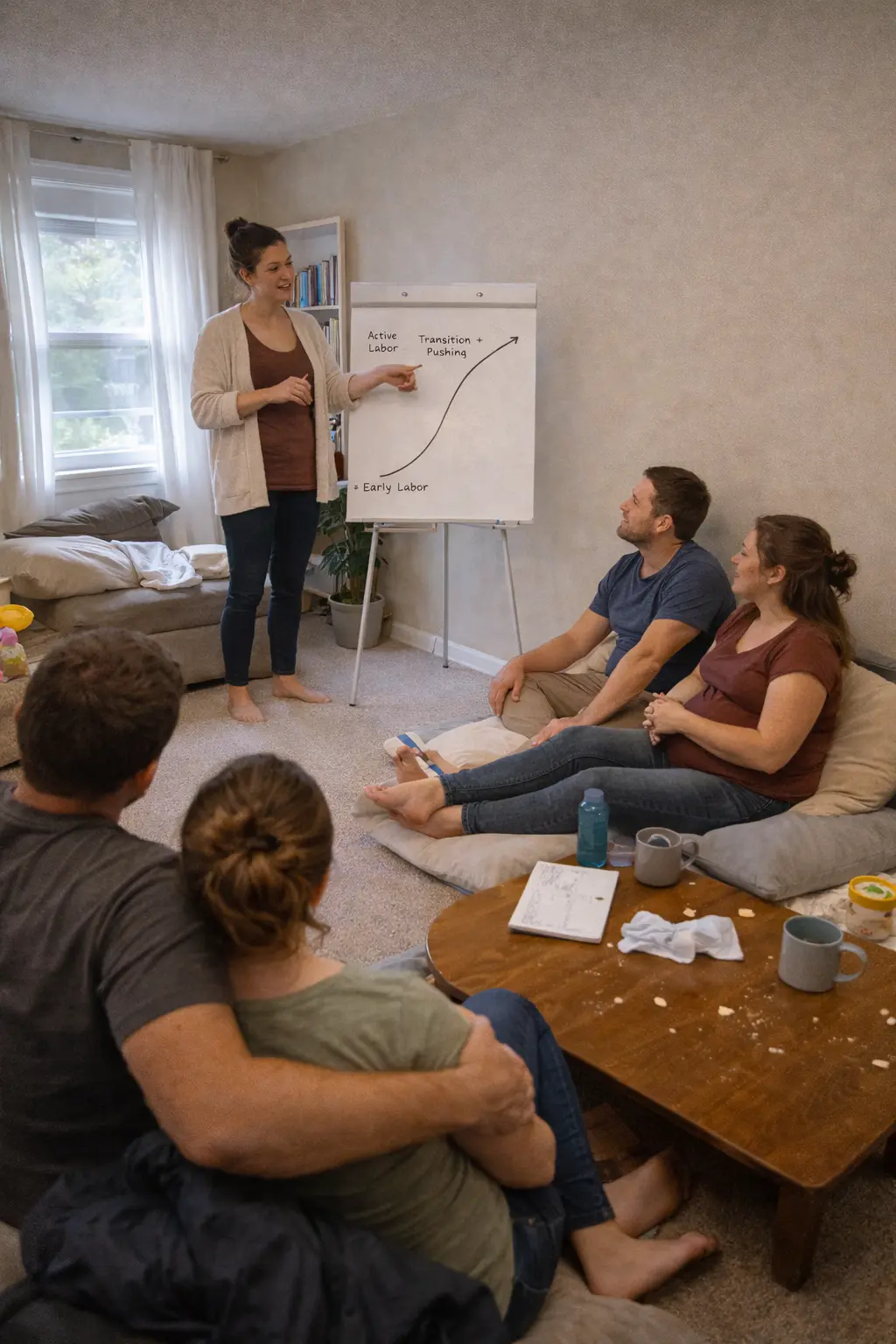
After seven births of my own and supporting hundreds of families through labor, I've heard just about every misconception about doulas. Some are funny. Some are frustrating. Most come from people who've never actually worked with one.
Let me clear the air. Because the myths floating around about what doulas do — and don't do — are keeping families from getting support that genuinely makes a difference.
Research from the American College of Obstetricians and Gynecologists shows that continuous labor support reduces C-section rates by up to 50%. That's not a small number. That's half the surgeries that didn't need to happen because someone was in the room, paying attention, the whole time.
Myth #1: Doulas Replace Your Partner
This one comes up at almost every consult. Partners worry I'm going to elbow them out of the way. Moms worry hiring a doula means their partner won't get to participate.
Here's what actually happens: I make partners better at supporting you.
Your partner knows you. They love you. They know that you hate being touched on your lower back and that you need cold water, not warm. What they don't know is how to use counter-pressure during contractions, which positions help labor progress, or when to suggest a walk vs. when to let you rest.
I've watched partners go from anxious and unsure to confident and hands-on — because they had someone showing them what to do instead of standing helplessly on the sidelines. One dad I worked with through our Aurora, CO birth support services told me after his daughter's birth, "I finally felt useful instead of just scared."
Your partner will always be your person. I'm there to help them help you.
Myth #2: Doulas Are Only for Natural Birth
If I had a dollar for every time someone said "I'm getting an epidural, so I don't need a doula," I could buy a lot of snacks for a lot of postpartum visits.
Doulas support all births. Planned epidural at 2 centimeters? I'm there. Scheduled C-section? I'm there. VBAC attempt? Also there. Unmedicated home birth? Yes, there too.
Here's why: even with an epidural, you still need someone to help you change positions so labor keeps progressing. You still need someone to explain what's happening when the monitor beeps or the nurse mentions Pitocin. You still need emotional support when things take longer than expected — because labor with an epidural can still take a long time.
After a C-section, I help with initial breastfeeding, answer questions about recovery, and make sure you understand what's happening before you're wheeled into the OR. None of that depends on how you chose to manage pain.
I don't have a birth preference for you. I have your birth preference for you.
Myth #3: Doulas Make Medical Decisions or Interfere with Your Doctor
Let me be really clear about this: doulas do not make medical decisions. Period.
I don't check your cervix. I don't monitor fetal heart tones. I don't diagnose complications. I don't tell you whether to get an epidural, accept Pitocin, or consent to a C-section. Those conversations happen between you and your medical team.
What I do is make sure you understand what's being offered and why. When a nurse says "We'd like to augment your labor," I can help you ask: "What does that mean? What are the benefits and risks? Are there alternatives? Can we have ten minutes to think about it?"
I bridge the gap between medical language and real understanding. I help you find your voice in a room where it's easy to feel like you don't have one. But the decisions are always yours — and your doctor's.
After supporting hundreds of births alongside nurses, midwives, and OBs, I can tell you that most medical professionals appreciate having a doula in the room. We stay in our lane. We communicate birth preferences clearly. We keep clients calm and informed, which makes the whole team's job easier.
Not sure what your hospital's doula policy is? Our city guides — like Austin, TX and Aurora, CO — break down which hospitals allow doulas and what to ask during your tour.
Myth #4: Doulas Are Too Expensive
I understand this one. Doula fees typically range from $800 to $2,500 depending on where you live, and that's real money. But let me give you some context.
Continuous doula support is associated with:
- 39% fewer C-sections
- Shorter labors (an average of 41 minutes shorter)
- Lower rates of assisted delivery
- Higher satisfaction with the birth experience overall
A C-section costs thousands of dollars more than a vaginal birth — sometimes $10,000+ more when you factor in longer hospital stays and recovery time. Even from a purely financial angle, doula support often pays for itself.
And the cost conversation doesn't stop at the sticker price:
- Many doulas offer sliding-scale fees or payment plans
- Some insurance plans now cover doula services — especially Medicaid in states that have expanded coverage
- HSA and FSA funds can often be used for doula care
- Some hospitals have free volunteer doula programs
If cost is the thing holding you back, check our full doula cost guide for specifics in your area. And don't be afraid to ask doulas about payment plans — most of us got into this work because we believe everyone deserves support, not just people who can pay full price.
Myth #5: Doulas and Medical Staff Don't Get Along
This myth probably comes from the idea that doulas push clients toward unmedicated birth or argue with doctors. Neither is true for professional doulas.
Every time I walk into a hospital, I introduce myself to the nursing staff. I share my client's birth preferences. I ask about hospital protocols. I make it clear that I'm there to support my client — not to challenge the medical team.
The result? Nurses have told me they love when their patients have doulas. One L&D nurse I work with at a hospital in Austin, TX put it this way: "When a doula is in the room, my patient is calmer, better informed, and needs less intervention. That's better for everyone."
Here's how the roles break down:
- Doula: Emotional support, comfort measures, advocacy, continuous presence
- Nurse: Clinical monitoring, medication administration, medical assessments
- Doctor/Midwife: Clinical decisions, delivery, managing complications
We each have a job. When we all do ours well, the family wins.
Myth #6: You Only Need a Doula If It's Your First Baby
First-time parents absolutely benefit from doula support — everything is new, and having a steady presence makes a real difference. But experienced parents need doulas too.
Your second or third birth is a different birth, not a repeat of the first. Maybe you had a tough experience last time and want things to go differently. Maybe your previous provider didn't listen to you. Maybe you're planning a VBAC and need someone who understands what that entails. Maybe you just don't want to do this alone again.
One mom I worked with in Denver was having her fourth baby. She told me, "I didn't know birth could feel like this." She'd never had continuous support before. Four births, and it took the fourth one for her to realize what she'd been missing.
What Actually Happens When You Hire a Doula
So if the myths aren't true, what does a doula actually do?
During pregnancy, we meet to talk through your preferences, answer questions, and build trust. During labor, I provide:
- Continuous physical support — position changes, counter-pressure, breathing techniques, heat and cold therapy
- Emotional support — reassurance, encouragement, a calm presence when things feel overwhelming
- Informational support — explaining what's happening, helping you understand your options, making sure you can give informed consent
- Partner support — showing your partner how to help, giving them breaks, keeping them fed and rested
After birth, I stay to help with initial breastfeeding, make sure you're comfortable, and process what just happened. Most doulas also offer at least one postpartum visit to check in on recovery.
Doulas complete certification through organizations like DONA International and CAPPA, which require:
- 25+ hours of classroom training
- Attendance at 3–5 supervised births
- Ongoing continuing education
- Ethics and scope-of-practice training
This isn't something we pick up from a weekend workshop. It's real training with real standards — and it makes a real difference in birth outcomes.
The Bottom Line
Most of the myths about doulas come from people who haven't worked with one. The families I've supported don't wonder if a doula was "worth it." They know.
Continuous support during labor means shorter labors, fewer interventions, better communication with your medical team, and higher satisfaction with your birth experience. That's not my opinion — that's what the research shows.
If you're still on the fence, start with our guide to what a birth doula actually does. And when you're ready to find the right person for your birth, our doula interview questions will help you hire with confidence. We also offer local birth support guides for families in Portland, OR and other cities across the country.
You deserve support. Not the kind that replaces your partner or argues with your doctor — the kind that holds space, shares information, and provides continuous support through every phase of your labor.
Written by Shelbi Kohler