June 10, 2026
Birth Plan Examples: Every Birth Type
See real birth plan examples for hospital, natural, VBAC, and C-section births. Learn what to include and how to write a birth plan that works.
Let's talk about birth plan examples — because seeing a real one makes the whole process feel doable. After writing birth plans with hundreds of families and putting together seven of my own, I've learned that the best birth plan isn't the longest one. It's the one that actually works in the room when you're in labor.
A birth plan is a written document that communicates your preferences for labor, delivery, and postpartum care to your medical team, doula, and partner. It's not a contract — it's a guide that helps everyone understand what matters most to you.
One Portland mom preparing for birth told me she brought a three-page birth plan to her first birth and the nurse barely looked at it. For her second, she used a single page with the essentials highlighted — and her care team actually read it. She said the difference wasn't the content, it was the format.
The Essential Birth Plan Template
Before we get into specific scenarios, here's the core structure every birth plan should include. This is the foundation — everything else is a variation based on your specific situation.
Your information Your name, due date, provider, hospital or birth center, partner and support team names. Keep it simple so the intake nurse can quickly match it to your chart.
Labor preferences Who you want in the room, your preferred comfort measures, mobility preferences (walking, changing positions, using a birth ball or tub), whether you want intermittent or continuous fetal monitoring, and your stance on induction methods if needed. If your provider schedules an induction, use our induction birth plan template to adapt these preferences for that scenario.
Pain management Your preferences for non-medical comfort measures (massage, counter-pressure, breathing techniques, hydrotherapy) and medical pain relief (nitrous oxide, IV pain medication, epidural). Be specific about what you want — and what you want to avoid.
Delivery preferences Your preferences for pushing positions, perineal support (warm compresses, perineal massage), delayed cord clamping, skin-to-skin contact, and who cuts the cord if that matters to you.
Newborn care Preferences for vitamin K, eye ointment, Hep B vaccine, feeding choices, and whether baby stays in the room or goes to the nursery for any period.
Emergency scenarios Your preferences for if things don't go as planned — who makes decisions, what interventions you're open to, and what you absolutely want (like skin-to-skin after a C-section if possible).
Hospital Birth Plan Example
This is the most common type of birth plan and the one that needs to be the clearest and most concise — hospital staff are busy and will appreciate something they can scan in 30 seconds.
Scenario: First-time mom planning a hospital birth with epidural, wants partner and doula present.
Key preferences:
- I want to labor at home as long as possible before coming to the hospital
- I'd like intermittent fetal monitoring so I can move around during early labor
- I want to use the tub for pain management before getting an epidural
- Please allow eating and drinking during early labor
- My partner and doula will be with me at all times
- I want delayed cord clamping (at least 60 seconds)
- Please place baby skin-to-skin immediately after birth
- I'm planning to breastfeed — please don't offer formula or pacifiers without asking me first
One Austin mom working with birth support shared that the most important part of her hospital birth plan was a single line: "Please explain everything before doing it." She said that simple request changed how her nurses communicated with her throughout labor and made her feel like a partner in her care, not just a patient.
Natural Birth Plan Example
Scenario: Mom planning an unmedicated hospital birth with doula support.
Key preferences:
- I plan to labor without an epidural or IV pain medication
- Please avoid offering or recommending pain medication — I will ask if I need it
- I want freedom to walk, change positions, and use the birth ball
- I'd like a heplock (not a full IV) for hydration and emergencies
- Please minimize vaginal exams — I'd like them only when medically necessary
- I want to push in whatever position feels right in the moment
- Please use warm compresses for perineal support
- I want delayed cord clamping and immediate skin-to-skin
- My doula will guide my breathing and positioning — please give us space to work together
VBAC Birth Plan Example
Scenario: Mom planning a VBAC (vaginal birth after cesarean) in a hospital that supports VBACs.
Key preferences:
- I am planning a VBAC and have discussed the risks and benefits with my provider
- I want continuous fetal monitoring per hospital VBAC protocol
- I'd like intermittent monitoring if continuous allows for breaks
- I want to be mobile during early labor — walking, rocking, using the birth ball
- Please avoid Pitocin unless medically necessary (higher contraction intensity can increase uterine rupture risk for VBAC)
- I want an epidural available if I need it but prefer to labor without if possible
- My doula and partner will be with me throughout
- I want delayed cord clamping and immediate skin-to-skin if baby is stable
- If a repeat C-section becomes necessary, I want my partner in the OR and skin-to-skin in recovery as soon as possible
One Aurora doula supporting VBAC families shared that most of her VBAC clients found that hospitals with dedicated VBAC coordinators had much smoother experiences. She said the key was confirming the hospital's VBAC policies before creating the birth plan — not assuming anything.
C-Section Birth Plan Example
Even if you're planning a C-section, a birth plan helps you communicate what matters. Many elements of a vaginal birth plan still apply.
Scenario: Planned C-section with specific preferences for the experience.
Key preferences:
- I want my partner in the OR with me
- Please lower the drape so I can see baby being born
- I want delayed cord clamping (at least 60 seconds) if medically possible
- Please place baby skin-to-skin on my chest in the OR if baby is stable
- If I'm unable to hold baby, please have my partner do skin-to-skin
- I want to attempt breastfeeding in the recovery room
- Please minimize separation from baby — keep baby in my room unless medically necessary
- I want my support person with me in recovery
One thing I hear again and again from families after a C-section is, "I wish I had known I could ask for skin-to-skin in the OR." Many hospitals now support this, but not all providers offer it — you have to ask. Put it in your birth plan.
How to Write a Birth Plan That Works
After watching hundreds of families walk through L&D with their birth plans, here's what I've learned separates a plan that gets read from one that gets ignored:
Keep it to one page. Hospital staff don't have time to read a novel. One page, clear sections, bullet points. If it doesn't fit on one page, cut the nice-to-haves and keep the must-haves.
Use positive language. Instead of "I don't want an epidural," write "I plan to labor without an epidural and will ask if I change my mind." Same preference, but the second version frames it as a choice rather than a refusal.
Prioritize your top three. If nothing else, pick the three things that matter most and make them bold or highlighted. If your birth plan gets lost in the chaos, your care team will remember what was highlighted.
Share it early. Give your birth plan to your provider at a prenatal visit, not when you show up in labor. Your provider can flag anything that won't work at their hospital before you're in the delivery room.
Bring copies. Bring at least three printed copies — one for your chart, one for the L&D nurse, one for your partner or doula. Digital copies on your phone are great backup, but paper travels better in a hospital.
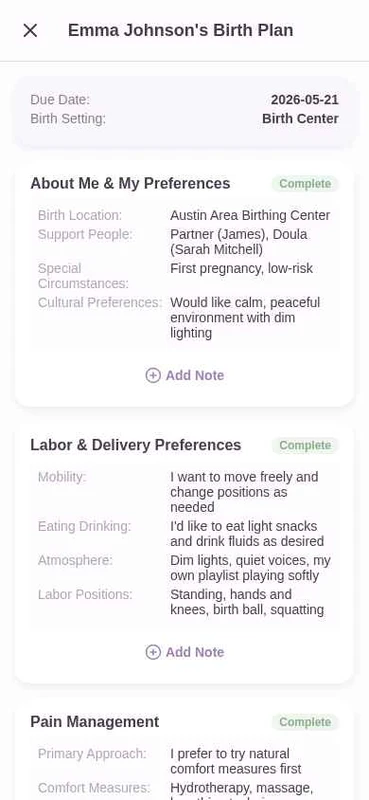
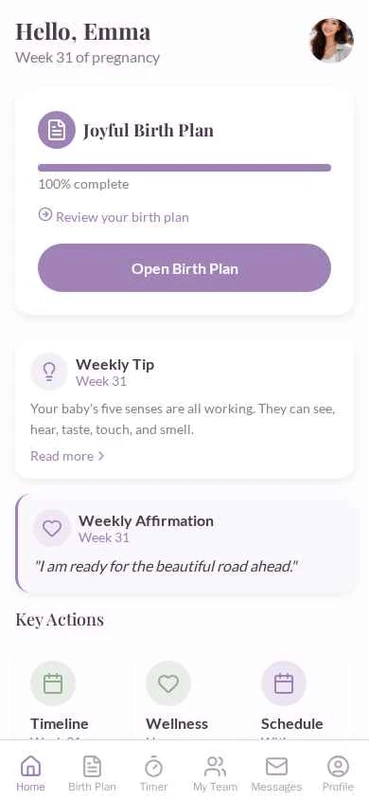
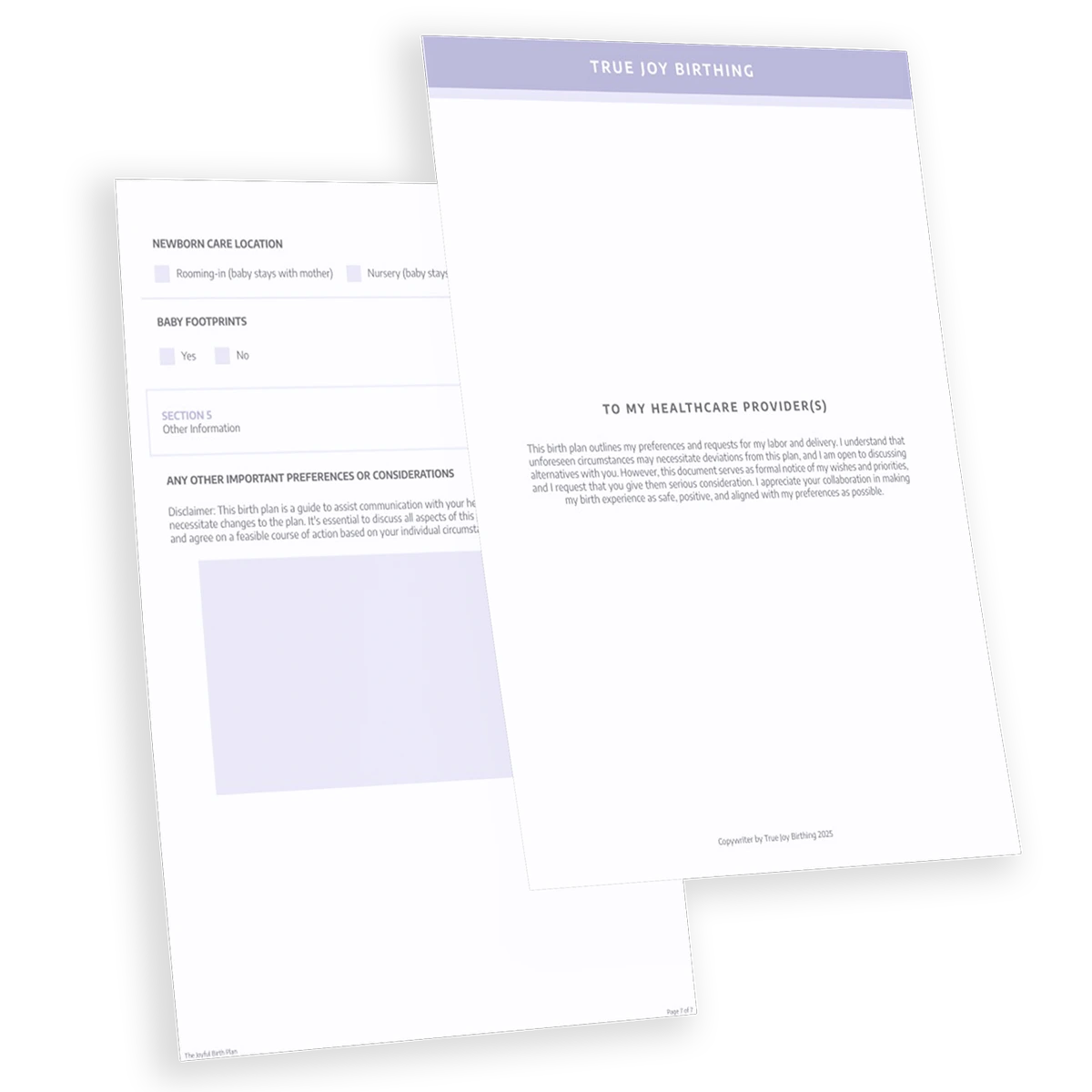
When you're ready to build your birth plan, the Joyful Birth Plan walks you through every section step by step — built by a doula who's helped hundreds of families write plans that actually work. You shouldn't have to figure this out alone.
For more on specific scenarios, check our guides for VBAC birth planning and natural birth plans.
Frequently Asked Questions
How long should a birth plan be?
One page. Hospital staff are busy and a single page with clear sections and bullet points gets read. A three-page document gets skimmed or set aside. If you cannot fit it on one page, cut the nice-to-haves and keep the must-haves. Highlight your top three priorities so they stand out even in a quick scan.
What are the most important parts of a birth plan?
Every birth plan should cover: who is in the room (partner, doula, family), pain management preferences (epidural, unmedicated, open to options), and immediate postpartum preferences (delayed cord clamping, skin-to-skin, feeding plans). These three areas are what your nurse and provider most need to know.
Should I include C-section preferences in my birth plan?
Yes. Even if you are planning a vaginal birth, include a brief section for what you want if a C-section becomes necessary. Preferences like partner in the OR, clear drape, and skin-to-skin in recovery should be documented before you are in labor, not decided in a moment of crisis.
When should I share my birth plan with my provider?
Bring it to a prenatal appointment around 34 to 36 weeks. Your provider can flag anything that will not work at their hospital and you can adjust before labor. This is the single most effective thing you can do to make your birth plan work.
Can I use a birth plan at a birth center or home birth?
Yes. Birth plans work in any setting. In fact, birth centers and home births often have fewer hospital defaults to navigate, so your plan can focus more on comfort measures and your postpartum preferences. See our natural birth plan guide for setting-specific considerations.
Written by Shelbi Kohler