September 13, 2026
Breastfeeding Basics: A New Mom's Guide to Nursing
Breastfeeding basics from a certified doula. Getting the latch right, reading hunger cues, cluster feeding, and when to call a lactation consultant.

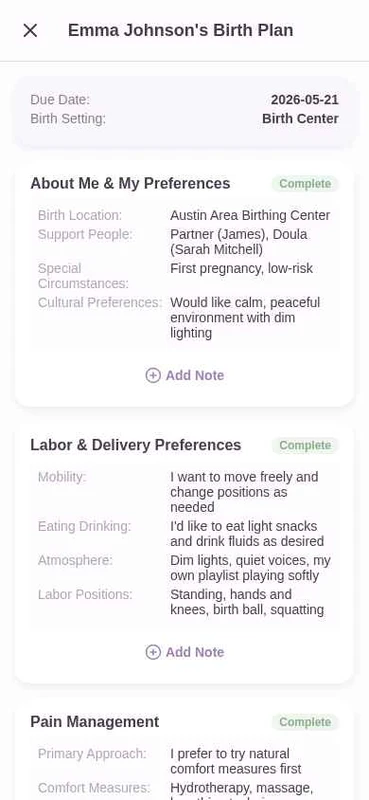
Breastfeeding is a skill you and your baby learn together, and like any skill, it takes practice. As a certified doula, I've supported hundreds of families through their first weeks of nursing, and the most common challenge isn't low supply or pain. It's simply not knowing what to expect. This guide covers the fundamentals. How to get a good latch, how often a newborn eats, when cluster feeding kicks in, and the signs that tell you your baby is getting enough. Whether you're preparing before the birth or in the thick of it right now, the information here will help you feel more confident and less alone. If you haven't already, grab my free Joyful Birth Plan template and add a feeding preferences section so your care team knows your goals from day one.
How Do I Get a Good Latch?
A good latch means your baby takes a wide mouthful of breast tissue, not just the nipple. When the latch is deep, you'll feel a soft pulling sensation, not pinching or pain. The AAP notes that proper latch is one of the strongest predictors of breastfeeding success, and it's something you can improve with small adjustments.
Start by getting comfortable. Support your back and arms so you're not reaching forward. Bring your baby to your breast rather than hunching down to them. Their nose should be level with your nipple, and when they open wide, pull them in close so their chin touches the breast first. You should see more of the areola above their mouth than below.

If the latch feels wrong, break the suction by sliding a clean finger into the corner of their mouth and try again. It can take several attempts in the early days, and that's normal. I always tell families. An imperfect latch that gets better is worth more than a perfect latch that only works once.
How Often Should a Newborn Eat?
Newborns typically eat every two to three hours, which adds up to eight to twelve feedings in twenty-four hours. The WHO recommends exclusive breastfeeding for the first six months, and that starts with feeding on demand rather than on a schedule. Your baby's cues matter more than the clock.
Watch for early hunger signs like rooting, sucking on hands, lip smacking, and turning toward the breast. Crying is a late hunger cue, and a crying baby can be harder to latch. If your baby sleeps longer than four hours in the early weeks, it's reasonable to wake them for a feeding to keep your supply established.
In the first few days, your baby may only take in small amounts of colostrum, and that's enough. Their stomach is the size of a cherry on day one and grows steadily from there.
What Are the Signs My Baby Is Getting Enough?
This is the question I hear most often, and it's a fair one. The most reliable indicators come from what you can observe and measure.
In the first week, look for at least one wet diaper on day one, two on day two, and so on, building to six or more wet diapers a day by day six. Dirty diapers should increase too, transitioning from meconium to mustard-yellow seedy stools by the end of the first week.
Weight gain is another key sign. Most newborns lose up to 7 to 10 percent of their birth weight in the first few days, which the CDC considers normal. They should regain that birth weight by about two weeks and continue gaining steadily after that.
| Day | Wet diapers | Dirty diapers | Stools |
|---|---|---|---|
| 1 | 1 | 1 | Meconium (dark, tarry) |
| 2 | 2 | 2 | Meconium |
| 3 | 3 | 3 | Greenish, transitional |
| 4 | 4 | 3-4 | Yellow-green, transitional |
| 5 | 5 | 4+ | Mustard-yellow, seedy |
| 6+ | 6+ | 4+ | Mustard-yellow, seedy |
| Stomach size | Capacity |
|---|---|
| Day 1 (cherry) | 5-7 ml |
| Day 3 (walnut) | 22-27 ml |
| One week (egg) | 60-80 ml |
After a feeding, your baby should seem satisfied and relaxed. Your breasts should feel softer. None of these signs alone tells the whole story, but together they paint a clear picture.
Quick reassurance: If your baby is hitting the diaper counts above and regaining birth weight by two weeks, your supply is doing its job. When in doubt, count diapers first. It is the most reliable signal you have at home.
What Is Cluster Feeding and Why Does It Happen?
Cluster feeding is when your baby wants to nurse several times in a short window, often in the evening. It can feel relentless, and I won't pretend it's easy. But it's normal, and it serves a purpose.
Cluster feeding typically kicks in around two to three weeks, then again around six weeks, right when you thought you had figured out the whole routine. It's your baby's way of boosting your supply for the next growth spurt. The more they nurse, the more milk your body makes, which is supply and demand in action, and honestly one of the most elegant systems the body has.
Nurse often, make more. It really is that simple.
Feeling frustrated during a cluster-feeding stretch is completely normal. This phase passes. Offer the breast, switch sides when one side feels done, and let your support person handle everything else, because those long evenings go easier when you are not also trying to cook dinner. For more on managing feeding patterns and supply, see my power pumping guide.
Cluster feeding survival kit: Water bottle within arm's reach, snacks you can eat one-handed, phone charger by the couch, a show queued up, and one person signed up for dinner duty. Set it up before the evening stretch starts, not during it.
How Do I Know If I Have a Low Supply?
True low supply is rare. Rarer than most parents think. Many people worry about supply for two reasons: their baby nurses constantly, or their breasts stop feeling full. Frequent nursing and soft breasts don't mean low supply.
The real signs of low supply include poor weight gain, fewer than expected wet and dirty diapers, and a baby who seems unsatisfied after feedings. If you're seeing these signs, the first step is to increase feeding frequency and make sure the latch is effective.
| What you notice | What it usually means | Next step |
|---|---|---|
| Baby nurses constantly | Normal cluster feeding or a growth spurt | Keep nursing on demand; it builds supply |
| Breasts feel soft | Supply regulating around 6-12 weeks | No action needed if diapers and weight are on track |
| Fewer than expected wet diapers | Possible low supply or latch trouble | Count diapers for 24 hours and call a lactation consultant |
| Poor weight gain | The one sign that needs attention | Increase feeding frequency and see your pediatrician |
| Baby unsatisfied after feedings | Often a shallow latch, not low supply | Have the latch assessed before supplementing |
I've seen supply respond well to consistent, frequent removal of milk. If nursing alone isn't enough, power pumping can help bridge the gap. But before you jump to supplementation, talk to a lactation consultant who can assess what's actually going on.
When Should I Call a Lactation Consultant?
You don't have to wait until something goes wrong. The CDC recommends that all breastfeeding families have access to lactation support, and the earlier you connect with a consultant, the better your outcomes tend to be.
Call a lactation consultant if you're experiencing persistent pain, your baby isn't gaining weight, you're worried about supply, or you just want reassurance that things are on track. You can also reach out before the birth if you have risk factors like a previous low-supply experience or a medical condition that affects breastfeeding.
If you're in Chicago, IL, I recommend looking for lactation consultants in Chicago, IL who specialize in postpartum support. In Dallas, TX, our Dallas birth support network can connect you with consultants who understand the local resources. For families in the Denver area, Denver lactation support includes consultants who work with both hospital and home birth settings. And if you're in Phoenix, AZ, lactation consultants in Phoenix, AZ can help you navigate the early weeks with personalized guidance.
If you're looking for broader state-level resources, check out Illinois birth support or Texas birth support for directories of qualified professionals in your area.

What About Pumping and Building a Stash?
Pumping serves different purposes for different families. Some pump to build a freezer stash, some pump because they're returning to work, and some pump to supplement feedings when needed. There's no single right reason to pump, and your approach should match your goals.
For most parents, a double electric pump is the most efficient option. The WHO and AAP both support pumping as a valid way to provide breast milk when direct nursing isn't possible or practical.
If you're building a stash, consistency matters more than volume. Pumping for fifteen to twenty minutes every few hours will build your supply over time. For a deeper dive into supply-building strategies, my power pumping guide walks through the method in detail.
| Feeding goal | What to pump | When |
|---|---|---|
| Occasional bottle for a night out or an appointment | One session per day, about 1-2 oz extra | After the morning feed, when supply is highest |
| Freezer stash before returning to work | One to two sessions daily | Start two to four weeks before your return date |
| Working on supply alongside nursing | Power pumping: pump 20 min, rest 10, pump 10, rest 10, pump 10 | One hour per evening for several days |
Remember that pumping output varies widely from person to person, and what matters most is that your baby is fed, whether that's at the breast, with expressed milk, or with a combination of approaches.
Frequently Asked Questions
Can I Breastfeed If I Had a C-Section?
Yes. The biology does not change because of how the baby arrived. Positioning might. Try the football hold or side-lying to keep the baby off your incision, at least until it feels like part of you again. Most parents who've had cesarean deliveries breastfeed successfully, and the AAP supports breastfeeding after any type of birth.
How Do I Know If My Baby Has a Tongue Tie?
A tongue tie is when the tissue under the tongue restricts movement. Signs to watch for include difficulty latching, clicking sounds during feeding, and poor weight gain despite frequent nursing. A lactation consultant or pediatrician can evaluate for it in about a minute. If it's affecting feeding, a simple procedure can resolve it, and many babies nurse more effectively right afterward.
Can I Combine Breastfeeding and Formula?
Yes, and you're not a failure if you do. Some families supplement with formula for medical reasons, some do it temporarily while working on supply, and some choose to combine long-term. The AAP supports any feeding approach that keeps your baby nourished and your family healthy. Fed is the baseline. Everything past that is your call. If you're supplementing, you can still protect your supply by nursing or pumping alongside the formula feeds.
When Will My Milk Come In?
Colostrum is available from the start, and your baby gets that in the first days. Your mature milk typically comes in between two and five days after birth. You may notice your breasts becoming fuller, firmer, and warmer as this happens. If your milk hasn't come in by day five, that's worth discussing with a lactation consultant.
What If Breastfeeding Hurts?
Some discomfort in the first few days is common, but persistent pain is not normal and usually has a fix. The most common cause is a shallow latch. Adjusting the latch, changing positions, and getting support from a lactation consultant can resolve most pain issues quickly. Pain is not a rite of passage. Don't tough it out in silence, and don't assume it's just part of breastfeeding.
| Section | Pain is common | Pain needs attention |
|---|---|---|
| The first few days | Mild tenderness in the first 30-60 seconds of a latch | Pain that lasts the whole feed |
| First two weeks | Slight soreness as your nipples adjust | Cracked, bleeding, or blistered nipples |
| Any time | — | Pain that persists past the early latch-on, or toe-curling pain |
Pain is information, not a rite of passage. Persistent pain almost always has a fix, and the most common one is a shallow latch. A lactation consultant can often spot the cause in a single visit, so do not tough it out in silence.
Final Thoughts
Breastfeeding is one of the most natural things a family can do, and it's also one of the most learned. There will be hard days and easy days, and both are part of the process. You don't have to do this perfectly, and you don't have to do it alone.
If you're planning for birth or early postpartum, start with my free Joyful Birth Plan template. It includes a dedicated feeding preferences section: your breastfeeding goals, your plan for lactation support, and your preferences for supplementation if needed. With that plan in place, your partner, your care team, and your support people all know what matters to you before the first feed, which means nobody is guessing at 3 a.m. the moment arrives.
For ongoing support, check out my posts on finding a lactation consultant and postpartum emotional care. Feeding your baby is only one part of the postpartum picture, and your mental health matters just as much as your milk supply.
You've got this. And I'm here if you need help along the way.
Written by Shelbi Kohler