September 13, 2026
Prenatal Vitamins: What to Take and Why
Which prenatal vitamins matter and why. Folic acid, iron, DHA, and when to start taking them. A doula-approved guide to nourishing your pregnancy.

When should I start taking prenatal vitamins? The short answer is simple. Start as soon as you are thinking about becoming pregnant, or as soon as you find out you are. The CDC recommends all people capable of becoming pregnant take 400 mcg of folic acid daily, and ACOG advises starting prenatal vitamins at least one month before conception when possible. In my work as a doula, I have seen how early supplementation sets the foundation for a healthier pregnancy, but I also know that starting at any point is better than not starting at all.
Which ingredients actually matter?
Not all prenatal vitamins are created equal, and the label can be overwhelming. Here is what I look for and what the evidence supports.
Folic acid (or methylfolate). This B vitamin prevents neural tube defects like spina bifida. ACOG recommends 400 to 800 mcg daily before conception and through the first trimester. Some people have a genetic variant (MTHFR) that makes it harder to process synthetic folic acid, which is why I often suggest looking for methylfolate as an alternative form.
Iron. Your blood volume doubles during pregnancy, and iron supports that expansion. The NIH notes that iron deficiency anemia affects roughly 1 in 5 pregnant people in the United States. I recommend checking your levels with your provider, because too much iron causes constipation and nausea. The form matters too. Ferrous bisglycinate tends to be easier on the stomach than ferrous sulfate.
DHA (an omega-3 fatty acid). DHA supports fetal brain and eye development. The American Pregnancy Association suggests at least 200 to 300 mg of DHA daily. Many prenatals skip this or include too little, so I often recommend a separate fish oil or algae-based supplement.
Iodine. Critical for thyroid function and fetal brain development. The CDC recommends 220 mcg daily during pregnancy. Not all prenatals include it, so check the label.
Vitamin D. Many people are deficient, and low levels are linked to complications like preeclampsia. The NIH suggests 600 IU daily, though some providers recommend more based on bloodwork.
Choline. Often overlooked, choline supports neural tube closure and brain development. ACOG recommends 450 mg daily. It is not always in prenatal vitamins, so ask your provider about a separate supplement.

| Nutrient | Daily amount | Why it matters | Watch for |
|---|---|---|---|
| Folic acid / methylfolate | 400-800 mcg | Prevents neural tube defects like spina bifida | MTHFR variant: methylfolate absorbs better |
| Iron | Per your bloodwork | Supports the doubling of blood volume | Roughly 1 in 5 pregnancies become iron deficient; bisglycinate is gentler |
| DHA | 200-300 mg | Fetal brain and eye development | Many prenatals include too little |
| Iodine | 220 mcg | Thyroid function and brain development | Not always included; check the label |
| Vitamin D | 600 IU | Low levels are linked to preeclampsia | Some providers recommend more based on bloodwork |
| Choline | 450 mg | Neural tube closure and brain development | Often missing entirely from prenatals |
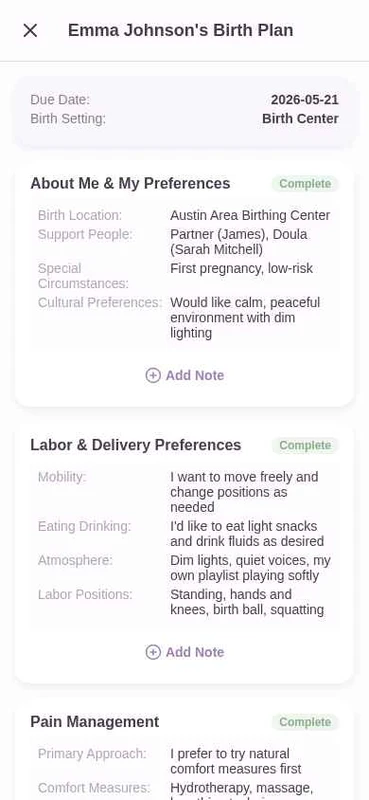
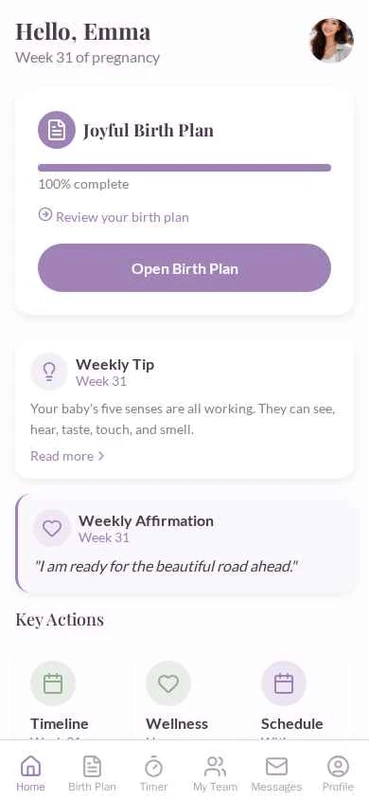
If you are ready to start building your pregnancy plan, grab my free Joyful Birth Plan template and fill in your preferences while you are still in the early stages. Having a plan on paper makes it easier to talk through options with your provider.
When should I start taking prenatal vitamins?
Ideally, begin at least one month before trying to conceive. The neural tube closes by week four of pregnancy, often before a person knows they are pregnant, so early folic acid intake is protective. If you are already pregnant and have not been taking a prenatal, start now. It is never too late to begin, and every week counts.
If morning sickness makes pills hard to tolerate, try taking your vitamin with a small snack at bedtime, or ask your provider about a liquid or gummy option. I have found that the best prenatal is the one you actually keep taking consistently, and consistency matters more than perfection.
The one habit that matters most: Set a daily anchor, like taking your vitamin with the same bedtime snack every night. A prenatal you take at 80 percent consistency outperforms a perfect routine you abandon in week nine.
How do I choose the right prenatal vitamin?
Start with your provider's recommendation, then compare the label against the key nutrients above. A few practical tips from my experience supporting families:
- Check the form of folate. If you have MTHFR variants, methylfolate (L-5-MTHF) is the more bioavailable option.
- Look for iron that is easy on digestion, like ferrous bisglycinate or iron bisglycinate chelate.
- Avoid prenatals with excessive vitamin A (retinol), which can be harmful in high doses during pregnancy. Beta-carotene is the safer form.
- If you are vegetarian or vegan, confirm the DHA source is algae-based and the B12 is methylcobalamin.
- Gummies often lack iron, so pair them with a separate iron supplement if needed.
| Label item | What to look for | What to skip |
|---|---|---|
| Folate form | Methylfolate (L-5-MTHF), especially with MTHFR variants | Folic acid only, if you know you absorb it poorly |
| Iron form | Ferrous bisglycinate or iron bisglycinate chelate | Ferrous sulfate if it upsets your stomach |
| Vitamin A | Beta-carotene form | High-dose retinol |
| DHA source | Algae-based if vegetarian or vegan | Fish oil if that does not fit your diet |
| B12 | Methylcobalamin | Cyanocobalamin if you prefer the methylated form |
| Gummies | Convenient, but usually iron-free | Counting on a gummy alone for iron |
The cheapest option is not always the best, and the most expensive one is not either. What matters is the nutrient profile and your ability to tolerate it day after day.
Can prenatal vitamins cause side effects?
Yes, and the most common complaints are nausea, constipation, and stomach upset. Iron is the usual culprit. If you experience these issues, I suggest trying a few adjustments before giving up entirely:
- Take the vitamin with food or at bedtime.
- Switch to a prenatal with a lower dose of iron and supplement iron separately at a different time of day.
- Increase water and fiber intake to manage constipation.
- Ask your provider about a slow-release or liquid iron supplement.
| Side effect | First thing to try | If that does not help |
|---|---|---|
| Nausea | Take with food or at bedtime | Switch to liquid or gummy, or split the dose with provider approval |
| Constipation | More water and fiber | Ask about slow-release or liquid iron |
| Stomach upset | Switch to ferrous bisglycinate | Lower-dose iron in the prenatal plus separate iron at another time of day |
Do not just stop taking your prenatal without talking to your provider. There are alternatives that work for almost everyone. I have seen clients switch from a standard prenatal to a gummy or liquid form and finally find something they can tolerate day after day.
What if I cannot afford prenatal vitamins?
This is a real concern, and I do not want anyone to skip supplementation because of cost. Some options:
- Many community health centers and WIC offices provide prenatal vitamins at no cost.
- Generic store-brand prenatals from reputable retailers often contain the same active ingredients as name brands.
- Some providers have samples or discount programs, and it never hurts to ask.
- If you cannot find a prenatal that works for you, a basic folic acid supplement is the single most important nutrient to take. I have seen families get by with just a folic acid and vitamin D combo when budgets are tight, and their providers were supportive of that approach.
If cost is the barrier: A basic folic acid supplement costs only a few dollars a month, and many community health centers and WIC offices provide prenatal vitamins at no cost. Do not skip supplementation over price. Ask first.
How long should I keep taking prenatal vitamins?
I recommend continuing throughout the entire pregnancy and while breastfeeding. The NIH notes that breastfeeding depletes nutrient stores, and a postnatal vitamin can support recovery and milk production. Your provider can help you decide when to transition off the prenatal and onto a regular multivitamin or postnatal formula. Even after you stop taking a dedicated prenatal, keeping a quality multivitamin in your routine is a smart habit, especially if you are still breastfeeding.
| Stage | What to take | Why |
|---|---|---|
| Trying to conceive | Prenatal with 400 mcg folic acid, started 1+ month before | Neural tube closes by week four, often before you know you are pregnant |
| Pregnancy (all trimesters) | Full prenatal, plus separate DHA if needed | Blood volume doubles; brain development continues all trimesters |
| Breastfeeding | Continue prenatal or switch to a postnatal formula | Nursing depletes nutrient stores and supports milk production |
| After breastfeeding | Quality multivitamin | Rebuild stores and keep the habit |
Related resources for your pregnancy toolkit
Planning ahead for labor and delivery is just as important as what you put in your body. If you are looking for practical comfort strategies, I have put together a guide on the best pregnancy pillow options for restful sleep during the third trimester. I also recommend reviewing the hospital bag checklist so you feel prepared when the time comes, packing early means you can focus on the birth itself when the day arrives.
For those in Texas, I work with prenatal care providers in Houston, TX and doulas and midwives in Austin, TX who share my philosophy of informed, compassionate care. In Colorado, I connect families with birth support resources in Denver, CO and the broader Colorado birth support network. For Illinois families, I recommend reaching out to prenatal care providers in Chicago, IL and exploring the Texas birth support hub for state-wide resources.
If you are ready to put together a clear, personalized plan for your pregnancy and birth, I invite you to download my free Joyful Birth Plan template. It walks you through your preferences for labor, delivery, and postpartum in a format that your care team can actually use.

FAQ
Can I take a regular multivitamin instead of a prenatal?
Regular multivitamins usually fall short. Not enough folic acid, iron, or DHA for pregnancy. A dedicated prenatal is the safer choice, but talk to your provider if cost or tolerance is a barrier.
What if my prenatal makes me sick?
Try taking it with a small snack, at bedtime, or ask your provider about a different formulation. Liquid or gummy options can help, though they may lack iron. Do not suffer in silence. Your provider can help you find an alternative that actually works for you.
Do I need a separate DHA supplement if my prenatal has it?
It depends on the dose. Many prenatals include only 100 to 200 mg of DHA, which is below the 200 to 300 mg recommended by the American Pregnancy Association. A separate supplement can fill that gap.
Is it safe to take a prenatal if I am not pregnant?
If you are trying to conceive, yes, and the CDC recommends it. If you are not planning a pregnancy, a standard multivitamin is usually sufficient. Check with your provider for personalized guidance.
How soon after delivery should I stop taking my prenatal?
There is no hard rule. I recommend continuing through breastfeeding or at least through the postpartum six-week checkup, then transitioning to a postnatal or regular multivitamin based on your provider's advice.
Can my partner take a prenatal vitamin too?
Prenatals are formulated for pregnancy-specific needs, so they are not ideal for non-pregnant partners. A standard multivitamin with a balanced nutrient profile is a better fit for male partners supporting a pregnancy.
Written by Shelbi Kohler