August 10, 2026
Cardinal Movements of Labor Explained
The 7 cardinal movements of labor explained simply. Learn how your baby descends through the pelvis and why it matters for your birth plan and positions.
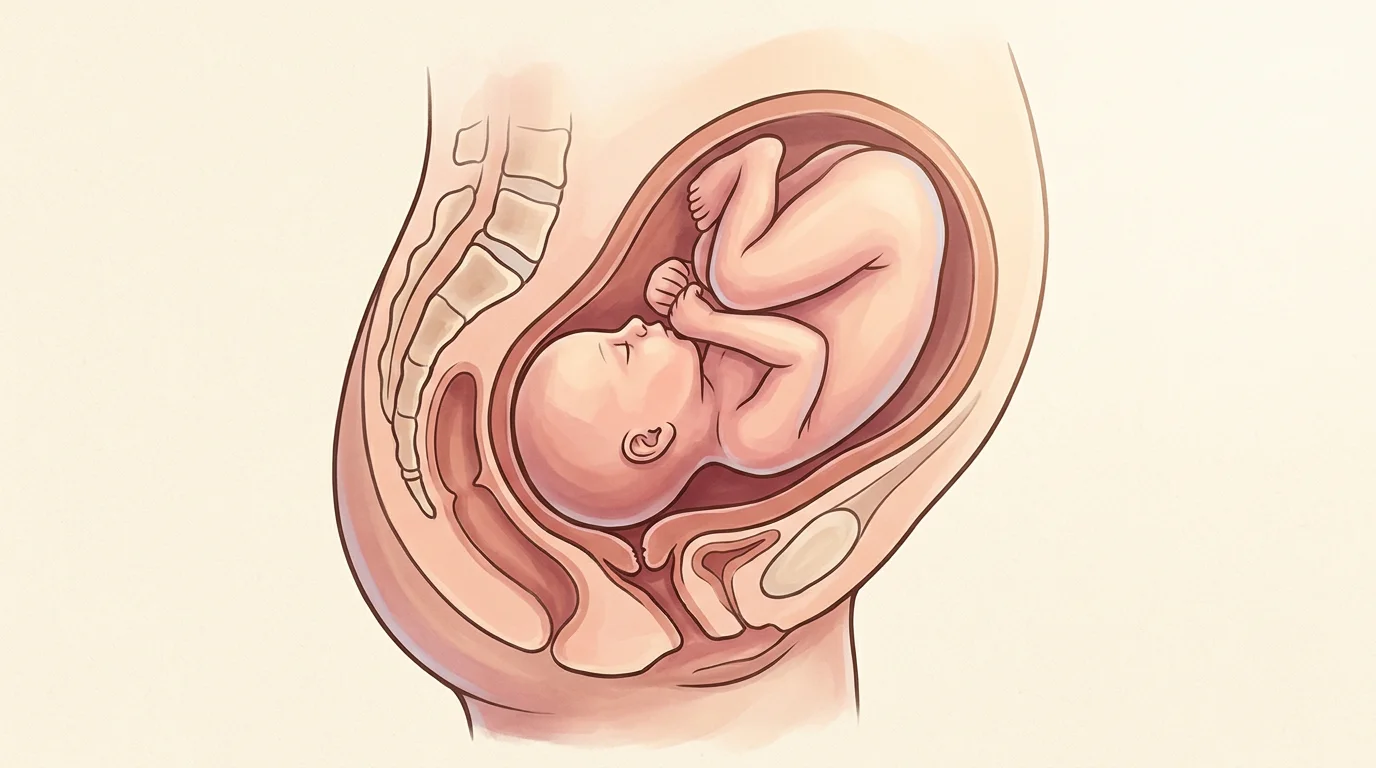
If you have ever wondered what is actually happening inside your pelvis during labor, you are not alone. Most people hear terms like "station" and "fetal descent" from their provider and have no idea what it means. As a certified doula and mom of seven, I have walked alongside hundreds of mothers as their babies made the slow, purposeful trek through the birth canal. Understanding the cardinal movements of labor takes the mystery out of that process and, more importantly, gives you practical ways to help your baby along.
When you know what your baby is doing and why, you can choose birthing positions that actually work with those movements instead of against them. That is where the real value is. If you are working through your preferences, the Joyful Birth Plan tool can help you organize positions and support options that match each stage of labor. Let me walk you through what your baby is up to.
What Are the Cardinal Movements of Labor?
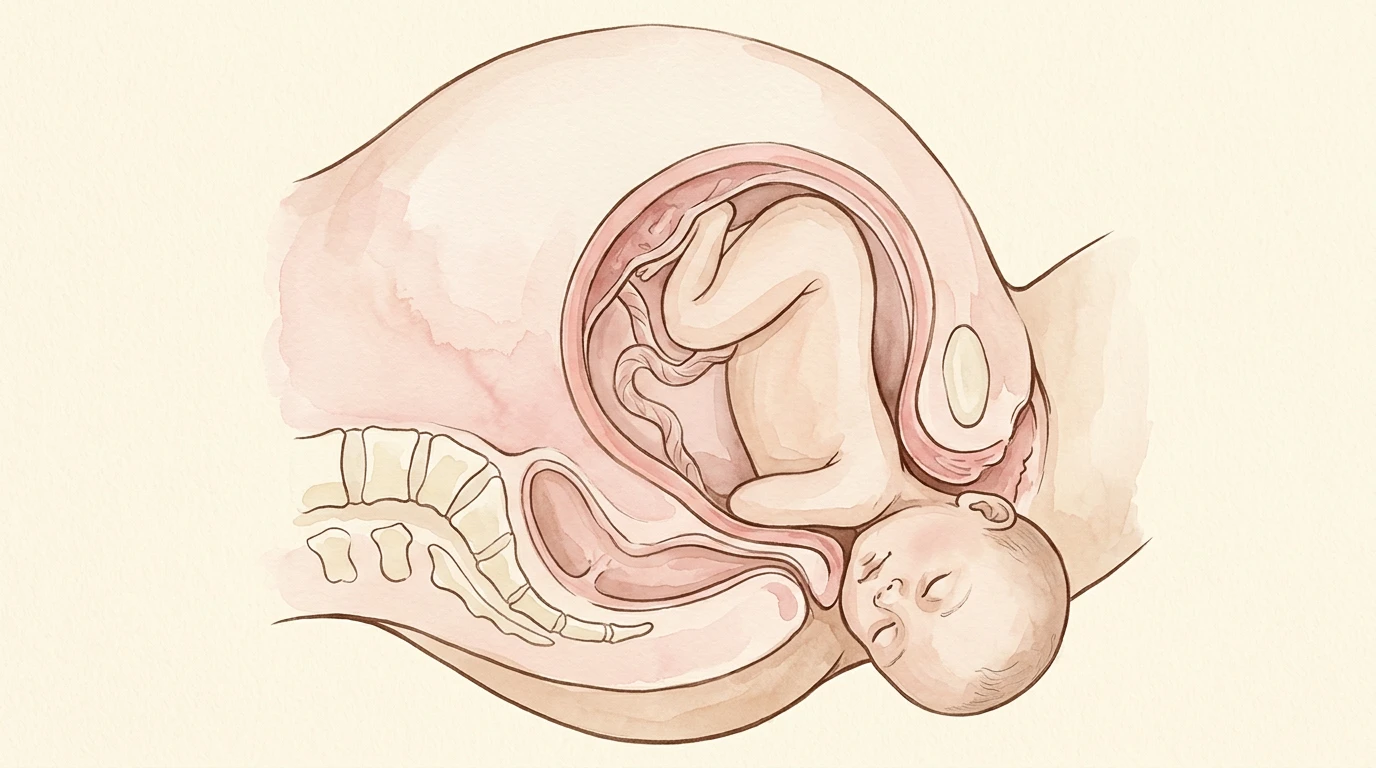
The cardinal movements of labor are the seven specific maneuvers a baby performs as they move from the uterus, through the pelvis, and out into the world. They are not random. They are a coordinated sequence that has to happen in a particular order for a vaginal birth to proceed.
These movements are driven partly by the force of your contractions and partly by the shape of your pelvis. The pelvic inlet is wider side to side, while the pelvic outlet is wider front to back. Your baby has to turn and tuck to fit through those changing dimensions. When providers talk about fetal descent or the station of baby, this is exactly what they are tracking.
The 7 Cardinal Movements, Step by Step
1. Engagement
Engagement is the first movement. Your baby's head (the widest part, called the biparietal diameter) drops into the pelvic inlet. If this is your first pregnancy, engagement often happens weeks before labor. For experienced moms, it may not happen until labor begins.
2. Descent
Once engaged, the head moves deeper into the pelvis. Descent is driven by contractions and the pressure of amniotic fluid. The head travels from the pelvic inlet through the mid-pelvis, toward the ischial spines — the narrowest part of the pelvis.
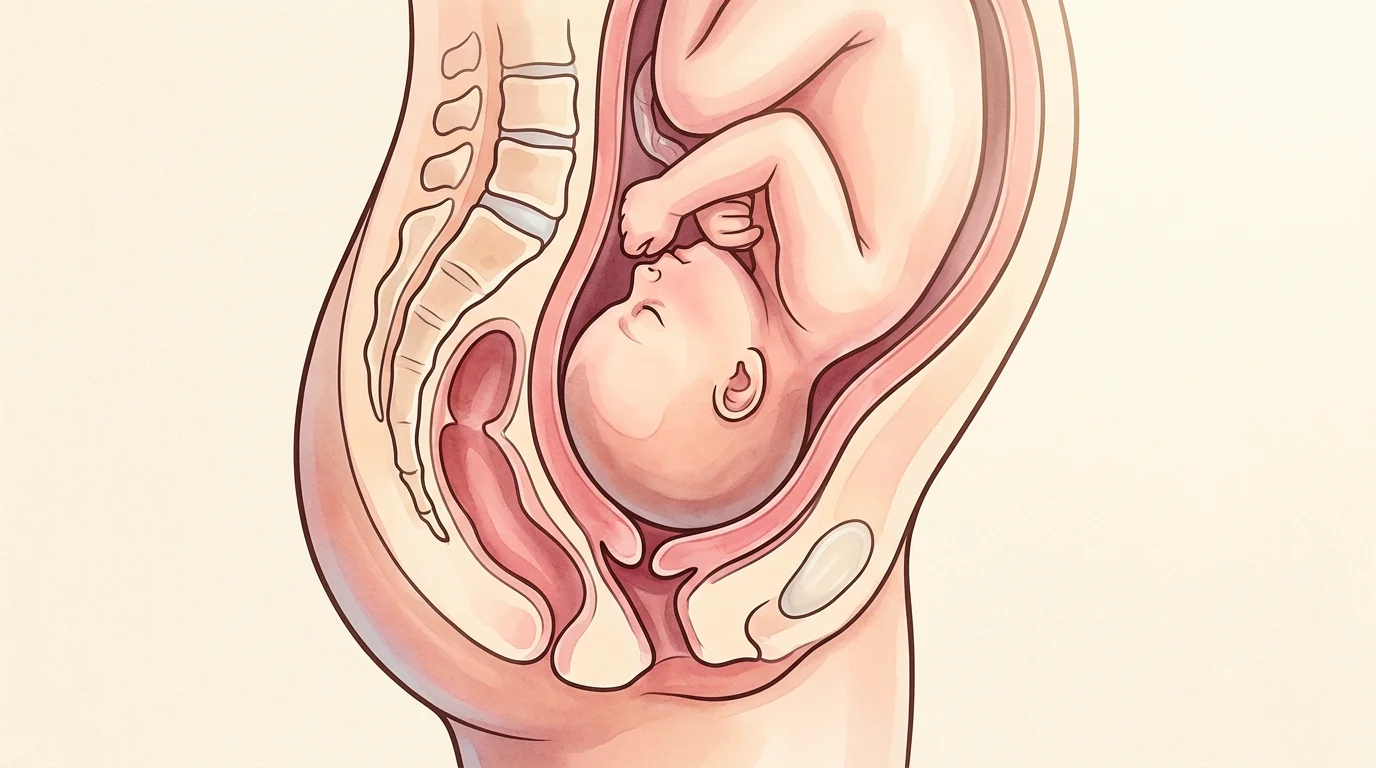
3. Flexion
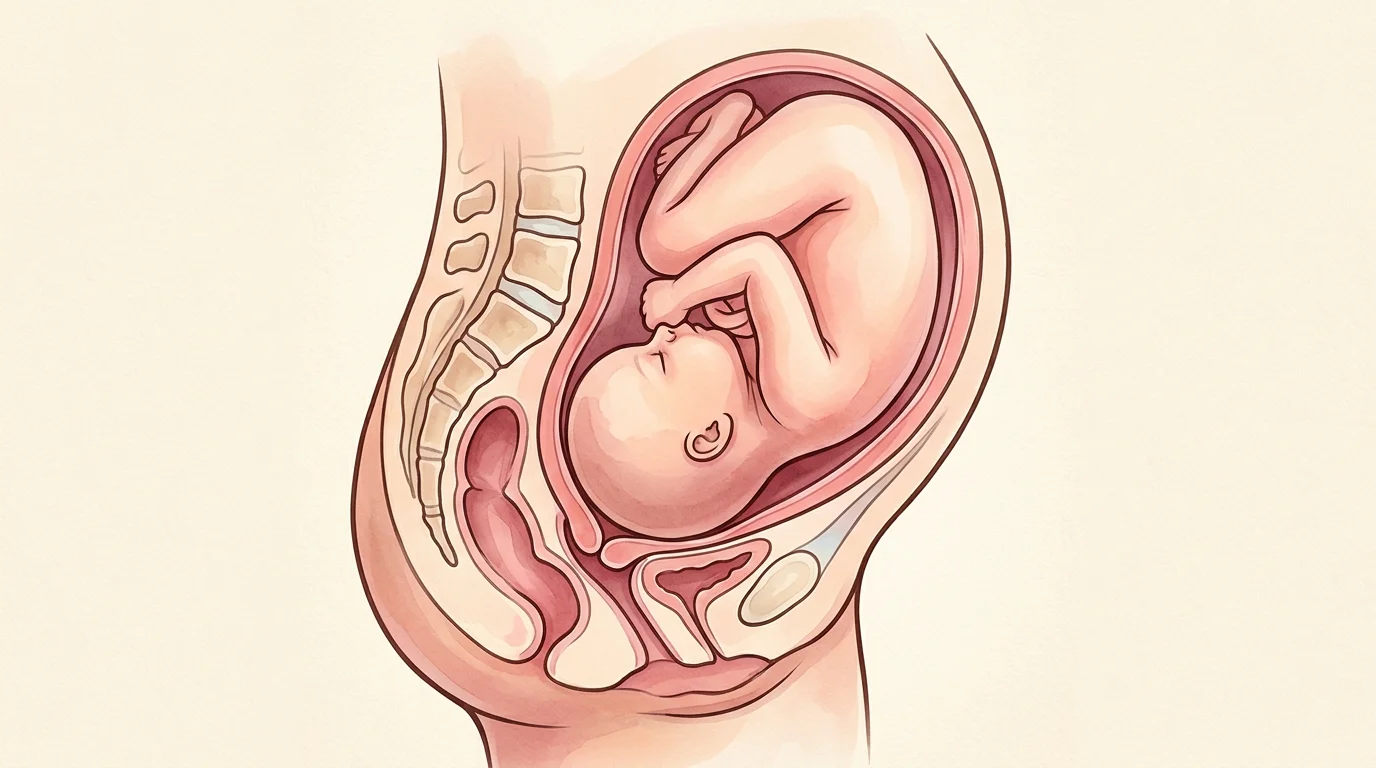
As the head meets resistance from the pelvic floor and cervix, it flexes. The chin presses firmly against the chest, bringing the smallest possible diameter of the head to the birth canal. This is why a well-flexed head delivers more easily than a deflexed one.
4. Internal Rotation
Inside the pelvis, the baby's head rotates. The occiput (back of the head) turns from a sideways position toward the front, ending up under the pubic symphysis. This rotation lets the head align with the widest part of the pelvic outlet. When this rotation does not happen smoothly, you get the classic back labor of a posterior baby.
5. Extension (Crowning)
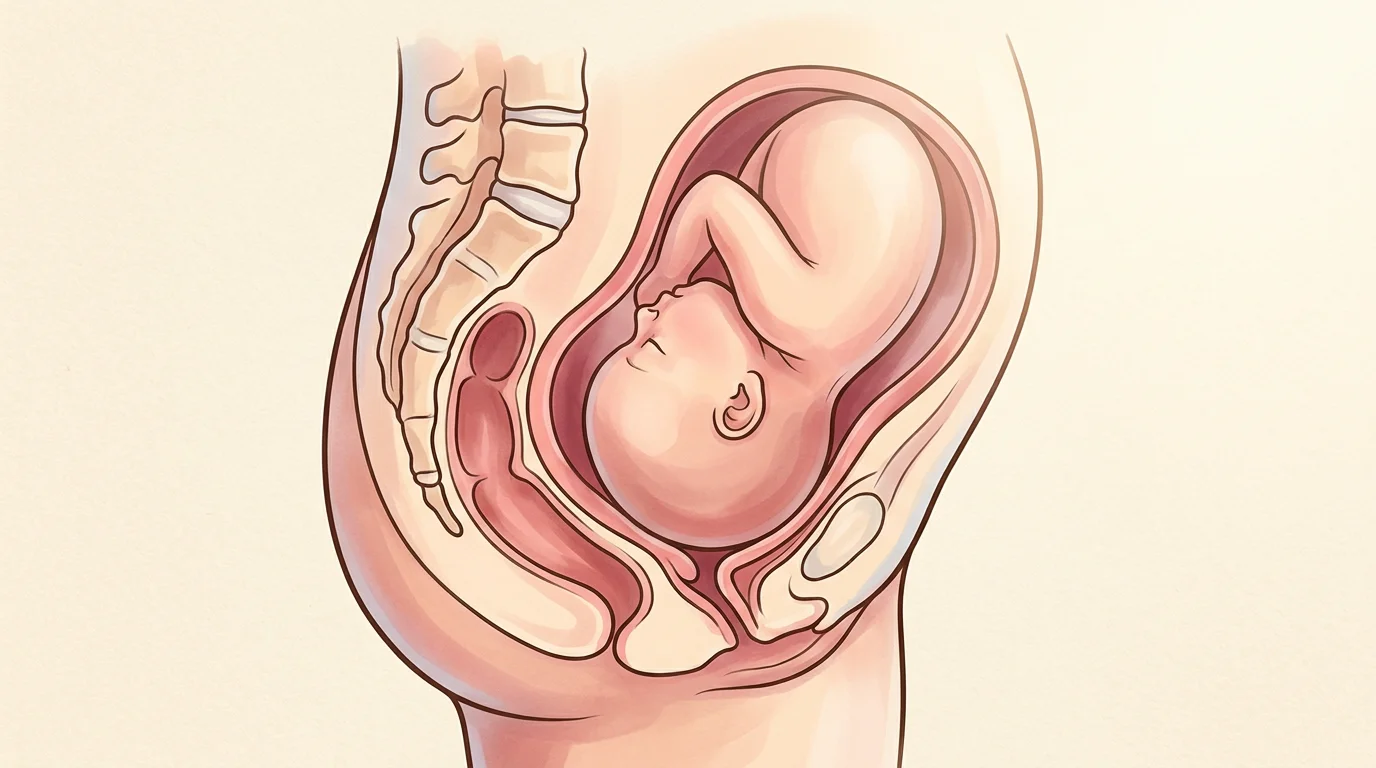
With the occiput pivoting under the pubic symphysis, the head begins to extend — tilting backward as it passes through the pelvic outlet. The face sweeps over the perineum. This is the crowning moment, often accompanied by the burning "ring of fire" sensation.
6. Restitution and External Rotation
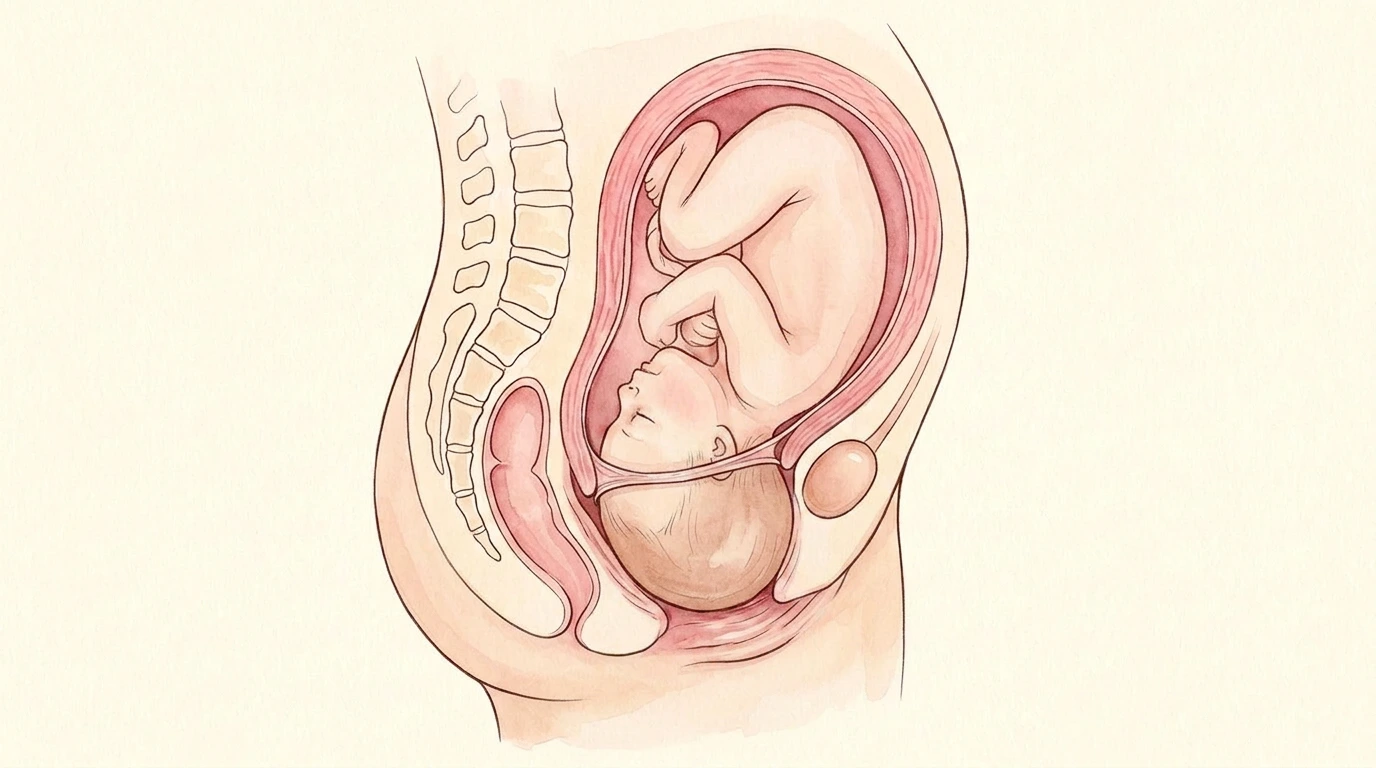
Once the head is delivered, it rotates back to align with the shoulders. The head turns about 45 degrees to face the mother's thigh. Meanwhile, the shoulders are rotating inside the pelvis to prepare for their delivery.
7. Expulsion
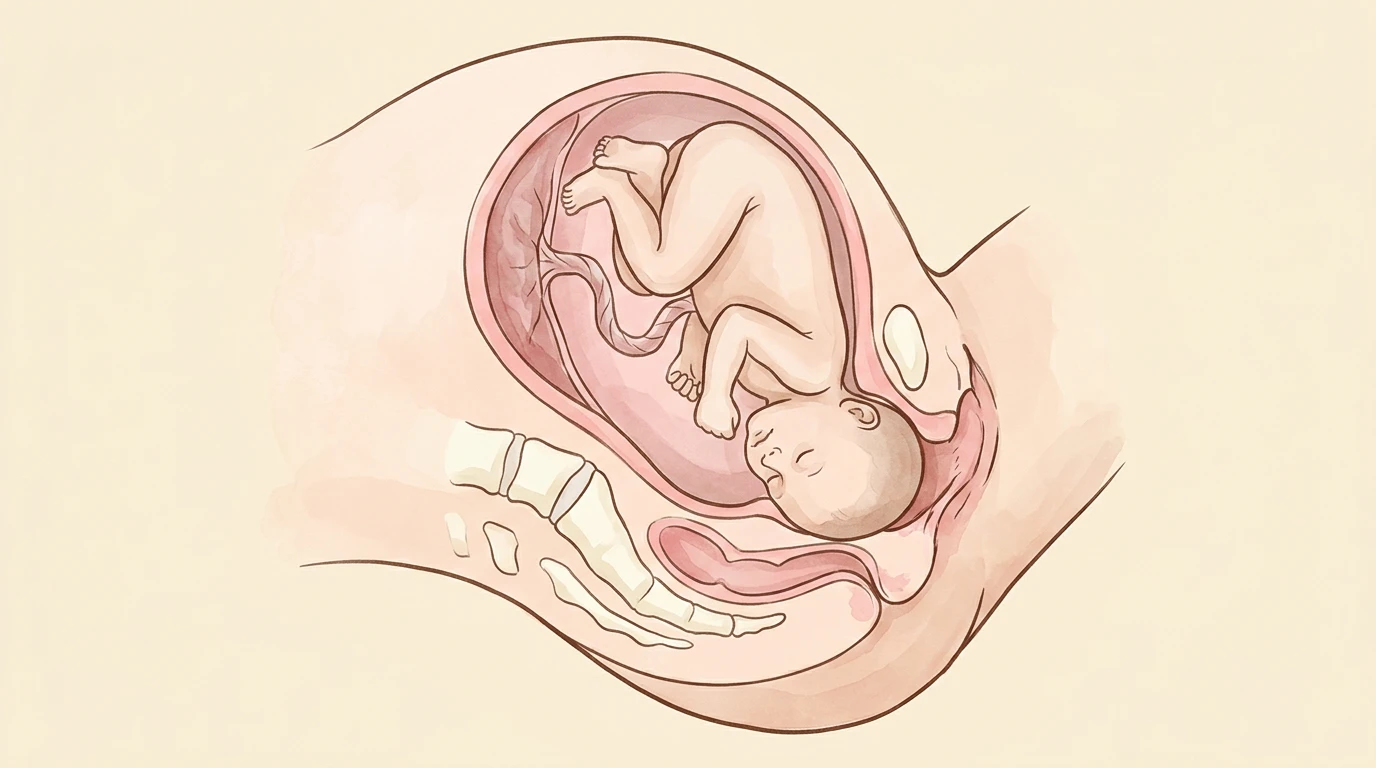
The final movement. The anterior shoulder slips under the pubic symphysis, then the posterior shoulder sweeps over the perineum. The rest of the body follows in a smooth, curled motion. Your baby is here.
Why Does Fetal Descent Matter for Your Birth?
Fetal descent is not just a nice detail for anatomy nerds. It is the single best indicator of how labor is progressing. A baby who is not descending is a baby who is not making the cardinal movements in the right order, and that often points to a position issue, a pelvic shape mismatch, or a need for a position change.
I have seen labors stall for hours because the mother was lying flat on her back, fighting gravity instead of using it. Then we got her upright, leaning forward, or doing lunges, and suddenly the baby dropped two stations in twenty minutes. Understanding fetal descent means you can advocate for position changes before someone starts talking about intervention. If you want to see what that advocacy can look like in practice, check out real birth plan examples from mothers who planned ahead.
What Is the Station of Baby?
Providers measure fetal descent using something called "stations." It is a scale from negative three to positive three (some use negative five to positive five). Negative numbers mean the baby is still above the ischial spines, the narrowest part of the pelvis. Zero station means the head is right at that narrowest point. Positive numbers mean the head has passed it and is moving down the birth canal.
The station of baby tells us which cardinal movements have already happened and which are still ahead. A baby at negative two has likely engaged but has not fully descended. A baby at plus two has probably completed internal rotation and is getting ready for extension. When your provider calls out a station during a cervical check, you will know exactly where your baby is in the sequence.
How Does Fetal Rotation Help the Baby Fit?
Fetal rotation is the turning your baby does as they navigate the pelvis. Most babies start labor in a position called occiput posterior (facing your belly) or occiput transverse (facing sideways). To fit through the pelvic outlet, the baby usually needs to rotate to occiput anterior (facing your spine). That rotation is internal rotation, and it is one of the most important of the 7 cardinal movements.
When a baby does not rotate, labor often gets longer and more intense in the back. That is the classic "back labor" situation. You can help fetal rotation along with asymmetrical positions like lunges, hip squeezes, and spending time on hands and knees. As a doula, I spend a lot of time during active labor helping mothers find those positions. It makes a measurable difference.
Which Birthing Positions Support Each Movement?
Not every position supports every cardinal movement. Engagement and early descent happen faster when you are upright and moving. Walking, sitting on a birth ball, and doing pelvic tilts all encourage the head to settle into the pelvis. Once labor is active and you are working through fetal descent, forward-leaning positions like hands and knees or leaning over a bed or ball open the pelvic inlet and help the baby tuck and rotate.
For the later stages, when extension and expulsion are happening, positions that open the pelvic outlet are key. Squatting, supported squatting, or side-lying with a peanut ball can create the space your baby needs to emerge. If you are not sure what positions belong in your plan, the Joyful Birth Plan walks you through it step by step. And if you are local, birth support in Portland, OR or labor support in Denver, CO can help you practice these positions before the big day.
Free Download
Cardinal Movements Cheat Sheet
A one-page printable PDF of all 7 movements with positions to try at each stage. Take it into labor or share it with your birth team.
Download the Cheat Sheet →Free · No email required · Printable PDF
Can You Tell If the Cardinal Movements Are Happening?
You cannot see them, but you can often feel them. Engagement sometimes brings a sense of pressure or a visible drop in the belly. As fetal descent continues, pressure increases and the urge to push may build. During fetal rotation, some mothers feel a shift in where the contractions are most intense. When the baby extends under the pubic bone, there is often a strong burning or stretching sensation called the "ring of fire."
Your provider can also feel them during a vaginal exam. They are checking the station of baby, the position of the head, and how much flexion is present. If you are working with a doula, she can help you interpret those findings and suggest position changes in real time.
What If the Baby Gets Stuck?
Sometimes the cardinal movements do not happen smoothly. The baby may engage but not descend, or descend but not rotate. This is called a malposition or arrested descent. Before assuming anything is wrong, the first question should always be: what position is the mother in? Switching from reclining to upright, from symmetrical to asymmetrical, or from still to moving can unlock the next movement.
If position changes do not help, your provider may suggest interventions like breaking the membranes, Pitocin augmentation, or, in some cases, assisted delivery. But in my experience, many "failure to progress" diagnoses are really just failure to optimize position. That is why I encourage every client to learn these movements ahead of time. Knowledge is the best preparation.
Frequently Asked Questions
How long does each cardinal movement take?
There is no set timeline. Engagement can happen weeks before labor for some people and during early labor for others. Descent and fetal rotation usually happen during active labor and transition, which can last hours or minutes depending on the person, the baby's position, and whether movement and gravity are being used. Extension and expulsion happen during pushing, which averages from twenty minutes to two hours for a first birth.
Can the 7 cardinal movements happen out of order?
Not really. They are mechanically linked. A baby cannot extend until they have rotated. They cannot externally rotate until they have extended. However, some movements can overlap or happen in quick succession. A fast labor might compress what feels like separate movements into one continuous motion.
Does a posterior baby mean the cardinal movements will not work?
No. Many posterior babies rotate during labor and complete all seven movements vaginally. It may take longer and involve more back discomfort, but it is absolutely possible. Position changes, pelvic mobility, and patience are your best tools. If you are in Oregon or Colorado, you can find more resources through the Oregon birth support options hub or the Colorado birth support hub.
Do all providers check for the station of baby?
Most providers who do cervical checks will note station, but not all will announce it unless you ask. If you want to know, just say so. Ask: "What station is the baby at?" and "What position is the head in?" Those two questions give you a clear picture of which cardinal movements are complete and which are still ahead.
Should my birth plan mention birthing positions for each stage?
Yes, and that is exactly what the Joyful Birth Plan is built for. You do not need to script every minute, but having a short list of go-to positions for early labor, active labor, and pushing gives you and your support team a starting point. It also signals to your provider that you have done your homework and want to be an active participant in the process.
Understanding the cardinal movements of labor changes how you show up for birth. It takes a mysterious internal process and makes it concrete, observable, and actionable. You do not have to be a childbirth educator to get it. You just need the basics, a few trusted positions, and the confidence to keep moving. If you are still building out your preferences, start with the Joyful Birth Plan and work from there. You have got this.
Written by Shelbi Kohler