June 28, 2026
How to Write a C-Section Birth Plan
Planning a cesarean? Here's exactly what to include in your C-section birth plan, from surgical preferences to recovery requests.

A c-section birth plan is one of the most overlooked tools in maternity preparation. When a cesarean is planned or becomes likely, families often assume there is nothing left to plan. I disagree. After seven births of my own and hundreds of births as a certified doula, I can tell you that a written cesarean birth plan gives you a real voice in the operating room and a smoother path through recovery.
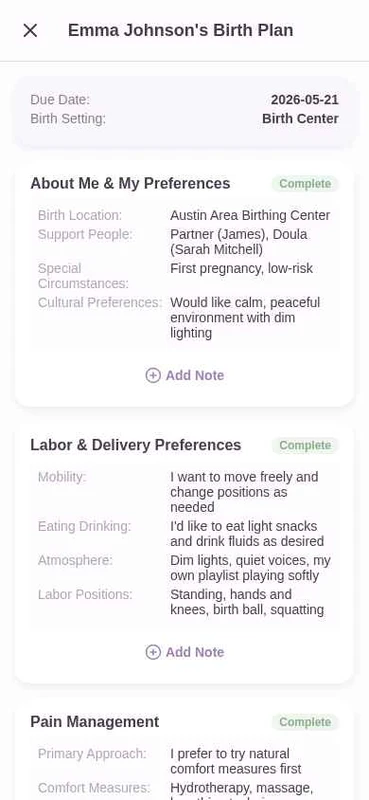
If you want a fillable template to start from, grab the True Joy Birthing birth plan template. It includes a dedicated c-section section you can hand straight to your care team.
Why Does a Planned C-Section Need a Birth Plan?
A cesarean is surgery, but it is also birth. Your preferences still matter. The way your baby is delivered, who is present, how you are informed during the procedure, and how you are treated in recovery are all things you can influence.
Without a written plan, the hospital falls back on default protocols. Those defaults may be fine, or they may not match what you want. A planned c-section preferences document makes your wishes visible before you are on the table, when it is too late to negotiate.
I have seen families regret not speaking up sooner. I have also seen families walk into a cesarean feeling calm and prepared because they had written everything down. The difference is not luck. It is preparation.
Include:
- Your name, provider, hospital, and delivery date
- A one-line summary of your top three priorities
- Your support person and their role
- Any language or cultural preferences for the room
- A note that you want to be informed at each step of the procedure
What Should You Include in Your Surgical Preferences?
This is the core of your c-section birth plan. Surgical preferences cover what happens from the moment you enter the operating room until your baby is born.
Most hospitals allow some flexibility here. Some do not. Either way, stating your preferences means your team knows what you want, and you know what to ask about in advance.
Include:
- Clear drape versus lowered drape at delivery so you can see your baby born
- Delayed cord clamping when clinically possible
- Skin-to-skin contact in the operating room, often called "skin-to-skin in the OR"
- Your partner or support person present at your head, not behind a screen
- Music or silence, your choice
- Photography or video preferences, including who takes photos
- Whether you want the surgical team to narrate the procedure as it happens
- Your preference for holding your baby immediately versus after assessment
One mother I supported in Dallas had a planned cesarean for a breech baby. She wanted the drape lowered so she could watch her daughter being lifted out. Her provider agreed. She told me later that moment of seeing her baby for the first time, even through tears, changed how she processed the entire surgery. She had written it in her plan, and the team was ready for it.
Not every preference will be possible. That is not a reason to leave it off. Write it down, discuss it with your provider at a prenatal visit, and let them tell you what is feasible.
How Do You Plan for the Recovery Room?
The c-section recovery plan is where most families stop thinking ahead. The surgery ends, the baby arrives, and then you are in a hospital bed for two to four days with a fresh abdominal incision. What you want during those days is worth writing down.
Recovery is when you are most tired, most medicated, and least able to advocate for yourself in the moment. A written plan does that work for you.
Include:
- Skin-to-skin and breastfeeding support within the first hour, if you want it
- Your preference for rooming-in versus nursery care at night
- Pain management preferences, including which medications you are open to and any you want to avoid
- Who is allowed in your room and visiting hours
- Your preference for help with the first time you stand and walk
- Lactation consultant request, ideally before you leave the hospital
- Clear instructions for keeping your baby near you unless medically necessary to separate
A mom in Fort Worth told me her recovery plan saved her from a rough first night. She had written that she wanted her partner to do diaper changes overnight while she focused on feeding and resting. The nursing staff saw it, respected it, and her partner stepped in every time. She got four hours of sleep that first night. After a cesarean, that matters.
What About an Unplanned or Emergency Cesarean?
Not every c-section is scheduled. Many happen after labor has already started. An unplanned cesarean is harder to plan for, but your c-section birth plan can still cover it.
I tell my clients to include a short section that applies if a cesarean becomes necessary during labor. This keeps you from making every decision in a high-stress moment.
Include:
- Your consent to an emergency cesarean if your provider deems it necessary
- Who you want present in the operating room
- Whether you still want skin-to-skin and delayed cord clamping if conditions allow
- Your preference for being told what is happening and why, in plain language
- Any allergies or medication sensitivities the team should know
- Who will stay with your baby if you need additional care after delivery
One mother I supported in Austin had a long labor that ended in an unplanned cesarean for failure to progress. Her plan included a note that she wanted her husband to go with the baby to the nursery if she could not. That is exactly what happened. He stayed with their son while she was in recovery, and she knew her baby was never alone. A small detail, written in advance, removed a major worry.
How Do You Handle Breastfeeding After a Cesarean?
Breastfeeding after a c-section comes with extra challenges. You are recovering from surgery, you may be on pain medication, and your milk can take longer to come in. None of this means you cannot breastfeed. It means you need a plan.
Include:
- A request for a lactation consultant within the first 24 hours
- Your preferred breastfeeding positions that avoid pressure on your incision, such as the football hold or side-lying
- Whether you are open to supplementation and, if so, what type
- A note that you want help with the first feed in the recovery room
- Your preference for pumping if your baby is in the NICU or separated from you
If you are working with a doula, ask them about postpartum breastfeeding support. You can read more about what doulas do at our guide to doula support. A doula does not replace a lactation consultant, but they can help you get positioned comfortably and remind you of your goals when you are exhausted.
Who Should Be in the Room With You?
Your support team matters in a cesarean. The operating room has strict limits on who can be present, but you usually have at least some say.
Include:
- Your primary support person and their name
- Whether you want a doula present, if your hospital allows it
- Who will cut the cord, if delayed clamping and partner involvement are possible
- Who will be with your baby if you and your partner are separated
- Anyone you specifically do not want present, if that applies
If you want doula support during your cesarean, check whether your hospital allows it. Many do, especially for planned procedures. If you are looking for a local doula, we have directories for birth support in Austin, Arlington, and Arlington. We also have state-level resources for birth support across Texas if you are outside those cities.
What Should You Plan for Going Home?
Discharge day is chaotic. You are tired, your baby is new, and you have a list of instructions. A c-section recovery plan should include what happens after you leave the hospital.
Include:
- Who is driving you home and staying with you for the first week
- A plan for meals, either prepped in advance or provided by friends and family
- Your pain medication schedule and who will track it
- Restrictions on lifting, driving, and stairs for the first two weeks
- Your postpartum visit schedule with your provider
- Warning signs to watch for, such as fever, excessive bleeding, or incision redness
- A plan for older children and childcare during your recovery
A mom I supported in San Antonio had three kids at home and a planned cesarean for her fourth. Her recovery plan included her mother-in-law staying for two weeks, a meal train from her church, and her husband taking ten days off work. She told me that plan was the reason she healed well instead of trying to do everything on day five.
What If You Have Already Written a Natural Birth Plan?
If you started with a natural birth plan and then learned a cesarean is likely or scheduled, do not throw it away. Adapt it. Many of your preferences still apply. Skin-to-skin, delayed cord clamping, breastfeeding support, and your support team all carry over.
You can compare your options by reading our guide to writing a natural birth plan. If your situation has shifted, the True Joy Birthing template includes sections for both vaginal and cesarean preferences so you do not have to start over.
One mother I supported had planned a home birth for months. At 37 weeks, her baby turned breech and stayed that way. She was devastated at first. We sat down together and rewrote her plan for a planned cesarean. She kept her preferences for delayed cord clamping, skin-to-skin, and a calm room. On the day of surgery, she walked in prepared. She told me later that rewriting the plan helped her feel like she was still making choices for her birth, even though the route had changed.
Frequently Asked Questions About C-Section Birth Plans
Can I have a birth plan if I am having a scheduled c-section?
Yes. A c-section birth plan covers surgical preferences, recovery room requests, breastfeeding support, and your postpartum plan at home. You still have choices, and writing them down helps your care team support you.
Will my doctor actually read my c-section birth plan?
Most providers will, especially if you bring it to a prenatal appointment and discuss it directly. I recommend reviewing it at around 34 to 36 weeks for a scheduled cesarean. This gives you time to adjust based on your provider's feedback.
What if my preferences are not possible during the surgery?
Some preferences depend on how the surgery goes. Your provider may not know until you are in the operating room. Write them anyway, and ask your provider ahead of time which ones are usually possible at your hospital. Knowing in advance prevents surprises.
Can my partner cut the cord during a c-section?
Sometimes. If delayed cord clamping is possible and your provider allows it, your partner may be able to cut the cord. This varies by provider and hospital, so include it in your plan and ask directly.
How is a c-section birth plan different from a vaginal birth plan?
The structure is similar, but the content shifts. A cesarean plan focuses on surgical preferences, operating room environment, immediate postpartum care, and surgical recovery. A vaginal plan focuses more on labor coping techniques and delivery positions. Both should include feeding preferences and postpartum support.
Do I need a doula if I am having a planned cesarean?
A doula can still help. They provide prenatal preparation, help you write your plan, offer support before and after surgery, and assist with breastfeeding and recovery. If you want doula support, start by reading our guide on what a doula does and then look for a local doula through our Texas birth support directory.
You Deserve a Plan That Fits Your Birth
A c-section is still birth. You still get to plan for it, ask questions, and make choices. Write down what matters to you, talk it through with your provider, and bring it with you on the day.
If you want a place to start, use the True Joy Birthing birth plan template. It walks you through every section, including cesarean preferences and recovery planning, so you walk into your birth prepared.
You do not have to figure this out alone. Write the plan. Ask the questions. Show up ready.
Written by Shelbi Kohler