December 8, 2024
What Is a Birth Doula? Labor Support
What is a birth doula? Learn how a labor doula provides emotional support, physical comfort, and advocacy during childbirth, and why continuous support matters.

When I had my first baby, I had no idea what a doula was. By my seventh, I couldn't imagine doing it without one — and I became one myself. A birth doula is a trained professional who provides continuous support throughout your labor, offering physical comfort, emotional support, and help advocating for what you want. She doesn't replace your doctor or midwife. She fills the gap that no medical provider can — continuous, one-on-one support from the moment you need it until after your baby is born. What that looks like varies from doula to doula, so ask about their approach when you interview.
What Does a Birth Doula Actually Do?
A birth doula does three things: keeps you as comfortable as possible, makes sure you understand your options, and supports your partner in helping you. That's it. Nothing mysterious, nothing clinical — just steady, experienced presence when you need it most.
During labor, a doula:
- Suggests position changes to help labor progress and ease discomfort
- Uses hands-on comfort measures like hip squeezes, counter-pressure, and massage
- Reminds you to eat, drink, and rest between contractions
- Explains what's happening and what your options are when things change
- Helps you and your partner communicate your preferences to the medical team
- Provides continuous support — no shift changes, no handing you off to someone else
One mom I supported in Chicago told me that when her labor stalled at 6 centimeters, her nurse was in and out handling three other patients. Her doula was the one focused on her the whole time. She changed positions, used a birth ball, and within two hours she was ready to push. "I honestly don't think I would have gotten there without her," she said.
During pregnancy, a doula:
- Meets with you to understand your birth preferences and concerns
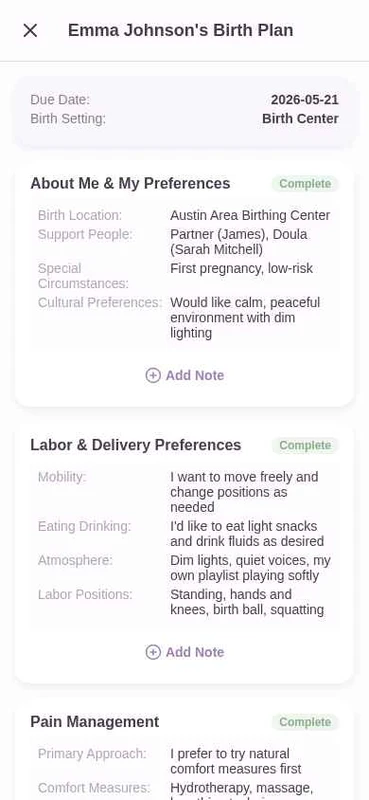
- Helps you write your birth plan (or refine one you've already started — our free birth plan template is a good starting point)
- Practices comfort techniques with you and your partner before the big day
- Answers questions and connects you with evidence-based resources
After birth, a doula:
- Stays for the first hour or two to help with initial breastfeeding
- Makes sure you're settled and comfortable before leaving
- Follows up within the first few days to check on how you're doing
What a Birth Doula Does NOT Do
This matters, because the line between a doula and a midwife trips people up all the time. I cover this in more detail in our doula vs. midwife guide, but here's the short version:
A doula does not:
- Check your cervix or monitor the baby's heart rate
- Perform any medical or clinical tasks
- Make decisions for you or speak on your behalf without your direction
- Deliver your baby
- Replace your OB, midwife, or partner
A doula supports you. Your medical team handles the clinical side. Your partner loves you. These roles work together, and they don't overlap.
Why Continuous Support Matters — The Research
This isn't just my opinion. The Cochrane Review — one of the most respected sources for evidence-based health research — analyzed 26 trials with over 15,000 mothers and found that continuous labor support from a doula makes a measurable difference:
- 25% fewer C-sections compared to mothers without doula support
- 41 minutes shorter labor on average
- 28% fewer instrumental deliveries (forceps or vacuum)
- 34% fewer reports of dissatisfaction with the birth experience
Those numbers tell a clear story. When someone provides continuous support through labor — someone whose only job is your comfort and your voice — things tend to go better. Not because doulas have special powers, but because continuous support is something most hospital environments just don't provide. Nurses have other patients. Doctors come and go. A doula is the one focused on you — whether you're delivering at a major hospital in Beaumont, TX or a smaller community setting.
How a Doula Supports Your Partner
One of the biggest misconceptions about doulas is that we replace partners. That's not how it works. A good doula makes your partner better at supporting you.
Most partners walk into a delivery room having never seen a birth before. They don't know what a normal contraction pattern looks like, when to suggest a position change, or how to apply counter-pressure on your lower back. A doula shows them.
I had one dad at a birth in Dallas who stood frozen against the wall for the first hour. By the end, he was doing hip squeezes, reminding his wife to breathe, and telling the nurse exactly what she wanted. He didn't need to be replaced. He needed a coach — and that's what a doula provides for partners.
Ways a doula supports your partner:
- Shows them specific hands-on techniques during labor
- Gives them breaks to eat, use the bathroom, or just breathe
- Whispers suggestions so they look like they know what they're doing (which, honestly, partners love)
- Reassures them that what's happening is normal
- Steps back when they've got it — the goal is to enable, not take over
Comfort Techniques a Doula Uses During Labor
Doulas carry a toolkit of physical comfort measures that can make a real difference in how you experience labor. These aren't secrets — they're techniques anyone can learn. The difference is that a doula knows when to use which one and how to adjust as your labor progresses.
Position changes and movement
- Walking, swaying, slow dancing with your partner
- Birth ball positions for pelvis opening and pressure relief
- Hands-and-knees, side-lying, and lunge positions to help baby rotate
- Upright positions that use gravity to your advantage
Hands-on comfort measures
- Double hip squeezes (the single most-requested technique in my practice)
- Counter-pressure on the low back during contractions
- Light touch massage to stimulate endorphins
- Acupressure points for pain management and labor progression
Breathing and focus techniques
- Rhythmic breathing patterns matched to contraction intensity
- Vocalization — low, open sounds that keep your body relaxed
- Visualization and focus points for coping through each wave
Environment adjustments
- Adjusting lighting, temperature, and sound to keep you calm
- Setting up a birth pool or shower for water therapy
- Making sure your birth plan preferences are communicated to staff
For a deeper dive into non-medical pain management options, our natural labor pain management guide covers these techniques in detail.
How to Find the Right Birth Doula
Finding a doula isn't like finding a doctor — you don't need the most credentialed person in the room. You need someone you feel comfortable with, who listens well, and who respects your choices. Here's how to find that person.
Start with certification directories
- DONA International, CAPPA, and ProDouga all maintain searchable directories of doulas by location
- Certification means they've completed training, attended births, and met professional standards — but it's a starting point, not the whole picture
Interview at least two or three doulas
- Ask about their training, experience, and how many births they've attended
- Ask what happens if they're at another birth when you go into labor — most doulas have a backup arrangement
- Talk about your birth preferences and see how they respond — a good doula supports your choices, even if they're different from what she'd choose
- Pay attention to how you feel talking to them. Can you be honest? Do you feel heard?
Ask about logistics and cost
- Most birth doulas charge between $800 and $2,000 depending on your location — our doula cost guide breaks this down, and you can see local pricing in city guides like Austin, TX
- Some offer sliding scale or payment plans
- Ask what's included — prenatal visits, the birth itself, postpartum follow-up
- Check whether your insurance or Medicaid covers doula services — more states are adding this benefit, and our insurance coverage guide has current details
Trust your gut After a few conversations, you'll know. The right doula makes you feel like your questions matter, your preferences matter, and you'll have someone in your corner no matter what happens on delivery day.
For local doula directories, hospital policies, and cost ranges in your area, check our city guides — Austin, TX, New York, NY, Chicago, IL, and more cities are covered in detail.
What to Expect Working With Me
I'm Shelbi Kohler — birth doula, mother of seven, and the person behind True Joy Birthing. I've been on both sides of this: the mom in the bed who needed support, and the doula at the bedside giving it. That experience shapes everything about how I work.
When you hire me, you get:
- Two prenatal visits to build your birth plan and practice comfort techniques
- On-call availability from 38 weeks until you deliver
- Continuous labor support from the time you call me until an hour or two after your baby is born
- One postpartum visit to check on feeding, recovery, and how you're processing the birth
- Access to me by text and phone throughout your pregnancy for questions and reassurance
I don't come in with an agenda. Whether you're planning an unmedicated home birth or a scheduled C-section with an epidural, my job is the same: make sure you feel informed, supported, and heard. Your birth, your call.
Ready to talk about whether we're a good fit? Reach out here — I'd love to hear from you.
Quick FAQ
Can I have a doula if I'm getting an epidural? Yes. An epidural handles pain, but it doesn't address everything. A doula still helps with position changes (you'll need them even with an epidural), keeps you informed about what's happening, and supports your partner. Epidurals can slow labor, and having a doula to suggest position changes and keep things moving is valuable regardless of your pain management plan.
Does insurance cover doulas? Increasingly, yes. Several states now cover doula services through Medicaid, and some private insurers are starting to add coverage. Check our insurance coverage guide for the latest on what's covered where you live.
What if my doula can't make it to my birth? Most doulas work with a backup. When you hire a doula, ask who her backup is and whether you can meet them. Good doulas make sure you're never left without support.
When should I hire a doula? The earlier in your pregnancy, the better — ideally by your second trimester. Popular doulas book up, and you want time for prenatal visits, birth plan preparation, and building a relationship. But even late in pregnancy, it's worth reaching out. Some doulas have last-minute availability.
What's the difference between a birth doula and a postpartum doula? A birth doula supports you during pregnancy and labor. A postpartum doula supports you after the baby arrives — helping with feeding, newborn care, recovery, and household tasks. Some doulas offer both. Our postpartum doula guide covers that role in detail.
Written by Shelbi Kohler