June 10, 2026
Doula Interview Questions: What to Ask
Ask the right doula interview questions before you hire. Learn what matters, what doulas recommend, and how to choose the right doula for your birth.
Let's talk about doula interview questions — because who you choose to support you during birth matters deeply. After working with hundreds of families and experiencing seven births myself, I've seen how the right doula match transforms a birth experience. And I've seen how a poor match can leave families feeling unsupported at the moment they need it most.
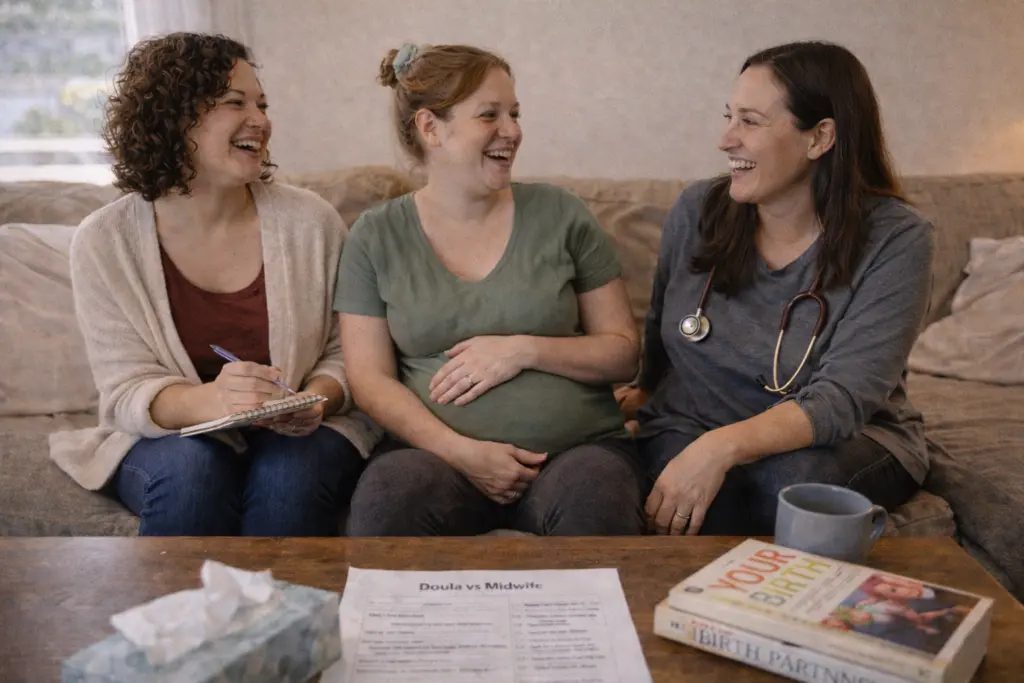
A doula interview is a conversation between you and a potential doula to determine whether she's the right fit for your birth. Most doulas offer free initial consultations specifically for this purpose. Taking advantage of these consultations and coming prepared with good questions is how you find someone you'll trust with one of the most important experiences of your life.
One mom in Austin, TX told me she interviewed four doulas before choosing one. The first three were perfectly qualified — great training, lots of births attended, warm personalities. But the fourth one asked her questions during the interview. She said that flipped everything — she realized she wanted a doula who was curious about her story, not just one who could tell her own.
Training and Experience Questions
Start with the basics. You want to know that your doula has the training and experience to support you through whatever comes up during labor.
What kind of doula training did you complete, and are you certified? DONA International, CAPPA, and ProDoula all have rigorous certification programs. Certification isn't everything — some excellent doulas practice without it — but it indicates a commitment to professional standards.
How many births have you attended as the primary doula? This is different from assisting or shadowing. A doula who has attended 20+ births as the primary support person has real experience managing the range of what can happen in labor.
What's your experience with my type of birth? If you're planning a VBAC, you want a doula who's supported VBAC families. If you're planning an unmedicated hospital birth, you want someone who knows how to work within hospital protocols. If you're planning a home birth, your doula should understand the transfer process.
Do you have back-up doula arrangements? This is the question families most often forget to ask. Ask to meet the backup person before you commit.
Doulas I work with tell me that the most important thing they wish families asked is: "What happens in a situation you haven't seen before?" Not because they need a doula who's seen everything — but because they want someone who's honest about what she doesn't know and has the judgment to seek help when needed.
Philosophy and Approach Questions
These questions help you understand how your doula thinks about birth and whether her approach aligns with yours.
What's your philosophy about birth? There's no right answer to this question — the point is hearing whether her approach matches what you want. Do you want someone who trusts the process and lets labor unfold naturally? Or someone who's more directive and proactive?
How do you support different types of births — unmedicated, medicated, planned C-section, unplanned C-section? A good doula supports the choices you make, not the choices she thinks you should make.
How do you work with hospital staff? Doulas who have good relationships with L&D nurses and providers at your hospital can advocate more effectively. If she's regularly working at the hospital where you'll deliver, that's a plus.
How do you support partners? A great doula doesn't replace your partner — she helps your partner support you better. She shows them comfort techniques, helps them find their role, and makes sure they feel included.
One doula in Aurora, CO shared that the families she works with most successfully are the ones who ask her about how she's handled situations where the plan changed. She said a doula who can talk honestly about a birth that didn't go as planned — without judgment or trauma — is usually someone you can trust when things get complicated.
Practical and Logistics Questions
These questions help you understand the nuts and bolts of working together.
What's included in your package? How many prenatal visits? Are postpartum visits included? What about phone or text support during pregnancy?
When do you go on call for my due date? Most doulas go on call at 38 weeks and stay on call until you give birth. Clarify the timing and what happens if you go past 41 weeks.
What happens if you're at another birth when I go into labor? Your doula should have a backup arrangement. Ask to meet the backup person during your pregnancy, not for the first time during labor.
What's your fee and what payment options do you offer? Doula fees typically range from $800 to $2,500. Many doulas offer payment plans, sliding scale fees, or HSA/FSA acceptance.
Do you accept insurance or Medicaid? Some doulas are enrolled as Medicaid providers in states that cover doula services. Others can provide a superbill you can submit to your insurance for reimbursement.
The Question Most Families Forget
There's one question that almost no one thinks to ask, and it's the one I hear families mention most often after birth.
"How do you handle it when things don't go according to plan?"
A doula's ability to pivot, stay calm, and support you when your birth takes an unexpected turn is arguably more important than how she supports you when everything goes smoothly. Listen for someone who can talk about a challenging birth with compassion and honesty, not someone who seems uncomfortable with the question.
One thing I hear again and again from families after birth is, "I wish I would have asked my doula about her experience with transfers and emergency situations." Not because they wanted to focus on worst-case scenarios — but because knowing she could handle it would have relieved so much anxiety beforehand.
How to Decide After the Interviews
After you've interviewed two or three doulas, here's how to make your decision:
Trust your gut. Your intuition about whether you felt comfortable with someone matters more than any credential. You'll be inviting this person into your most vulnerable moments. If something felt off during a 30-minute consultation, it won't feel better during 12 hours of labor.
Ask yourself: Did she listen more than she talked? A doula who dominated the conversation in your interview will likely dominate your birth space. You want someone who asks what you want and listens to your answer.
Did she make you feel more confident, or more anxious? Some doulas share a lot of information about potential complications. There's a fine line between informed and overwhelming.
Consider the connection, not just the resume. The doula with 100 births and a long certification list may not be the right fit if you didn't feel a connection. The newer doula with 15 births who made you feel completely at ease may be exactly who you need.
When you're ready to start building your birth plan, the Joyful Birth Plan walks you through every section — including who you want on your support team. You shouldn't have to figure this out alone.
For more on choosing a doula, check our guide to finding a doula near you, our doula vs midwife comparison, or explore birth support options in Portland, OR and other cities.
Frequently Asked Questions
What questions should I ask a doula before hiring?
Focus on three areas: training and experience (certification, number of births attended, experience with your birth type), philosophy and approach (how they support different types of births, how they work with hospital staff, how they support partners), and practical logistics (what is included in the package, backup arrangements, fees and payment options). See the full question list above for specifics.
How many doulas should I interview?
Interview at least two, ideally three. Having a comparison point helps you recognize what matters most to you. Most doulas offer free initial consultations, so the only cost is your time. The right doula is not always the one with the most credentials. She is the one who makes you feel confident and heard.
What is a doula consultation?
A doula consultation is a free initial conversation, usually 20 to 45 minutes, where you and the doula get to know each other. You ask questions about her experience and approach, and she asks about your birth goals and preferences. Think of it as a mutual interview. Both sides are checking for fit.
How do I know if a doula is the right fit?
Trust your gut. Did she listen more than she talked? Did she make you feel more confident or more anxious? Did she ask about your story, or just tell hers? You will be vulnerable with this person during one of the most intense experiences of your life. If something felt off during a 30-minute consultation, it will not feel better during 12 hours of labor.
What if I can't afford a doula?
Many doulas offer sliding scale fees, payment plans, or reduced rates for first-time families. Some accept HSA or FSA funds. In states with Medicaid doula coverage, you may be able to get doula services at no cost. Doulas-in-training may offer reduced or free services as part of their certification. Check our Medicaid doula coverage guide to see if your state participates.
Written by Shelbi Kohler