December 8, 2024
Doula Care: Every Stage of Pregnancy
Doula care supports you through every stage — pregnancy, labor, birth, and postpartum. Learn how continuous doula support improves outcomes at each phase.

I've birthed seven babies and supported hundreds of families through their own births. One thing I know for sure: doula care isn't just for labor day. The real difference shows up when you have someone walking with you from the first trimester all the way through those raw, exhausting newborn days.
Too many families think a doula only shows up when contractions start. That's like saying a coach only matters on game day. The prenatal visits, the planning, the late-night texts about whether something is normal — that's where the relationship gets built. And that relationship is what makes the hard moments manageable.
Let me walk you through what doula support actually looks like at every stage, because it's way more than holding your hand during pushing (though I'll absolutely do that too).
What Doula Support Actually Covers
Most people hear "doula" and picture someone rubbing your back during contractions. That's part of it, but the full picture is bigger.
A birth doula provides:
- Prenatal support — helping you figure out what you want, practicing comfort techniques, answering questions your doctor doesn't have time for
- Labor support — providing continuous support from early labor through delivery, offering physical comfort measures and emotional grounding
- Advocacy — making sure your voice is heard when you're too focused on contractions to advocate for yourself
- Postpartum follow-up — checking in after birth, helping with feeding questions, processing your birth story
The research backs this up. Continuous labor support reduces cesarean rates by up to 39% and shortens labor by an average of 41 minutes. That's not magic — that's what happens when someone who knows birth is in your corner the whole time.
If you want the deeper breakdown on what a doula does day to day, check out our guide to what a doula actually does.
Pregnancy: Building Your Foundation
This is where the real work starts. Not the sweaty, hard work — the important groundwork that makes labor day go better.
What Prenatal Visits Look Like
Most doulas offer 2-3 prenatal visits. Here's what we actually do during those:
Listen to you. What worries you? What are you hoping for? What does your partner need to feel prepared? I take notes so I can remind you of your own words when you're deep in labor and can't think straight.
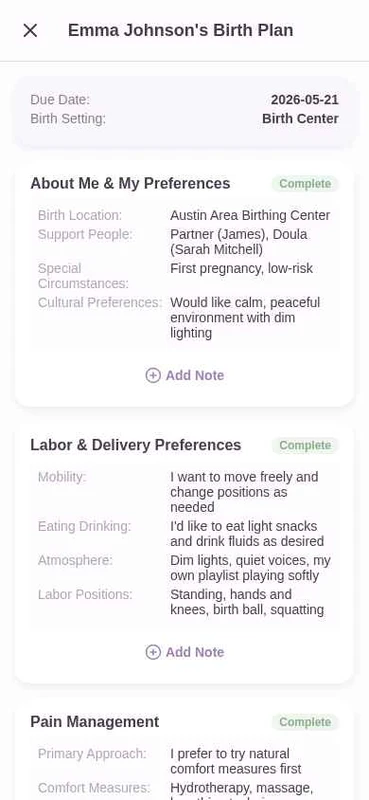
Talk through your birth preferences. Not a rigid birth plan that falls apart at the first curveball — a real conversation about what matters most to you and how to adapt when things change. Our birth plan template can help you organize your thoughts before we meet.
Practice comfort techniques. We try out different positions, breathing patterns, and hands-on comfort measures so you know what actually helps before you're in labor. Some moms love counter-pressure on their lower back. Others want nothing touching them. Let's find out now, not then.
Prep your partner. Partners want to help but often don't know how. I'll show them specific things they can do — where to press, what to say, when to step back. This makes them feel useful instead of helpless.
When to Hire a Doula
The earlier, the better. I know families who've reached out in their first trimester and others who called me at 38 weeks. We can work with either timeline, but earlier gives us more time to build trust and work through your preferences. Somewhere around 20-30 weeks is the sweet spot for most families. If you're ready to start looking, our Aurora, CO birth support guide walks you through local options and what to expect.
Worried about cost? Most doulas charge $800-2500 for full care packages. Some insurance plans now cover doula services, and many states' Medicaid programs do too. Check our Medicaid doula coverage guide for your state, or our doula cost breakdown to understand what you're paying for.
Labor and Birth: The Main Event
This is what most people think of when they hear "doula." Here's what I actually do when labor starts.
Early Labor
I'm available by phone and text from the moment you think something is happening. We talk through what you're feeling, time contractions together, and figure out when it's time to head to your birth place or call your home birth midwife. Early labor can last a long time, and having someone confirm "yes, this sounds like early labor" or "no, call your provider now" is worth a lot.
Active Labor
This is when I join you in person and provide continuous support until your baby is born and you're settled. No shift changes. No going home at 5pm. I'm dedicated to you throughout.
What I'm doing during active labor:
- Physical comfort — hip squeezes, counter-pressure, massage, helping you change positions, getting you water, keeping you fed if your provider allows it
- Emotional support — reminding you that you're doing it, that this is normal, that you're strong. Sometimes just being a calm presence in the room changes everything.
- Information — explaining what's happening, what your provider is suggesting, what your options are right now. You don't have to make decisions in a vacuum.
- Partner support — giving your partner breaks, showing them how to help, keeping them in the loop so they don't feel sidelined
Working With Your Medical Team
I'm not there to argue with your doctor or midwife. I'm there to make sure communication stays clear between you and them. I know the lingo. I can help you ask the right questions. If your provider suggests an intervention, I can help you understand what it means and what your options are — not talk you into or out of anything, just make sure you understand what's happening.
Good medical teams appreciate doulas. We keep clients calm, informed, and comfortable. That makes their job easier too.
Pushing and Delivery
When it's time to push, I'm coaching positions, keeping you hydrated, and cheering you on. If you want a mirror to see your baby crowning, I'll find one. If you want to reach down and touch your baby's head as they emerge, I'll tell you when. If things get intense and you need someone to look at who isn't wearing scrubs, that's me.
And when your baby is placed on your chest, I step back. That moment is yours.
Postpartum: The Part Nobody Warns You About
The birth is over and you're home with a newborn. Now what?
This is where a lot of families struggle hardest, and it's where postpartum support makes the biggest difference. A postpartum doula — which can be the same person who attended your birth — helps with:
- Feeding support — whether you're breastfeeding, bottle feeding, or somewhere in between, we help you figure out what works
- Recovery — your body just did something incredible. We talk through what's normal healing and what needs a call to your provider
- Newborn care — diapering, soothing techniques, sleep patterns, knowing when something warrants a call to the pediatrician
- Emotional processing — birth doesn't always go according to plan. Talking through what happened helps more than most people realize.
- Practical help — sometimes you just need someone to hold the baby so you can shower. That counts.
The Postpartum Reality Check
Here's what I wish someone told me before my first: the postpartum period is harder than birth for a lot of women. You're sleep-deprived, hormonally wild, and responsible for keeping a tiny human alive. Having someone come to your house who knows what they're doing — who can tell you "yes, that's normal" or "let's call your doctor" — is a game-changer.
Most birth doulas include at least one postpartum visit in their package. Some families add more. Either way, knowing someone will check on you after birth matters more than you think it will beforehand.
Choosing a Doula Who Fits
Not every doula is the right fit for every family. Here's what actually matters when you're choosing:
- Do you feel comfortable with this person? They're going to see you at your most vulnerable. If the vibe is off, keep looking.
- Do they have experience with the kind of birth you're planning? Home birth, hospital birth, VBAC, planned cesarean — make sure they've been there before.
- Are they certified? DONA, CAPPA, and other organizations require training, supervised births, and continuing education. Certification isn't everything, but it's a baseline.
- What's their backup plan? Doulas are human. We get sick. We have other births. Ask who covers for them.
- Do they mesh with your partner? Your partner has to be comfortable too.
Our how to choose a doula guide and doula interview questions page walk you through this in more detail. You can also browse local resources — for example, our Chicago, IL birth support guide lists experienced doulas serving the area.
The Bottom Line
Doula support isn't a luxury. It's not pampering. It's not "nice to have if you can afford it." Continuous support through pregnancy, birth, and postpartum leads to better outcomes — fewer interventions, shorter labors, higher satisfaction, and families who feel like they had a say in their own birth experience.
I've been on both sides of this. I've been the laboring mom who needed someone, and I've been the doula holding space for hundreds of other moms. The difference between going through it alone and having someone who knows birth in your corner is real.
If you're thinking about doula support, let's talk. No pressure, no sales pitch — just a conversation about what you need and whether we're a good fit. Reach out anytime.
Key research on doula support:
- Continuous labor support reduces cesarean rates by up to 39% (Cochrane Review, 2017)
- Labors with doula support average 41 minutes shorter
- 93% of mothers with doula support report a more positive birth experience
- Women with doulas are 31% less likely to need synthetic oxytocin (Pitocin)
- Postpartum doula support reduces rates of postpartum depression by up to 50%
For local cost details and insurance coverage, check our city guides like Austin, TX and New York, NY.
Written by Shelbi Kohler