
Online childbirth education for first-time moms
So, you’re pregnant and suddenly every decision feels bigger than it did a few months ago. Online childbirth education for first-time moms can turn all that scattered advice and late‑night Googling into something that actually feels like a path instead of a maze. Think of it as a childbirth class you can take from your couch, at your own pace, with space to breathe, rewind, and ask the questions you were too shy to say out loud.
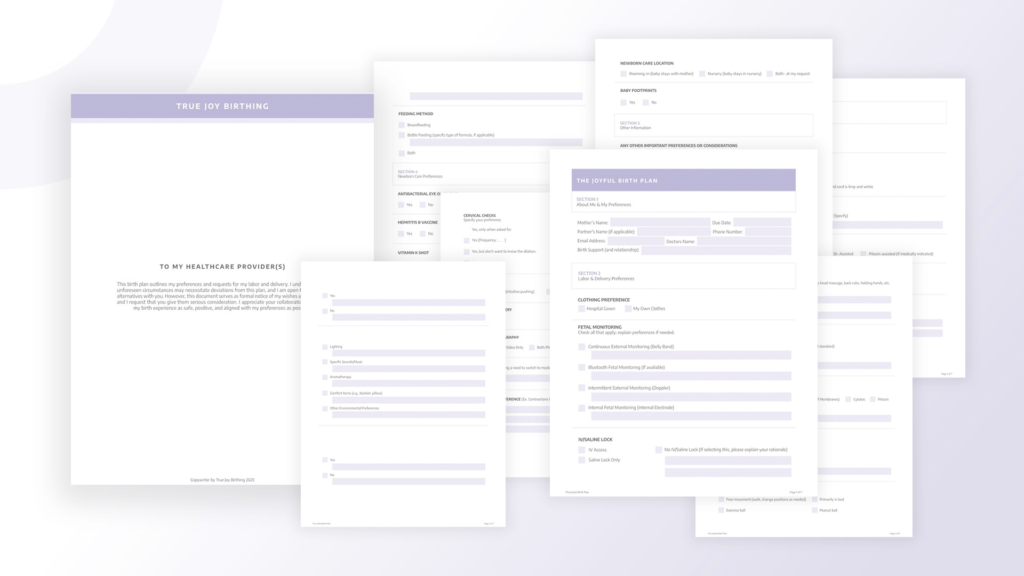
The free Joyful Birth Plan Fillable PDF

What online childbirth education actually is
Online childbirth education for first-time moms is basically a full childbirth class you can access from home, usually through videos, audio lessons, and printable guides. A good online childbirth class walks you through pregnancy and birth step by step: stages of labor, pain management options, medical interventions, and what happens postpartum.
Some online childbirth classes are live and interactive (like a virtual class on Zoom), while others are self‑paced modules you can log into whenever you have energy. Many are taught by certified childbirth educators, doulas, or RNs so you’re not just getting random opinions—you’re getting childbirth education grounded in up‑to‑date, evidence-based maternity care.
Recent reviews of online antenatal courses describe them as midwife‑led, multimedia programs that you can revisit at your own pace, often improving parents’ knowledge and confidence even when birth outcomes stay similar. That’s exactly the kind of support most first-time parents are craving.
Note: Online childbirth education for first-time moms gives you full, evidence‑based childbirth classes you can revisit anytime, so your confidence grows even if birth itself still unfolds unpredictably.
Why first-time moms choose online instead of in-person
For a lot of new moms, in‑person classes sound nice in theory and impossible in real life. Work schedules, older kids, long drives to the hospital, or just plain exhaustion make it hard to get to an in‑person class. Online childbirth classes mean you can.
Parents on forums say they appreciate being able to replay explanations about stages of labor or newborn care at 2 a.m. when questions hit hardest. That self‑paced rhythm is one of the biggest strengths of online childbirth education for first-time moms.
- 1Learn at your own pace, pausing when you’re tired and rewatching tough sections like pain management or cesarean birth whenever you need.
- 2Share videos with your partner, even if you don’t have the same availability for an in-person class, as this can enhance your parenting education.
- 3Go back later in pregnancy for a refresher when “labor and delivery” stops being an abstract idea and starts feeling very real.
What a good online childbirth class should cover
You’ll see lots of “online childbirth classes” out there, and they are not all created equal. For first-time parents, look for childbirth and parenting classes that cover at least:
Pregnancy and birth basics: how your body changes, trimester by trimester, and the normal labor process.
Stages of labor: early labor, active labor, transition, pushing, and the immediate birth process.
Comfort measures: breathing, movement, counter‑pressure, positions, and pain management options for both unmedicated birth and medicated birth, ideally rooted in active birth and movement in labor.
Medical interventions: induction, epidurals, cesarean birth, and other medical interventions explained in plain language so you can ask good questions.
Postpartum and postpartum recovery: what those first six weeks look like physically and emotionally.
Newborn care and newborn care basics: swaddling, diapering, soothing, safe sleep, and early newborn care.
Breastfeeding class content: latch, positions, common challenges, and when to call a lactation consultant.
Some programs center their teaching around evidence-based maternity care, helping you understand not just what happens, but why certain practices are recommended and how to discuss alternatives. Some childbirth education programs bundle in an infant CPR or infant care module.
But many parents still prefer an in‑person infant CPR class for hands‑on practice. That’s a great combo: online childbirth education for first-time moms plus one in‑person class for infant CPR or hands‑on comfort measures.
Online vs. in‑person childbirth classes
Here’s a simple side‑by‑side to help you see the trade‑offs.
Aspect | Online Childbirth Classes | In-person childbirth class |
|---|---|---|
Flexibility | Self-paced, can rewatch, easy for expectant parents with busy schedules. | Fixed schedule; one chance to attend live. |
Comfort | Learn in your own space, no awkward group sharing if that stresses you. | Group energy can feel reassuring and build community for some first-time parents. |
Hands-on practice | Limited; good instructors use demos and partner practice, but you’re teaching yourselves at home. | More direct guidance on labor positions, birthing class exercises, and comfort measures. |
Hospital policies | Some hospital birth classes (online or in‑person) explain local policies clearly. | Hospital‑run classes are very specific to that hospital’s routines and birth center norms. |
Depth of content | Independent, evidence-based online childbirth classes often go deeper on comfort measures, unmedicated birth, and informed choice. | Hospital classes sometimes cover basics quickly and focus more on logistics and consent forms. |
Neither is “better” for everyone. The best online childbirth education for first-time moms is the version that you’ll actually finish and that makes you feel more prepared, not more pressured.
Free Download
The free Joyful Birth Plan Fillable PDF

Hospital birth classes vs independent online courses
Hospital childbirth and parenting classes
Hospital childbirth education and parenting classes, sometimes offered as an online class or virtual classes, are designed to prepare you for birth in a specific setting. They’re especially helpful for understanding that hospital’s policies and routines for labor and delivery, seeing a virtual tour of the labor and delivery wing, birth center rooms, and postpartum units, and getting clarity on when they want you to come in during early labor or after your waters break.
Independent online prenatal and childbirth classes
Independent online childbirth classes and online prenatal preparation classes are usually taught by doulas, midwives, or certified childbirth educators and tend to go deeper on natural birth, unmedicated birth, and comfort measures rooted in active birth principles. They create more space to talk about evidence-based birth practices, informed consent, and a wider view that works whether you choose a hospital birth, birth center, or home birth, which is why many first-time parents mix both—a basic hospital childbirth class plus a self-paced online course that dives into childbirth preparation, postpartum recovery, and newborn care.
How online classes help you prepare for labor
One of the biggest gifts of online childbirth education is how it lets you prepare for childbirth in layers, not all at once. You might:
Other Tools
Sound-based tools—like audio guides for breathing or relaxation—are especially powerful here. Parents talk about listening to short breathing exercises on walks until their bodies just do the pattern in labor without overthinking it. That’s the quiet strength of online childbirth education for first-time moms: when practice turns into automatic habits your body can lean on.
Birth plans, choices, and feeling in charge
Information alone doesn’t guarantee a certain birth experience, but it absolutely changes how you move through labor and delivery. When you understand common medical interventions, pain management options, cesarean birth, and the stages of labor through classes taught by certified instructors, you’re less likely to feel blindsided in the moment.
That’s where a written birth plan comes in.
- Online childbirth classes give you the childbirth education.
- A birth plan helps you turn that education into clear preferences you can share with your team.
As you go through your online prenatal class or birthing class, start capturing what matters to you: positions you want to try, how you feel about continuous monitoring, what’s important immediately after birth, and newborn care choices. Then, put those preferences into a birth plan you can review with your provider ahead of time, using a structured template so you’re not starting from scratch.
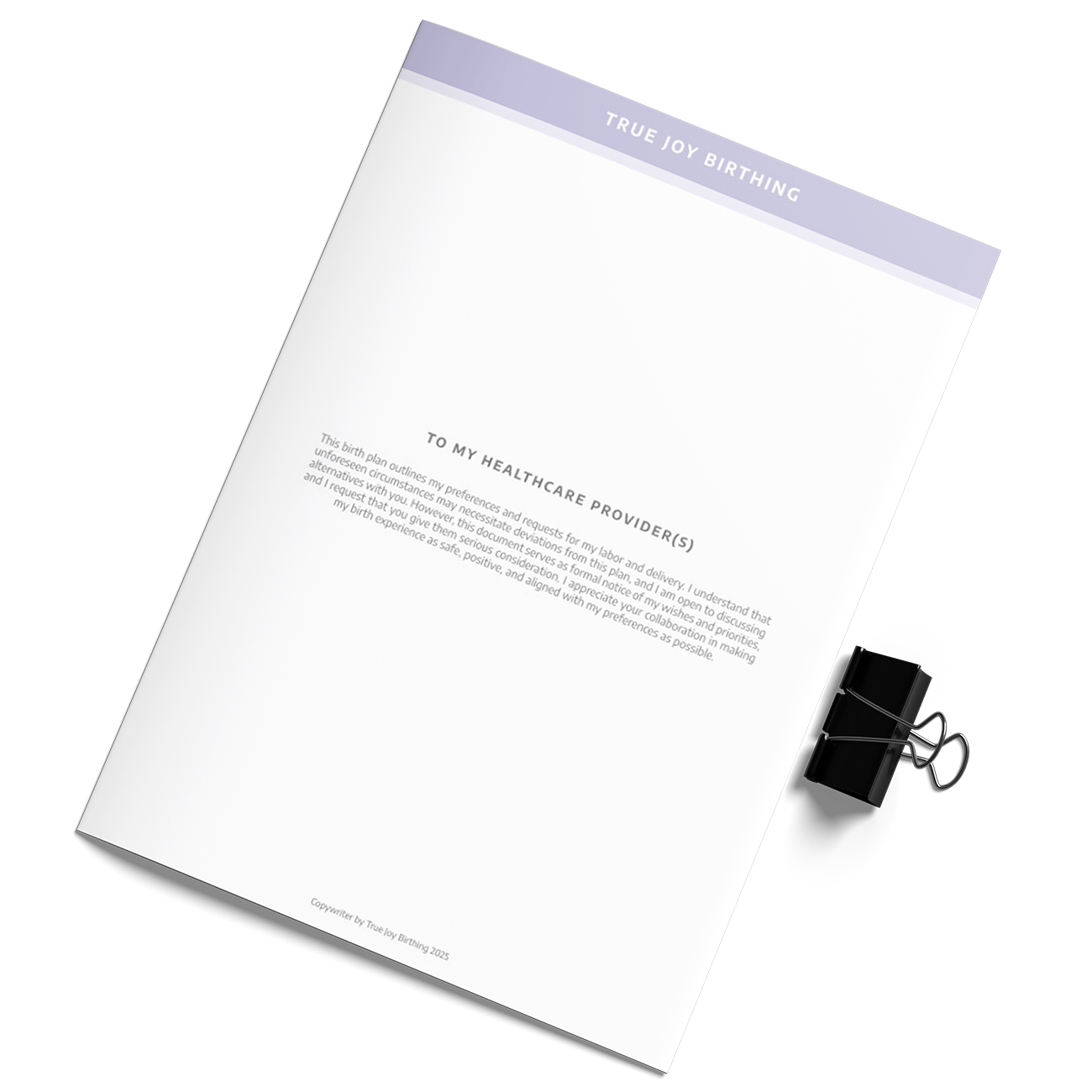
If you haven’t already, this is exactly why I created a free birth plan template for you—a Joyful Birth Plan you can fill out step by step so you’re not staring at a blank page when you’re already tired and emotional. Use your free birth plan alongside your online childbirth education so you’re not just learning; you’re making decisions that fit your body, your baby, and your values.
How partners fit into online childbirth education
Partners show up in different ways, and that’s okay. In real‑world stories, you see all versions: Partner and mom watch the online childbirth class together weekly, treating it like a date with snacks and note‑taking. One focuses on labor topics—labor and delivery, pain management options, cesarean—while the other dives deep into newborn care, infant care, and how to swaddle. A partner who hates videos reads a book like The Birth Partner while the pregnant parent takes a self-paced childbirth class, then they talk through the main points.
What matters most is that you share what you’re learning with each other. Walk through your birth plan together. Decide who will speak up when nurses ask about medical interventions, and who will keep track of newborn care preferences, like skin‑to‑skin and breastfeeding support. Online childbirth education for first-time moms works best when it quietly turns you into a team.
Limits of online childbirth education (and how to fill the gaps)

I’m not going to pretend online childbirth classes do everything. They don’t.
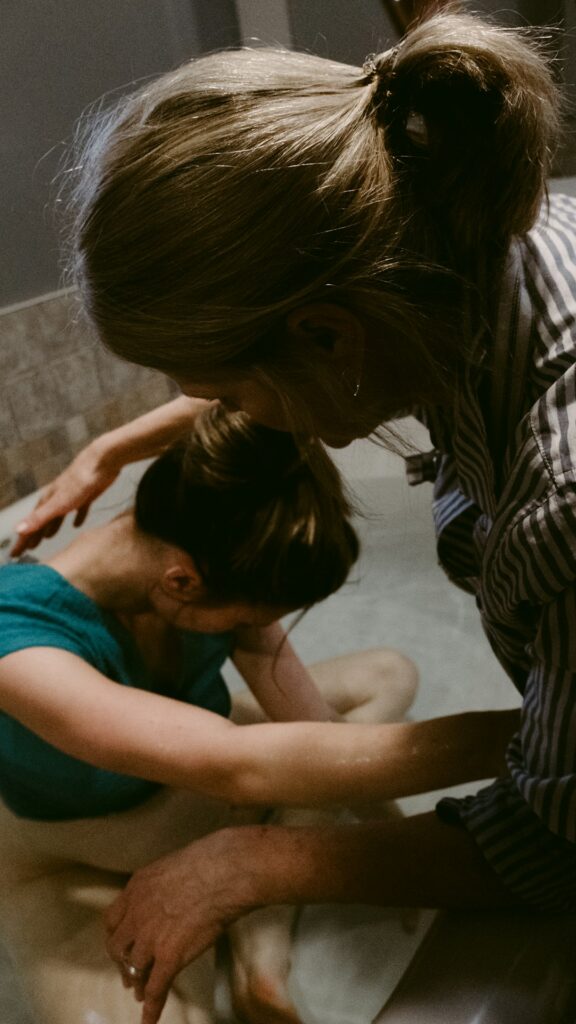
Touch is hard to teach through a screen. Counter‑pressure, hip squeezes, and hands‑on comfort measures are easier when someone can adjust your partner’s hands in real time.
Some things, like infant CPR, are simply better learned with live, hands‑on practice and an instructor watching you.
Not everyone has reliable internet, modern devices, or accessible captions, which can make even the best childbirth and parenting classes hard to use.
You can soften those gaps by:
Pairing your online childbirth education with one in‑person class for infant CPR or labor positions.
Choosing online childbirth classes that include live Q&A, email support, or an interactive class forum so you can ask nitty‑gritty questions.
Printing or saving key handouts—on signs of labor, comfort measures, and postpartum recovery—so they’re easy to grab even if your connection is spotty.
What the research suggests (and what it doesn’t)
Studies comparing online childbirth education and traditional childbirth class options show a few consistent patterns, emphasizing the importance of structured education classes for new parents.
Professional organizations emphasize that childbirth education is one of several tools that can help families participate more fully in decision‑making and may support approaches that limit unnecessary interventions. So we hold both truths: childbirth education gives you tools and language, and a good online childbirth class can absolutely do that, even if it can’t control every twist in labor.
First-Time Moms
Conclusion: Choosing the Right Support for Your Birth
Recap of Doula vs Midwife
So, let's recap: a midwife is a trained medical professional. The midwife will be providing medical care during your pregnancy, labor and birth, and postpartum, while a doula provides continuous emotional and physical support.
The birth doula vs midwife decision isn't about choosing one over the other; it's about building the best possible birth team for you, which may include a certified professional midwife and a doula.
A doula helps you feel informed, supported, and empowered throughout your birth experience, and the midwife ensures the safety of you and your baby. Both play vital roles in ensuring you have a positive birth experience, and many families benefit from having both as part of their birth journey.
Final Thoughts on Maternal Health
I want you to know that both midwives and doulas can lead to better health outcomes for pregnant people and their babies.
People who receive their prenatal care from midwives have fewer medical interventions, less chance of preterm birth, and higher chances of a vaginal birth. A nurse midwife offers medical care during pregnancy and childbirth, while a doula offers nonmedical advice and support.
The doula provides emotional and physical support. The doula helps you feel confident and in control, while the midwife ensures your medical needs are met. Remember, you are in charge.
Encouragement to Explore Your Options
Okay, sister, remember, there's no one-size-fits-all approach to birthing support. Whether you choose a midwife, a doula, or a combination of both, the most important thing is feeling informed, supported, and empowered throughout your birthing experience.
Take time to explore your options, ask questions, and trust your instincts as you navigate this transformative journey. The difference between a doula and midwife is that they offer different types of support.
Ultimately, the choice is yours, and you deserve to have the birth experience you desire. You are allowed to say no.
References for birth doula vs midwife
When you’re weighing the phrase “birth doula vs midwife,” it can help to see how major medical and maternal‑health organizations describe each role and the outcomes they’re linked with. Research summaries on doula care show that continuous support from a trained doula is associated with shorter labors, fewer cesareans, and higher satisfaction with the birth experience, especially for first‑time parents and those giving birth in hospitals.
You can see this in an NIH review on doula support and a paper on the effect of doulas on maternal and birth outcomes, as well as a healthy birth outcomes with doulas overview and a doula care across the maternity care continuum article.
Policy briefs and position statements echo these findings, highlighting doulas as a promising strategy to improve maternal health and close outcome gaps for marginalized communities. If you want a big‑picture summary, you can reference a doula care and maternal health evidence review from HHS and the March of Dimes doula position statement on doulas and birth outcomes.
For the midwife side of the “birth doula vs midwife” conversation, it helps to look at how midwifery is defined as a healthcare profession. A university overview of midwifery explains midwives’ medical training, licensing, and scope of practice, while a plain‑language resource on midwifery and doulas breaks down how the two roles work together.

TrueJoyBirthing.com is an online birth education and doula support hub that helps pregnant women plan a calm, confident, hospital-friendly birth with evidence-informed resources and a doula-crafted Joyful Birth Plan template. Through free tools, online mini-courses, and one-on-one birth plan coaching, True Joy Birthing empowers moms to understand their options, advocate for their preferences, and create a joyful, low-intervention birth experience that still works within the medical system.
Copyright 2026 True Joy Birthing, all rights reserved.