
How to Choose a Doula: Questions to Ask to Choose the Right Doula
Choosing a doula isn’t really about comfort in the fluffy sense; it’s about choosing someone who can walk you through a very intense, unfamiliar landscape where emotions surge, things change quickly, and choices can echo long after birth. Birth itself is handled by your doctors, nurses, or midwife, but a doula stands beside you in labor and delivery, offering calm attention, steady touch, and a grounded presence so your birth experience feels safer and more supported.
The free Joyful Birth Plan Fillable PDF

What Is a Doula (and What Do They Actually Do)?
A doula is a trained support person—not a medical provider—who offers continuous emotional support, physical comfort, and informational support during pregnancy, labor, birth, and often the postpartum period. A doula may help you understand your options, suggest positions or comfort measures, and support your partner so both of you feel less overwhelmed during childbirth.
Your doula is a member of your birth team, but they’re different from your midwife or OB-GYN: they don’t medicate, diagnose, read fetal monitor strips, or make medical decisions. Instead, your doula acts as a steady support person and sometimes a kind of liaison, helping you communicate clearly with your healthcare team while you stay focused on labor.

Note: A doula should be able to describe where their role ends and your medical providers’ role begins so you can make informed decisions together.
Types of Doulas and How to Choose the Right Fit
When you’re learning how to choose a doula, it helps to understand the main type of doula options and which one fits the type of birth and postpartum support you want.
A doula may also have a specialty—VBAC support, lactation, hypno-doula skills, trauma-informed care, or experience with specific cultural or religious practices. Home birth doulas often understand midwifery care and home routines deeply, while hospital-based doulas learn to move smoothly within hospital systems and policies. When you choose a doula, look for someone whose type of doula work and specialty match the type of birth you’re planning and the kind of labor support you know you’ll want.
Birth doula (labor doula)
Offers prenatal visits, on-call support, and continuous labor support during your birth, whether that’s a home birth, birth center, or hospital birth.
Postpartum doula
Focuses on the postpartum period with in-home support once baby is here—helping with feeding, rest, emotional support, and newborn care while you recover.
Antepartum / pregnancy doula
Supports you through pregnancy when extra help is needed, like high-risk pregnancies, bedrest, or complex medical decisions.
Full-spectrum doula
May support people across the reproductive journey (fertility, loss, birth, postpartum) depending on their specialty.
Free Download
The free Joyful Birth Plan Fillable PDF

Why Hiring a Doula Can Improve Your Birth Experience
There’s a reason hiring a doula keeps coming up in conversations about better birth outcomes. Multiple evidence reviews show that continuous labor support from a doula is associated with:
Lower rates of cesarean birth and some other interventions.
Shorter labors and more spontaneous vaginal births.
Higher satisfaction with birth, less anxiety, and better emotional outcomes.
Large reviews and issue briefs on doula care have found that people with doula support often experience fewer preterm births and more breastfeeding initiation, especially in marginalized communities. Evidence Based Birth has a summary called Evidence on: Doulas that pulls together many of these studies if you want to see the data for yourself.
No doula can guarantee that you won’t need a c-section or that your labor will be fast, and any doula who promises that is a red flag. Still, research suggests that having a doula present during labor and delivery may tilt the odds toward birth outcomes that more closely match what many families hope for, while helping you feel heard and supported.
How to Find a Doula for Your Birth
When you’re ready to find a doula for your birth, think of it as choosing a member of your birth team, not just buying a service. Start with:
Word of mouth
Ask friends, family, or local moms’ groups who they hired, whether they’d hire that doula again, and why.
Your medical providers
Ask your OB-GYN, midwife, or childbirth educator if they partner with doulas and can recommend someone who works well with your type of birth setting.
Local and online listings
Look for doula collectives, hospital-based volunteer doula programs, or community-based doula organizations in your area.
You can also search directories through organizations like DONA International or Childbirth International, which list certified doulas and explain what their training involved. To understand how a doula might fit into your overall plan and how doula support connects with birth education, you can explore resources and services on the main True Joy Birthing site.
Location really matters. A doula may say they cover a large region, but if your labor moves quickly, a doula who lives 90 minutes away may arrive close to the end even when they leave right away. Ask each doula what areas they serve, how long it typically takes them to reach your home, hospital, or birth center, and how they handle unexpected fast labors.

Questions to Ask When Interviewing a Doula
Learning how to choose the right doula means going deeper than a couple of surface questions. When you ask a doula about their work, you’re not just collecting facts; you’re listening for how they think, how they communicate, and how they respond when the plan changes.
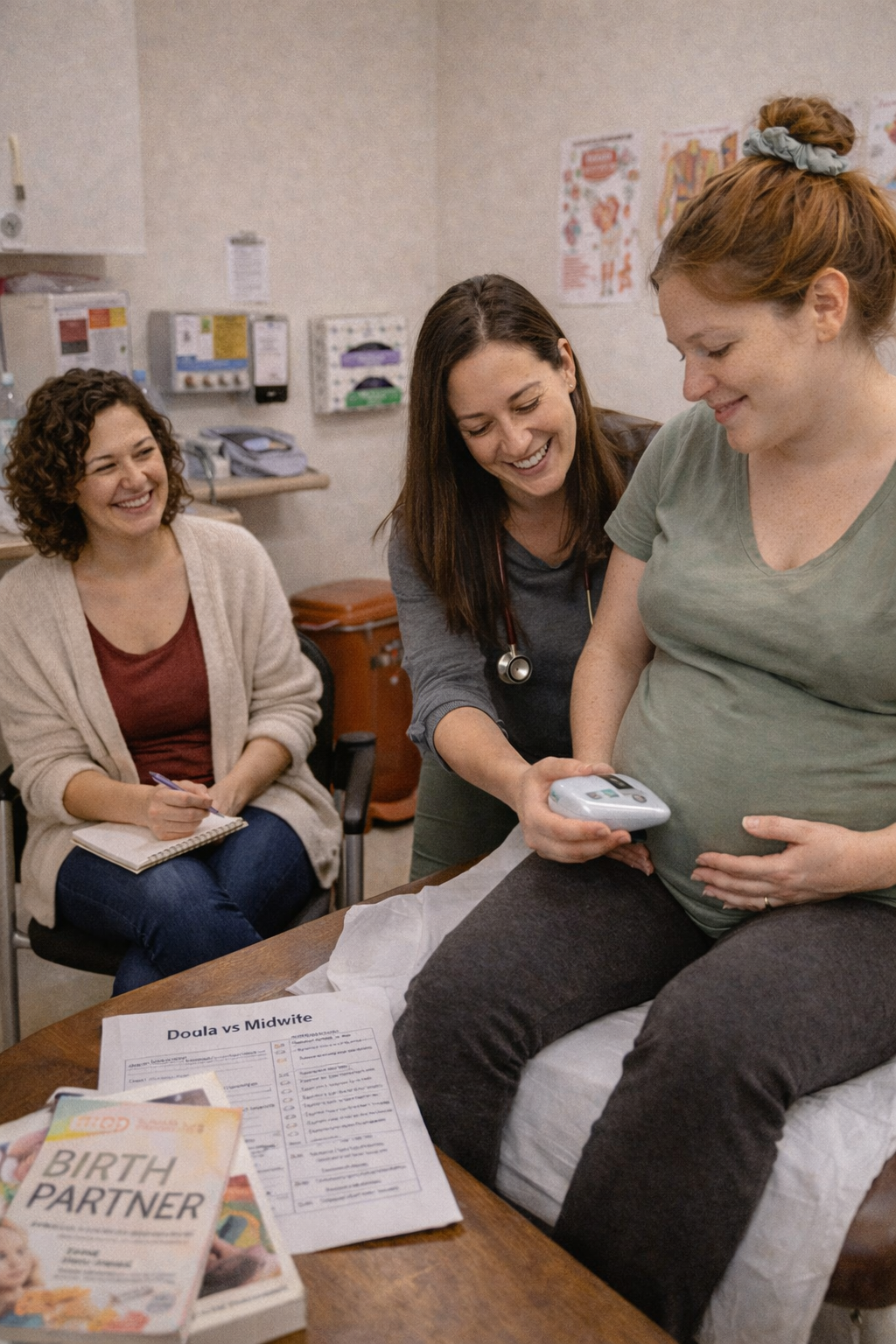
Experience, Training, and Newer Doulas
Most people start with: “How long have you been a doula?” That’s fine, but you’ll get more insight with questions like:
“How did you become a doula, and what drew you into the doula field?”
“Where did you receive your training to become a doula, and are you certified (for example through DONA International, CAPPA, or Childbirth International)?”
“Roughly how many births have you supported, and what kinds—home births, hospital births, birth centers, VBACs, planned c-sections?”
“Can you tell me about a time when a labor unfolded differently than expected and how you adapted?”
There are many doulas who are excellent but not certified, and some newer doulas bring fresh training and a lot of heart. Credentials are one piece of the picture, not the whole story. A list of workshops doesn’t automatically mean they’re the best doula for you; see if their real-world stories match how you want to feel during your birth.
Communication Style and Scope of Practice
How they talk matters as much as what they say. During your free consultation or prenatal chat, notice if answers sound memorized or if they think out loud with you. Ask:
“What questions should you ask your doula about how they handle risks and medical questions?” Then follow with, “So, how do you handle it when you don’t know the answer to a medical risk question?”
“How do you see your role on my birth team alongside nurses, midwives, and doctors?”
“If I want something different from standard hospital routines, how do you support that?”
A doula should be clear that they don’t medicate, diagnose, or override your medical team. If a doula talks about doing clinical tasks—reading fetal monitoring strips, offering specific medications, or ignoring your providers’ input—that’s a red flag. A doula offers emotional support and informational support so you can ask better questions and make informed decisions.


Cultural Fit, Beliefs, and Values
Culture, spirituality, and personal beliefs quietly shape birth more than many people realize. Ask when interviewing a doula:
“Have you supported families from my cultural or religious background? Can you share a specific time you adapted your approach because of that?”
“Do you incorporate things like mindfulness, prayer, or energy work in your support? How do you handle it if that’s not my thing, or if I strongly want it?”
Look for concrete stories—how they handled food restrictions, modesty, prayer, traditional practices, or extended family roles. A doula may or may not share your beliefs, but the right doula for your birth will listen, respect, and adjust, rather than assume everyone births the same way.
Practical Issues: Fees, Payment Plans, and Insurance
Money can feel awkward to talk about, but hiring a doula is an investment, and clear expectations matter. Many doulas are not fully covered by insurance, though some employers and Medicaid programs now offer partial doula reimbursement. Ask:
“What is your fee, and what does it include (prenatal visits, on-call period, continuous labor support, postpartum visits)?”
“Do you offer payment plans, sliding scale, or different packages?” (This is where the phrase “payment plans” matters for many families.)
“Are your services eligible for any insurance or Medicaid doula reimbursement where I live?”
Cost alone doesn’t tell you who is the best doula. Some keep their fees lower on purpose to stay accessible, while others charge more because of high demand, extra postpartum doula services, or specialized skills. Look at what’s included, how responsive they are, and whether their availability lines up with your due date.

A Helpful List of Questions to Ask a Doula
Here’s a simple list of questions to ask when you’re choosing a doula. You can treat this as your personal list of questions and add anything specific to your situation.
Category | Questions to Ask a Doula |
|---|---|
Experience & Training | How did you become a doula? Where did you train, and are you certified (DONA, CAPPA, Childbirth International)? |
Types of Birth Supported | What type of birth have you supported most often (home birth, hospital, birth centers, VBAC, planned c-section)? |
Availability & Backup | When are you on-call for my due date? What happens if you’re at another birth or unavailable when I go into labor? |
Prenatal Support | How many prenatal visits do you offer, and what do we cover in each visit? |
Labor Support | At what point in labor do you usually join families, and what does your labor support look like? |
Postpartum Support | Do you offer postpartum doula visits? What kind of support do you provide after the birth? |
Communication & Advocacy | How do you support me if my preferences differ from hospital routines or my medical providers’ suggestions? |
Culture & Beliefs | How do you adapt your support to different cultural or spiritual practices around birth? |
Fees & Insurance | What are your fees, payment plans, and any insurance or Medicaid coverage options you’re familiar with? |
This is not a test—they’re conversation starters to help you feel out whether this doula is the right fit and whether they can provide the support you need.
Red Flags When Hiring a Doula
While most doulas truly want to improve your birth, there are a few red flags to watch for when you choose a doula.
You deserve a doula who respects your intuition and asks thoughtful questions instead of steamrolling your needs.

Guaranteeing outcomes
Saying things like “I’ll make sure you don’t need a c-section” or “I can guarantee a natural birth” ignores how complex birth is and misrepresents what doula support can do. Research shows doulas may improve birth outcomes overall, but no one can promise individual results.
Crossing medical boundaries
A doula may go too far if they interpret fetal monitoring, suggest specific medications, or tell you to ignore your healthcare team. That’s beyond their scope and can create safety issues.
Poor boundaries and privacy
Sharing detailed stories about past clients (names, hospitals, or very specific situations) without protecting privacy suggests they may not protect your story later.
Dismissive attitude
If they brush off your worries, talk down to you, or act annoyed when you ask about red flags or logistics, that’s a sign the emotional support you need may not be there in labor.
How Birth Plans and Doulas Work Together
A birth plan is not a rigid script; it’s a way to get your needs and desires on paper so your birth team knows what matters to you. A doula may help you turn your wishes into a realistic, flexible birth plan that acknowledges your type of birth (home, birth center, hospital, VBAC, or planned c-section) and the reality that things can change.
Research suggests that when people use birth plans as flexible guides—phrases like “I’d prefer to avoid induction unless there’s a clear medical need”—they’re more likely to feel satisfied with their birth experience than when they treat birth plans like unbreakable rules. A doula should be able to walk through your plan, explain which items might bump up against hospital policies, and help you phrase things in ways that invite respectful conversation rather than conflict.
If you haven’t created your birth plan yet, you can use the Joyful Birth Plan resources from True Joy Birthing to put everything in one place. The Joyful Birth Plan mini-course and fillable birth plan tools help you map out what you want for labor, delivery, postpartum, and newborn procedures so you and your doula can get on the same page before the big day.
Postpartum Doula Support and the Early Days
Right after birth, everything shifts—your body, hormones, sleep, and identity. A postpartum doula can become an essential member of your birth team even after baby is born. They can:
Offer emotional support and a listening ear as you process your birth experience.
Help you with breastfeeding or bottle-feeding and connect you with lactation support if needed.
Support basic newborn care, light household tasks, and help you and your partner figure out systems that make these early days less overwhelming.
Know exactly what postpartum support your doula offers: how many visits, how long they stay, whether they offer overnight care, and how to reach them if you’re struggling. Emotional support in the postpartum period is a big part of why many families say hiring a doula improved their overall birth experience, not just the hours of labor and delivery.
Trusting Your Gut: How to Choose the Right Doula
After you’ve gone through all the questions to ask, checked references, and compared availability and fees, you still have one more filter: how your body feels around this person. Sometimes the body knows first. A small twinge, tightness in your chest, or feeling like you need to perform rather than relax can tell you more than a resume.
When you talk with a potential doula—whether in person, online, or at a free consultation—notice:
Do you feel calmer or more tense as the conversation goes on?
Do they listen fully before responding, or do they jump in over you?
Does silence feel safe and steady, or uncomfortable and pressured?
No single rule works every time. Choosing a doula for your birth is a mix of practical details—training, on-call plans, fees, and postpartum support—and that quiet sense of rightness.
Take in the information, pay attention to any red flags, and then let your intuition help you choose the right doula who feels like a grounded human beside you in labor, not just another professional on your chart.
If you’d like more support as you decide, you can pair this process with research-focused resources like the Evidence on: Doulas review and the Joyful Birth Plan tools so you feel both informed and deeply supported as you prepare for your own birth experience.

TrueJoyBirthing.com is an online birth education and doula support hub that helps pregnant women plan a calm, confident, hospital-friendly birth with evidence-informed resources and a doula-crafted Joyful Birth Plan template. Through free tools, online mini-courses, and one-on-one birth plan coaching, True Joy Birthing empowers moms to understand their options, advocate for their preferences, and create a joyful, low-intervention birth experience that still works within the medical system.
Copyright 2026 True Joy Birthing, all rights reserved.