
Free Birth Plan Template: Make a Birth Plan That Feels Like You
Putting together birth plans can look, from the outside, like you’re just getting ready for one big moment in labor and delivery. In reality, using a free birth plan template is one of the first ways you practice making steady, thoughtful choices as a parent—under pressure, with lots of opinions around you, and with your whole heart on the line. A good birth plan template doesn’t promise control; it simply helps you clearly communicate your preferences for birthing, healthcare, and newborn care so your voice doesn’t disappear when things get intense.
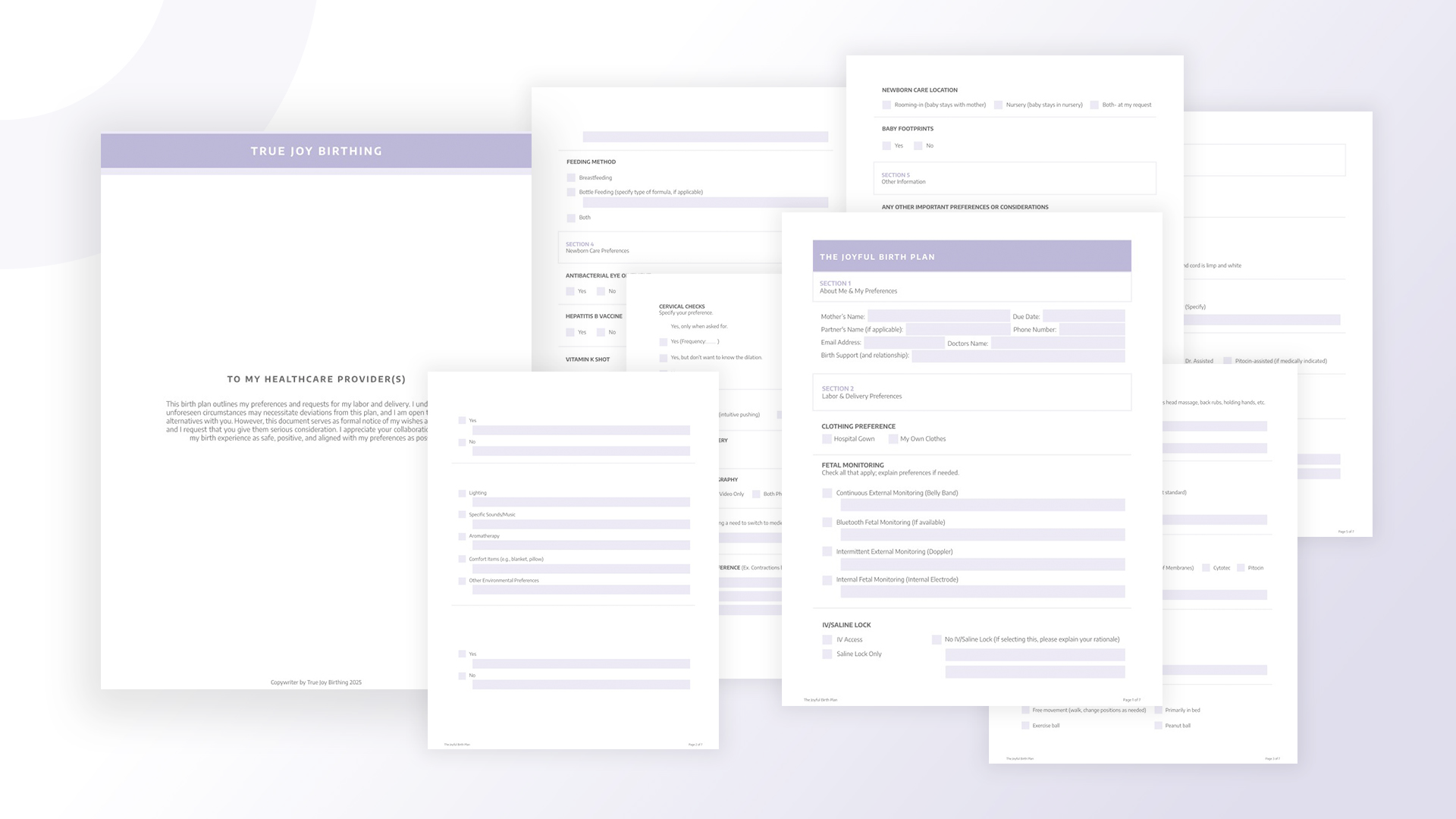
The free Joyful Birth Plan Fillable PDF

What a Birth Plan Is (and What It Isn’t)
A birth plan is a short, written document that outlines your preferences for pregnancy’s final stretch: labor and delivery, the first stage of labor, and those blurry hours right after birth when everyone is meeting your newborn. A sample birth plan or free birth plan template usually walks you through your preferences for labor positions, monitoring, pain management, the delivery room atmosphere, newborn procedures, and your plan to feed right after birth.
It’s important to remember that birth plans are guidance, not guarantees. No hospital or birth center is legally required to follow your wishes word‑for‑word, and your care team still has to respond to medical emergencies or changes in your pregnancy. But a clear birth plan includes the things that matter most to you, which helps your medical team understand your birth choices quickly and respect your birth experience whenever it’s safe to do so. You can change your mind, cross things out, and update your preferences for labor at any point—even during childbirth—because this isn’t a contract; it’s a living conversation on paper.
Another important question is what is a doula--take a look at this article that goes into detail.

Note: A birth plan is a simple, flexible roadmap that clearly shares your wishes for labor, delivery, and newborn care, so your medical team can understand and respect what matters most to you while keeping everyone safe.
Why Start With a Free Birth Plan Template?
Staring at a blank page and trying to make a birth plan from scratch is a lot to ask of a tired pregnant brain. A free birth plan template gives you structure so you don’t have to remember every detail of labor and delivery on your own, and it quietly nudges you to think about what to include in your birth plan long before contractions start. Many parents never hand their hospital a copy of their birth plan simply because they didn’t know where to find a simple, printable birth plan that wasn’t hidden behind paywalls or endless email forms.
Trusted organizations offer free birth plans you can download and personalize:
These free birth plan templates are designed to help you get started, not to overwhelm you. You can print them, jot notes in the margins, and then copy your birth plan into a more customizable birth document when you’re ready.
If you want something created by a birth worker for real‑world hospital and birth center care, the Joyful Birth Plan from True Joy Birthing is a customizable birth plan that pairs a fillable template with teaching on how to talk through your plan with your provider and birth team. It’s a way to take the structure of a free birth plan and add more heart, context, and clarity around your birth experience.
Free Download
The free Joyful Birth Plan Fillable PDF

What Your Birth Plan Template Should Include
When you first open a birth plan template, it can feel like a lot of boxes and lines. Instead of racing to fill them all, move slowly, almost like you’re walking yourself through giving birth step by step. Ask, “What would help future‑me feel seen and safe here?” and let your answers flow into each section.
Medical background and red flags
Start with the unglamorous part up top: your medical background. Your birth plan includes important safety anchors like allergies, blood type if you know it, chronic conditions such as high blood pressure or diabetes, and any problems in a previous pregnancy or first child’s birth. This is the information that shapes medical care in seconds during labor and delivery, so putting it where your care team can see it right away makes a real difference.
Where you’re giving birth and who will be there
Next, name your chosen hospital or birth center and any backup location that makes sense if transfer becomes necessary. Then think about your support people: partner, doula, family, or close friends. Your birth plan template is a good place to list each person by name and phone number, note how many people you want in the delivery room, and clarify who should get updates if you go for a c‑section and you’re not able to speak up in the moment.
This is also where you can recognize your birth team beyond medical staff. A doula isn’t there to replace doctors or nurses (learn about the benefits of having a doula); they’re there to stay with you, emotionally and physically, as shifts change and the room fills and empties. Including them in your birth plan helps the medical team see them as part of your care team from the start.
You maybe considering a natural birth in a hospital which we talk about too.


Preferences for labor and the first stage of labor
When you picture the first stage of labor, think about the environment and small comforts that might hold you steady: dimmer lights instead of bright fluorescents, your own playlist instead of hospital TV, the sound of your partner’s voice reading affirmations as contractions build. You can include in your birth plan preferences like freedom to move (walking, rocking on a ball, leaning over the bed, using a birthing stool), access to a bathtub or shower, and whether you’d like intermittent monitoring if your pregnancy is low‑risk and your provider agrees.
Many birth plans also touch on the number of vaginal exams you’re comfortable with, whether you’d prefer a quieter room with fewer people coming in and out, and how you’d like staff to speak to you—gentle coaching, more explanation, or both. None of this scripts your childbirth minute by minute, but it sets the tone for your birth experience in ways staff can actually follow.
Invitation to Download the Joyful Birth Plan
Birth should feel clear, not scary. TrueJoyBirthing.com helps when hospital words sound like a foreign language. When you type “doula near me,” pause before picking one. First, build your Joyful Birth Plan. That way, talking with doulas becomes focused - no guesswork, just choices that fit you.
A fresh start begins with a blank page - grab the free birth plan template sheet now. Pull up a printer when you’re ready. Go over each part slowly, line by line. Slide it into your folder before doctor visits. Build a circle around you that listens closely. Walk away after delivery knowing your voice mattered - and feel solid about every choice made

Pain management and natural birth
Pain management is where a lot of us feel pulled in different directions. You might long for a natural birth, yet also feel nervous about what will happen if the pain is more than you expected. Instead of hard lines like “No epidural,” your birth plan template can hold softer, but still strong, language such as: “I prefer to start with non‑medication pain management (movement, water, breathing techniques, massage) and will ask if I decide I want an epidural.”
ACOG and other women’s health resources encourage learning about both epidural and non‑medication options so you can make informed choices when the time comes. Writing your preferences for labor in this section doesn’t lock you into an unmedicated birth; instead, it tells your healthcare team how to support your goals and when you’d like them to check in about medication.
Interventions and “even the unexpected”
Most birth plans will ask how you feel about common interventions: induction, having your water broken, using Pitocin to strengthen contractions, or assisted delivery with vacuum or forceps. You don’t need a medical essay—just a few clear sentences that match your values. You might say you’d like staff to explain why an intervention is recommended, what the risks and benefits are, and whether it’s safe to wait or try something else first.
You can even add a short line acknowledging that birth doesn’t always go according to the original plan: something like, “If my original plan cannot be followed because of medical needs, my priorities are (for example) mobility, minimal interventions, and early skin‑to‑skin.” That way, even when the unexpected shows up, your wishes stay part of the conversation.

Cesarean birth preferences
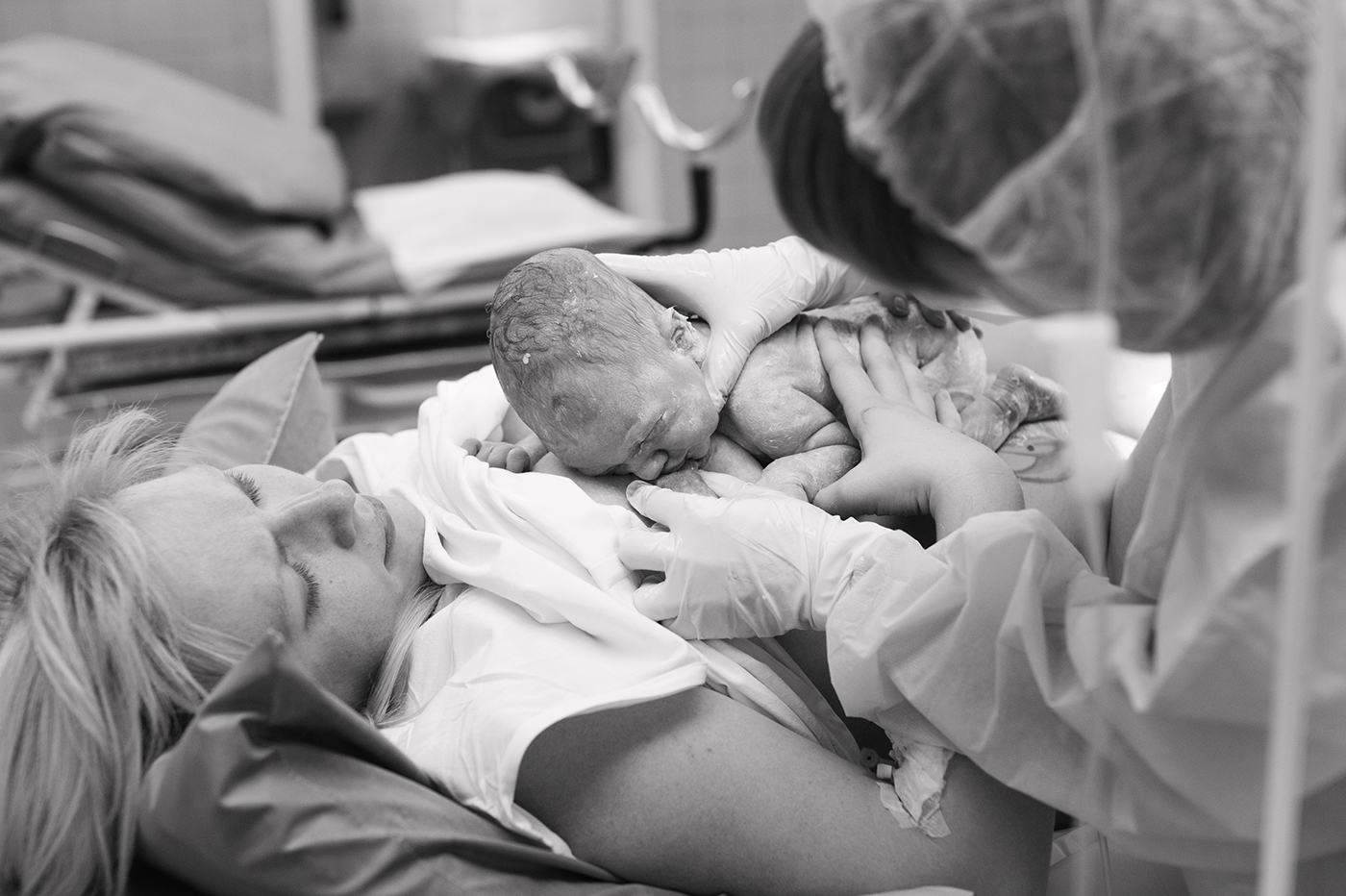
Because c‑sections are common, having a simple c‑section section in your free birth plan helps protect your sense of agency if surgery becomes necessary. You might write that you’d like your partner present, that you’d love to hear your baby’s first cry, and that you hope to have your baby placed on your chest or at least brought close so you can see and touch them as soon as it’s safe.
Some hospitals and birth centers now offer more “gentle” cesarean options—things like delayed cord clamping, clear drapes, or immediate skin‑to‑skin in the operating room—and your birth plan template is a good place to note your preferences and ask your provider what’s possible in your setting.
Newborn care, skin‑to‑skin, and your plan to feed
Finally, your birth plan template will invite you to think about what happens right after birth, both for you and your newborn. You can note that you want immediate skin‑to‑skin with your baby placed on your chest if everyone is stable, and that you’d like routine checks, weighing, and measuring delayed until after that first hour whenever medically possible.
You’ll also be asked about your plan to feed—exclusively breastfeed, combination feed, or formula—and whether you’d like automatic support from a lactation consultant before discharge. Routine newborn procedures like Vitamin K, eye ointment, the Hepatitis B shot, blood spot screening, and hearing tests can be listed here along with your preferences for timing and whether you prefer these done in‑room, with baby skin‑to‑skin or in your arms. This is where a copy of your birth plan becomes especially helpful for nurses, because it keeps these small but meaningful decisions from getting lost in the rush.


Cultural, spiritual, and identity‑specific needs
One size rarely fits all in maternity care. A thoughtful birth plan includes space for cultural or spiritual practices, modesty preferences, language needs, and gender identity details that shape what respectful care means for your family. You might mention prayer breaks, specific rituals around the placenta, the need for an interpreter, or your preference for gender‑neutral parental terms.
For Black, Indigenous, and other marginalized parents who face higher risks in pregnancy and childbirth, putting these needs in writing can support more individualized, accountable care. It’s not about asking for “extras”—it’s about making sure the care team sees you clearly, not just your chart.
Making a Birth Plan Your Healthcare Team Can Actually Use
A beautifully written birth plan doesn’t help much if no one reads it. Sometime around weeks 34–36 of pregnancy, bring a copy of your birth plan to an appointment with your ob-gyn or midwife and ask to go through it together. This is the moment to talk to your doctor or midwife (differences of a birth doula vs midwife) about which preferences fit your hospital or birthing center’s usual routines, what might require separate consent, and where your plan will be stored in your record so every nurse and provider can find it easily.
How you phrase things matters. Questions like, “When would you recommend induction in my situation?” or “If I’m hoping for a natural birth, what pain management options do you like as backup?” tend to open conversation in ways that “No induction” or “No epidural ever” sometimes shut down. You’re still making your wishes clear, but you’re also signalling that you want shared decision‑making with your care team—a core part of respectful, evidence‑based maternity care.
Aim for a birth plan that’s short, clear, and organized enough that an over‑tired nurse at 3 a.m. can read it in a few minutes.
One to two pages with headings, short paragraphs, and only a few carefully chosen bullet points is far more likely to guide real‑time decisions than a long, dense document. This is where a customizable birth template like the Joyful Birth Plan really shines: it helps you organize your thoughts, keep everything on one or two pages, and still capture your voice and priorities.

Sharing, Updating, and Keeping a Copy of Your Birth Plan
Once your free birth plan is filled in, treat it like any other important piece of medical paperwork. Print several copies: one to keep at home, one for your hospital bag, one for your provider, and one you can hand straight to the nurse who checks you in when you arrive in labor. Keep a digital copy stored securely in email or the cloud so your partner, doula (how to choose a doula), or another support person can pull up a copy of your birth plan if the papers go missing.
Every time you have a big appointment, consultation, or change in your pregnancy, glance back at your birth plan template. You might cross out old notes, add new ones, or simply write the date at the bottom so everyone knows which version is current and what changed ahead of time. The act of updating your plan—of letting it breathe and shift with you—often does as much for your confidence as the finished document itself.
If you’re ready to go deeper, explore the Joyful Birth Plan course and template from True Joy Birthing, which walk you through each section, explain options in plain language, and show you how to make a birth plan that feels like your story, not just another hospital form.
Whether you use a simple sample birth plan from ACOG or NHS, a printable birth plan from March of Dimes, or a more detailed customizable birth template, the real power is the same: you get to make your wishes clear before labor begins, so that even when childbirth gets wild—as it often does—your voice is right there on the page, steadying the room.
Take a look at online childbirth education for first-time moms.

TrueJoyBirthing.com is an online birth education and doula support hub that helps pregnant women plan a calm, confident, hospital-friendly birth with evidence-informed resources and a doula-crafted Joyful Birth Plan template. Through free tools, online mini-courses, and one-on-one birth plan coaching, True Joy Birthing empowers moms to understand their options, advocate for their preferences, and create a joyful, low-intervention birth experience that still works within the medical system.
Copyright 2026 True Joy Birthing, all rights reserved.